In August 1993 I drove to Italy in one of the school’s more beat-up Volkswagen vans — the blue one we used to haul food and gear when we took kids up to Brione to go camping in Valle Verzasca. That morning I’d brought a student from Lugano to Malpensa Airport at the end of summer, waved them through departure, and then taken myself out to lunch at a trattoria before the drive back to TASIS (the American School in Switzerland).
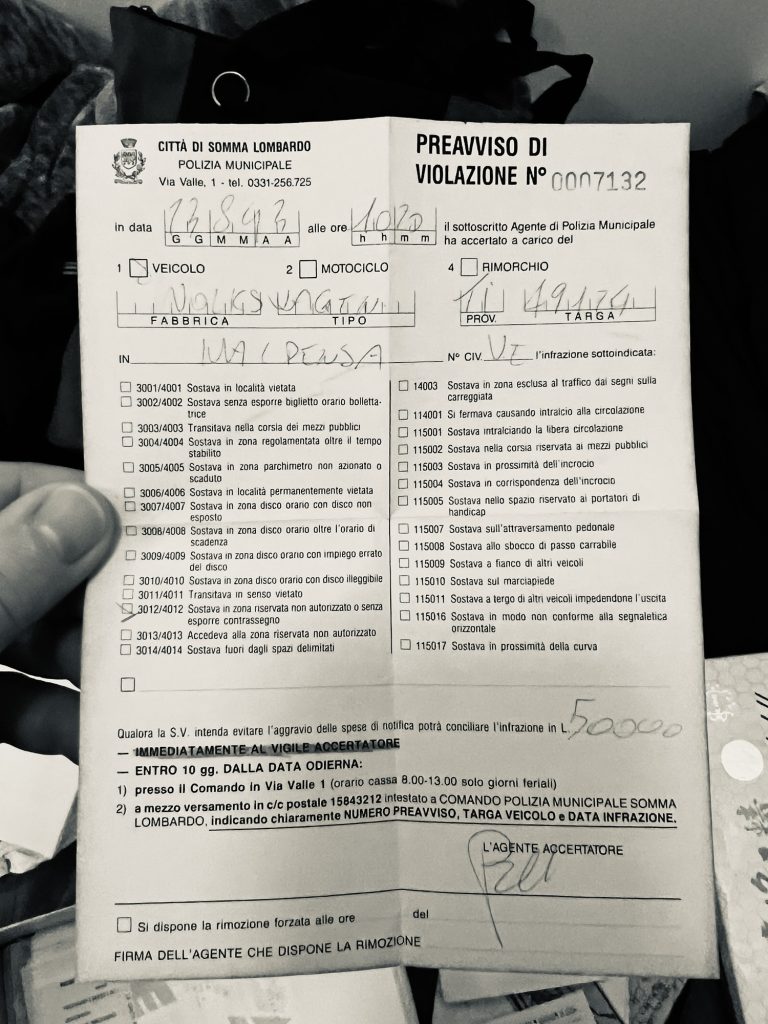
When I stepped outside, there was a poliziotto in the act of writing a ticket. We immediately launched into a spirited discussione, complete with theatrical Italian hand gestures. I’m pretty sure I used every adjective I knew in Italian — the polite ones, the rude ones, and a few I invented under pressure. The agente remained unmoved.
The violation was written as:
“Sostava in zona riservata non autorizzato o senza esporre contrassegno.”
Basically: parked in a reserved area without authorization or without displaying the proper permit.
The fine was 50,000 lire — roughly 25 bucks. No great tragedy. And I had no intention of paying it. In a couple of days I’d be in Paris, then Amsterdam, and then back home in Brooklyn.
I figured I’d deal with it when I went back to the school the next year. Fat chance.
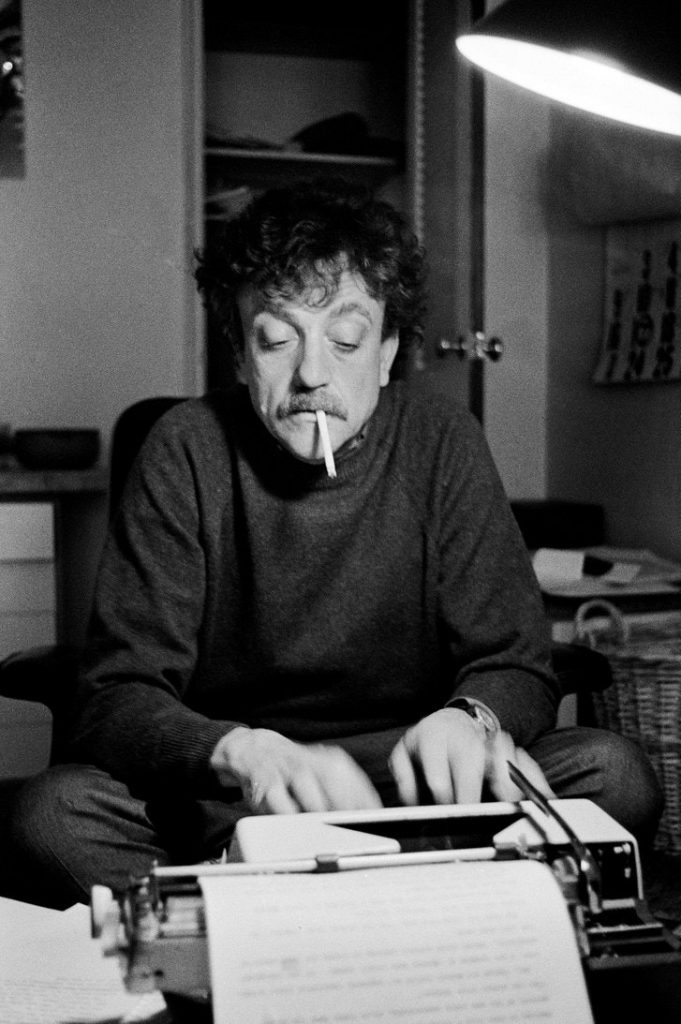
Some days, the page needs a rest from creation. Those days are perfect for transcribing.
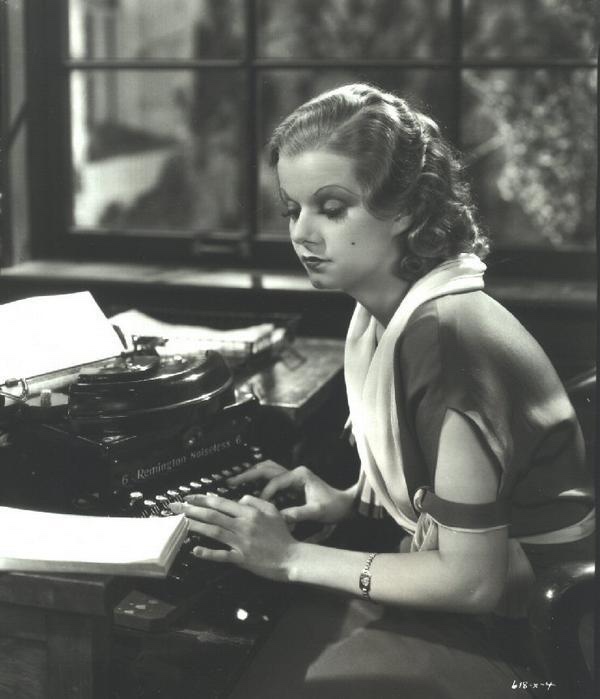
Kurt Vonnegut wrote a scene in Cat’s Cradle where a “vacantly pretty” secretary says she knows nothing about surface chemistry, even though she types for a famous chemist every day.
“Don’t ask me,” she says. “I just type what he tells me to type.”
The narrator observes that her smile is glassy and her mind contains nothing but used Kleenex and costume jewelry. Harsh.
She was a believable character for 1963.
But 1963 was also the year my grandmother sat at a typewriter as a medical transcriptionist.
She soaked up everything — every term, every diagnosis, every procedural note.
Decades later, she would casually rattle off medical facts at the dinner table with the confidence of a seasoned clinician. She wasn’t pretending. There was no imposter syndrome. She had learned it through repetition, curiosity, and attention.
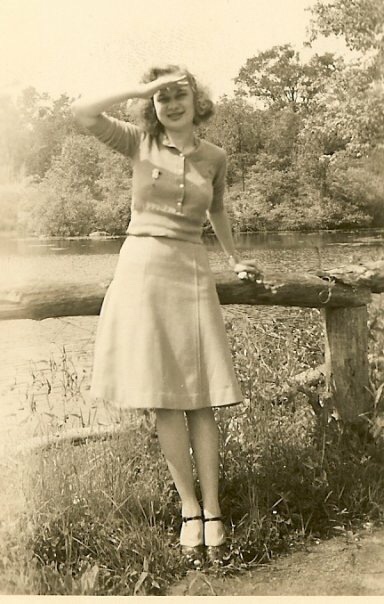
My maternal grandmother, Helen
I’m like her that way. I’m a knowledge junkie. I don’t understand willful ignorance, especially from people who work close to knowledge every single day. If information passes through your hands, why not catch some of it?
Transcribing stories is a way of catching knowledge — your own knowledge.
You’ll hear how you speak, how you ramble, where the emotional gravity sits.
You’ll notice patterns you didn’t know were there.
Here’s the practice:
Take a minute or two and record yourself telling a story you’ve told before but never written down and transcribe it.
Or transcribe a half a page from an audiobook if you cannot speak.
It doesn’t have to be word-for-word. You’re a writer discovering how ideas sound when they arrive through your mouth instead of your hands, not a court reporter.
I’ve transcribed conversations and passages from books just to understand them better. There’s a particular magic that happens in transcription. It’s the ingredients of the spell. The potion is brewed later through rewriting and revision.
Transcription is a shortcut that injects words directly into a writer’s brain
I’m eleven years old, half feral, and worn out from constantly getting into fistfights with boys who call me a long-haired hippie freak. They’re not wrong. I spend my days barefoot and sunburned, and my tolerance for bullshit is zero.
My dad is out of it. He’s going through some heavy shit and has that thousand-yard stare of a shell-shocked Vietnam vet. I don’t really understand the details, but I don’t have to. It’s been a hell of a year, and it’s only April.
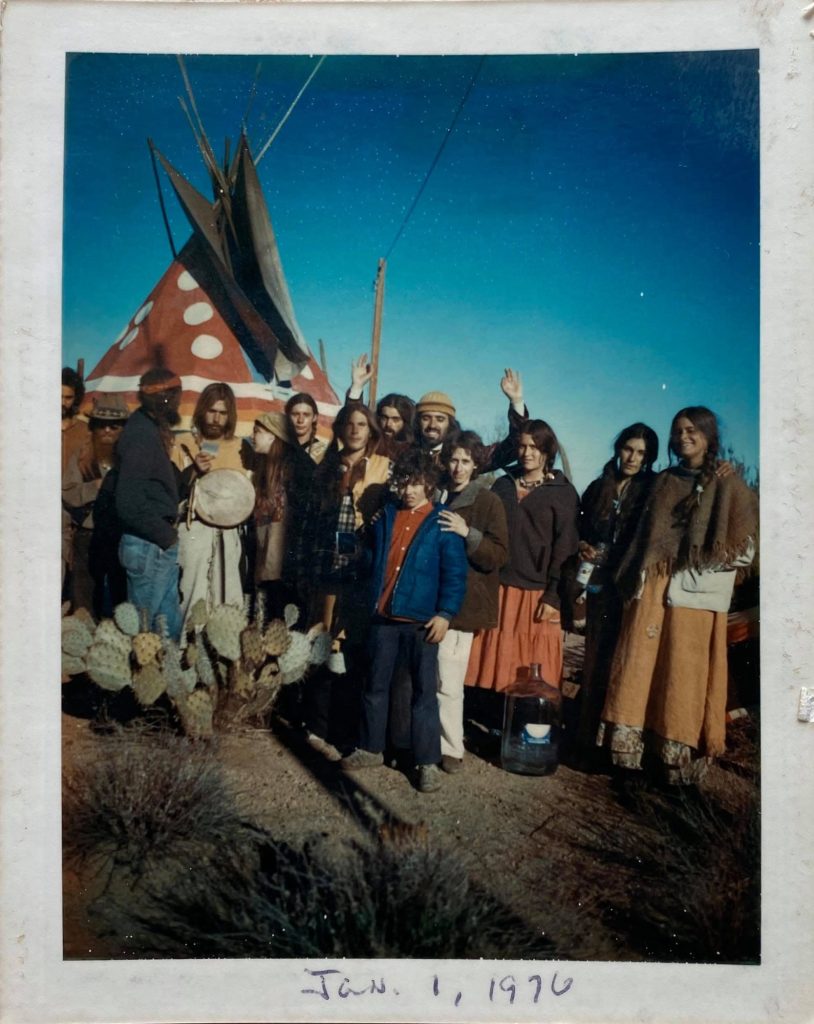
Dad’s girlfriend Linda ditched us back in March. She took off with my baby brother in the bread truck we’ve been living in since ’72. She beat me to the exit. I was ready to bolt in January, right after the cops raided our desert commune during a peyote ceremony. I had a plan and a partner in crime, but my partner’s little sister squealed, and we got nabbed.
Without Linda in the picture, I figure we’re headed for the streets. But Papa Casanova always lands on his feet. He shacks up with a woman named Jiliflower, who has a two-bedroom house she shares with her twin daughters. This means I get a pallet on the living room floor, because she’s already taken in another stray who’s claimed the couch. Dad shares Jiliflower’s bed. I share the living room with a guy who shares my name but looks nothing like me.
Richard is short, dark-skinned, with long hair, a Mexican mustache, big teeth, and an all-white wardrobe that smells like Nag Champa. He’s very spiritual.
Me? I’m shorter, skinny, but also muscular from a lifetime of climbing trees. I look like a light-skinned Mowgli or Tarzan’s bastard son, and plenty of people have seen me that way, since I went full native and ran around in a loincloth, with bow and arrows, shooting at saguaros and rabbits. That wasn’t a dream; it actually happened.
Nowadays I’m mostly in grubby thrift-store jeans, shirtless unless it’s cold or I’m trying to pass for civilized.
2.
One morning on Fourth Street, I see Heather and Michael panhandling in front of the Food Conspiracy.
Heather is a very pretty hippie chick, barely in her twenties, with a little boy named Michael who’s maybe five or six. She’s holding a hand-painted sign and her son is sitting cross-legged at her feet, poking at a crack in the sidewalk with a stick. She looks tired, dusty, and still beautiful in that earthy way—sun dress, bare feet, beads, beads, beads.
I met them at Eden Hot Springs near Globe after I rode out there with a bunch of Rainbow Family folks for a healing gathering. My dad was too sick to come along and stayed in Tucson. Funny that people always call them healing gatherings, or festivals, when there’s usually a bunch of people flipping out on psychedelics or puking from spoiled communal stew.
Heather is trying to scrape together money for food and gas because she has this plan to hitchhike up to some land outside of Ukiah in Northern California. Supposedly there are cabins and horses and a bunch of cool people living there. Sounds like a small commune, or at least a place where adults don’t yell at you for running wild while they’re letting it all hang out. Heather doesn’t know much more about the place, but she talks about it like it’s paradise.
It sounds like a dream to me. My earlier plan to run away didn’t have a specific destination in mind, maybe San Francisco or somewhere in Oregon, so this just feels like the sign I’ve been waiting for. I tell Heather I have fifteen bucks saved up from doing odd jobs and I’ll share it if she lets me tag along. I’m thinking I’ll take care of her and the kid, like I’m a grown-up sugar daddy or something. She looks at me like she’s trying to figure out if I’m serious, and I guess I am, because for the first time in years, I feel free.
3.
Most adults I meet are on power trips and treat children like second-class citizens and all my teachers think I’m clueless because I don’t always have the answers they want.
Sure, since third grade I’ve been out of school more often than I’ve been inside a classroom. But that doesn’t mean I’m not sharp, it just means I never bothered to learn that Grover Washington delivered the spaghetti bird a dress in 1492, or some such bullshit. They have no clue I’ve learned to question authority and been lectured by acid-tripping college dropouts from some of the finest universities in the country.
I also read a lot, even though it’s mostly science fiction and comic books.
Many adults in my tribe don’t have strict rules for children because they were raised by strict parents. They prefer to let the little people in their lives experiment, make their own mistakes, and find their own way. That’s what I’m counting on with Heather.
So I tell her I’m a year and a half older than I am because thirteen sounds way more capable than eleven. I figure she’s probably been on her own since she was a teenager, so she’ll get it. I point out the two slim throwing knives in my belt, half covered by my tee-shirt, and the bigger knife hidden under the right leg of my jeans, showing her I’m someone who can protect us if things get hairy. If she’s going to be sticking out her thumb and hitching a thousand miles of rides on Interstate 10, there’s safety in numbers, and I’m her backup.
But maybe I’m trying too hard, because Heather’s got that glazed-over, patchouli-and-weed vibe that says she’s too stoned to make responsible decisions. I crouch down and hand Michael some trail mix as a gesture of friendship. The wind kicks up, a little tumbleweed bumps into me, and I play it up with an exaggerated “ouch” to make Michael laugh.
If you can tell a story in a minute you can write it down on a single page. I know this from my auditioning stage actor days.
Learning monologues cut to a performance length of one minute I had to have a beginning, a middle, and an end—with stakes and beat shifts packed in, along with a full range of emotions.
Crafting a single paragraph of microfiction is like that: writing an unforgettable experience or a scene that stands on its own.
So if you think one page isn’t enough, I reckon you haven’t yet written a drabble.
A drabble is a work of microfiction with a strict length of exactly 100 words.
For me, it’s the challenge.
Why limit my word count to such an insignificant number?
Writing this type of microfiction trains me to tell a tale in a confined structure where every sentence carries weight.
In this tiny space I can sketch a character, hint at a plot twist, or evoke a vivid moment.
If you’ve ever doubted that one page can hold a full story, microfiction proves otherwise. It teaches you to make every word matter.
Sometimes the smallest stories leave the biggest impressions.
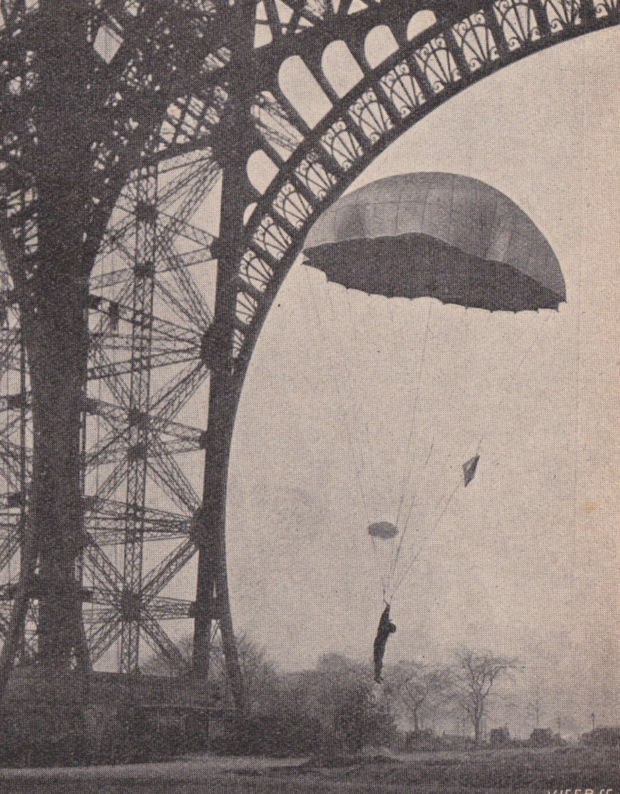
The first successful jump off the top of the Eiffel Tower (1911)
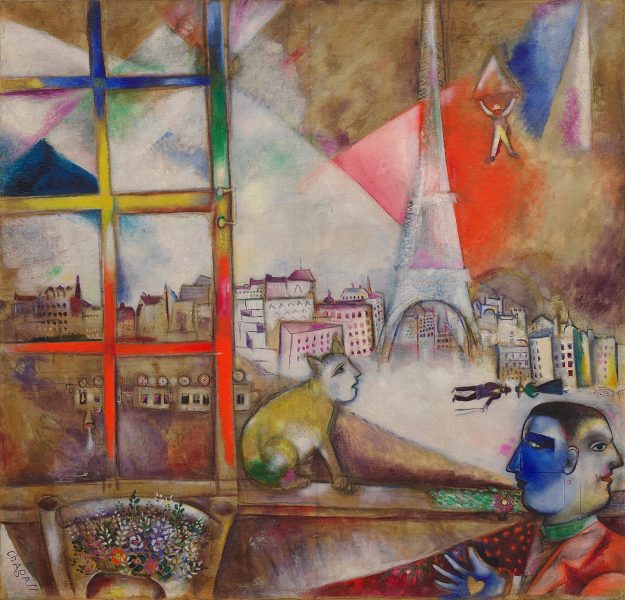
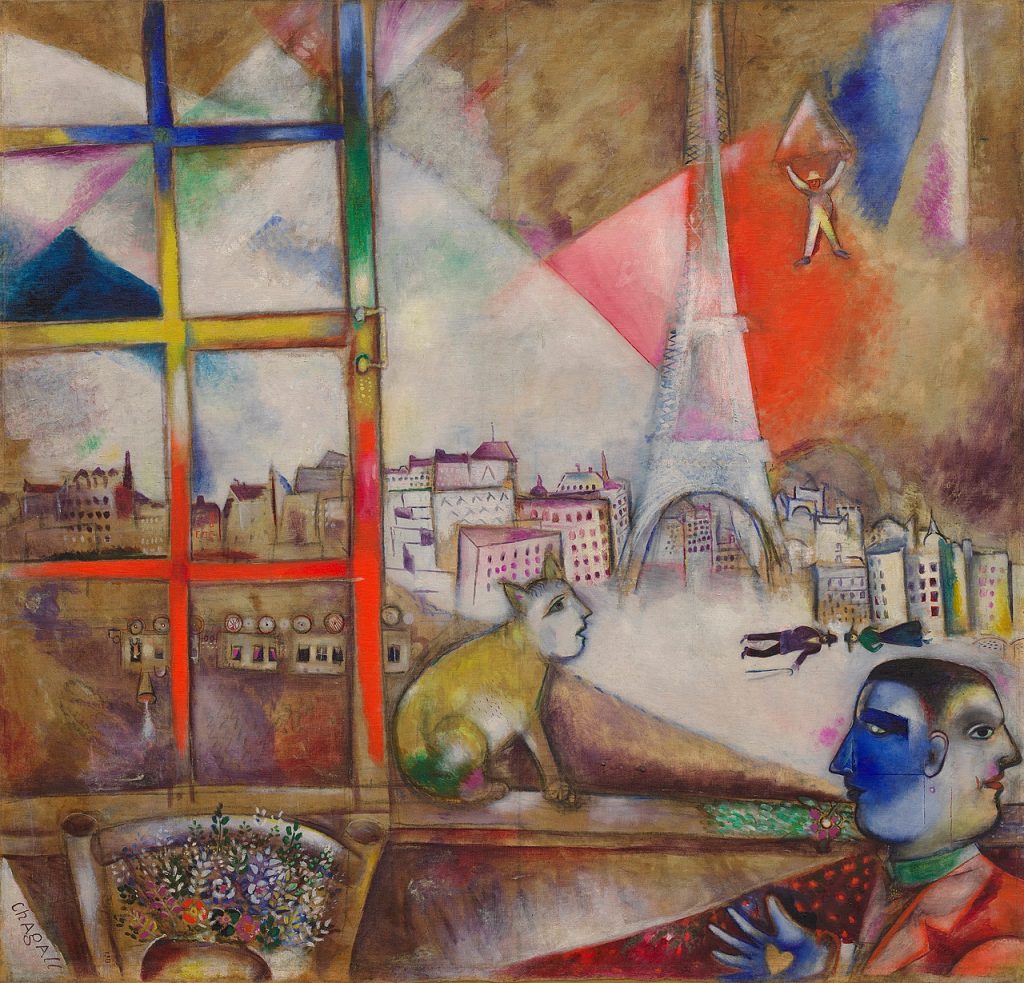
Below is a drabble I wrote, inspired by a poster on my wall — itself inspired by the plunge of a Parisian parachutist that the artist witnessed in real time.
Richard La Rosa — 12/6/2025
Marc Chagall, Paris through the Window (1913)
Escape Hatch by Richard La Rosa
The room is cluttered with hundreds of canvases but I head straight for a picture hanging over a bricked-up window.
It’s a portrait of Paris through the lens of Orphic cubism, painted with oils mixed for Monsieur Chagall by my Hungarian great-grandmother, a gypsy whose crushed pigments are infused with the means of traveling to imaginary realms.
I swapped it with a flawless forgery and it’s my escape from an early demise.
The slightest touch, paint dissolves…
And I step into the canvas through a window of imagery, entering an alternate reality a century past onto cobblestones slick with rain.
I landed in Eugene in the summer of 1972, when I was eight years old.
That year, I went to my first Renaissance Faire and saw the Grateful Dead perform on the same meadow that would eventually become the Oregon Country Fair grounds. I don’t remember much about the set list, but I recall the energy and running around shirtless, weaving my way through the crowd.
After that, I passed through town periodically with my dad and his girlfriend, staying in various communal houses and crash pads for days or weeks at a time before hitting the road again in our old bread truck. We were nomadic hippies. Eugene was just another stop.
It didn’t feel like home yet, but it reminded me of Berkeley, where I used to live.
Back then, Eggsnatchur Natural Foods was tucked inside the old Craftsman house at 675 E. 13th Avenue, next to Koobdooga Bookstore—“a good book” spelled backwards. The two buildings sat at either side of a funky little campus village: studio apartments, small businesses, and repurposed houses arranged around a central courtyard, like an accidental commune.
From 1972 to ’74, Greg Weed Comics ran out of the back of Koobdooga like a speakeasy for superhero nerds, until Darrell Grimes bought him out and added his own massive collection. I didn’t know Darrell yet, but when I returned two years later, his shop was the event horizon that pulled me back there.
When I finally settled in Eugene in the summer of ’76, the Eggsnatchur was gone, and Honey’s Café had taken its place. Just two weeks before I got back, Darrell had moved into one of the courtyard cottages and officially rebranded his shop as The Fantasy Shop. I spent countless hours there, cross-legged on the hardwood floor between the shelves, devouring issues of Spider-Man and The Fantastic Four. By 1977, I was living with my mom and sister. By ’78, Honey’s had closed, and Poppi’s Greek Taverna became the final restaurant to occupy the old house.
2.
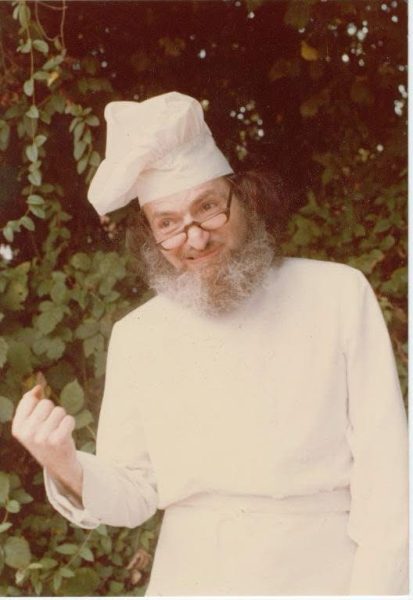
In the fall of 1979, Lenny Nathan opened the Nosh Bar in the cottage next to The Fantasy Shop. I recognized Lenny from the Saturday Market, where he sold cheesecake and coffee with his two daughters. He looked like a rabbi in a straw boater and he sounded just like Burgess Meredith as the Penguin on the Batman television series from the sixties.
Lenny was also quite the raconteur—which, honestly, made him my kind of guy.
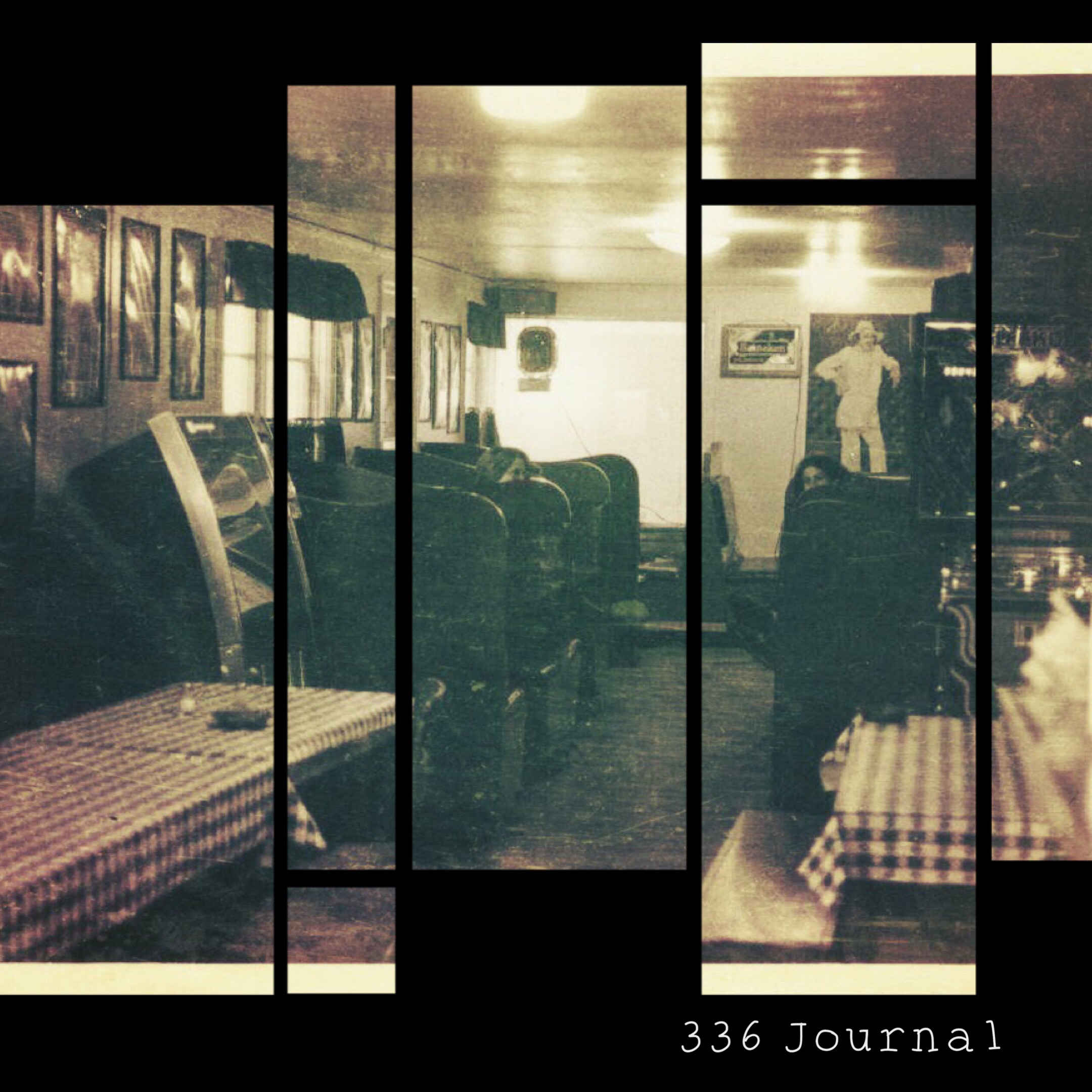
At the Nosh Bar, Len served matzoh ball soup, meatball sandwiches, and giant four-egg omelets well into the wee hours. There was a jukebox, a pinball machine, and some very interesting Eugene characters.
For me, it was a kind of bohemian Shangri-La.
Over the years, the courtyard became a favorite after-school hangout spot. I came to know some of the people who worked there—such as Madjym, Hershel, Jillian, Molly, Melody, and Lenny’s daughters, Katy and Annette. My friend Dawn, and a fellow thespian named Aaron, both from high school, worked there for a time. And of course, Uncle Ray drifted through with his shopping cart full of bottles and cans, often scoring chicken and hot chocolate from Poppi at the back door of the Taverna—as long as he wasn’t too drunk or ornery.
Even after Darrell moved The Fantasy Shop out of the courtyard and into the Smith Family Bookstore building I kept coming back.
By the early ’80s, I was living a few blocks away and working across the street at Prince Pückler’s, the best ice cream shop in town. Lenny’s had become my regular late night joint. It was where I lingered, heard all kinds of new music in the jukebox, and where I learned to be a better writer.
That whole 600 block of East 13th between Patterson and Hilyard wasn’t just two lifeless parking structures like it is today. It was a living, breathing ecosystem of oddballs and outcasts, artists and seekers; a village unto itself.
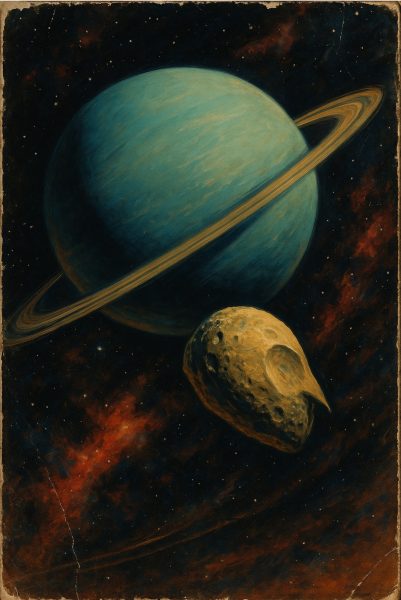
Moth—named for William Shakespeare’s mischievous dream-sprite—is the smallest moon ever caught lurking around Uranus. It circles the ice giant every 9.6 hours, moving so stealthily through the dark that only a telescope a million miles away, positioned by a stroke of astronomical good fortune, could spot it. A world this small shouldn’t exist anymore. By all rights, it should have been ground into glittering dust ages ago by the brutal tides and gravitational crosswinds of Uranus’s crowded inner realm.
But Moth remains.
It survives.
It slips through the rings like a rumor whispered between evanescent celestial beings.
And the discovery shakes more than poetic nerves. If Moth is out there, then so are others—micro-moons, shards and strays and half-formed worlds hiding in the Uranian gloom. Its orbit hints at a delicate gravitational choreography that defies the old models. Some astronomers say these tiny bodies corral ring material; others swear they’re the shattered bones of ancient collisions, ghost fragments still circling the ice giant in mute procession.
Whatever the truth, Moth reminds us that we’re still amateurs in our own cosmic neighborhood. Forty years after Voyager 2 breezed past Uranus, a moon only six miles wide sat in the dark, unseen and unbothered—waiting for a new century, sharper eyes, and a little bit of luck to finally bring it into the light.
Richard La Rosa ~ 12 / 3 / 2025
———
The moon described above is real. It was discovered on February 2, 2025, when the James Webb Space Telescope turned its Near-Infrared Camera (NIRCam) toward Uranus and its rings and caught a faint point of light hiding in the glare. The object—currently designated S/2025 U1—is only about 6 miles (10 km) across, making it the smallest Uranian moon detected to date. It moves in the planet’s equatorial plane, orbiting roughly 35,000 miles (56,330 km) from Uranus’s center, tucked neatly between the known moons Ophelia and Bianca.
Because S/2025 U1 lacks an official name, I’ve taken the liberty of calling it Moth, for a science fiction story I’m writing. The choice is not arbitrary.
Shakespeare’s Moth, pronounced “mote” in Elizabethan English, is one of Titania’s tiny fairy attendants in A Midsummer Night’s Dream: small enough to overlook and quick enough to dart between worlds. Given that Uranus’s moons have been named after Shakespearean characters for more than two centuries, choosing Moth feels less like invention and more like uncovering a name that was waiting patiently for someone to notice it.
And really—there is no better name for the faintest moon ever found in the Uranian system than one that, when pronounced, literally means “a speck.”
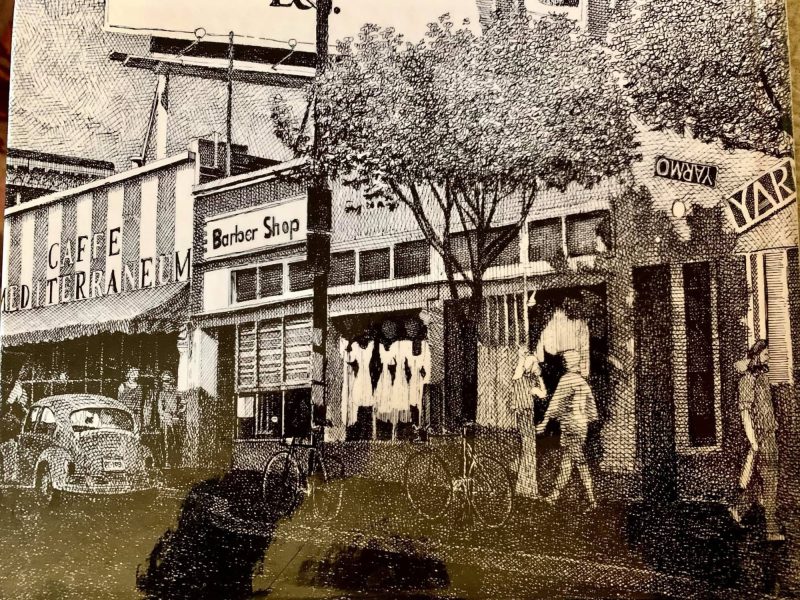
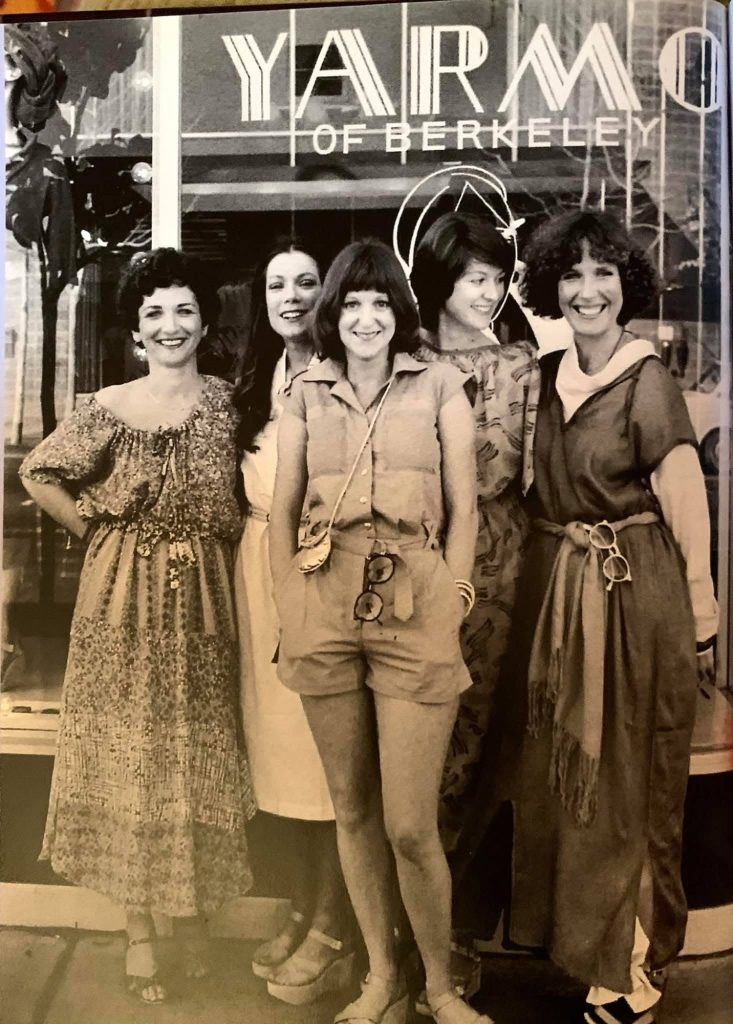
I’m in Eugene for a week after leaving my job at a Telegraph Avenue shop called the Yarmo Zone, wedged between Blondie’s Pizza and Sather Gate World Travel.
The Zone is a quirky Berkeley shop facing Caffé Mediterraneum that sells Betty Boop paraphernalia, pin-back buttons, silk skinny ties, and a medley of mod-to-punk ephemera.
It’s an offshoot of Eva Yarmo’s boho clothing boutique across the Avenue, the one she opened in the mid-sixties when Telegraph was still a runway for miniskirts and the first wave of countercultural fashion.
Eva Yarmo (left) with her crew at Yarmo.
Everyone has an opinion about my plan to join the Air Force. My friends and family are shocked and appalled that I would enlist, but the logic of my decision makes sense to me. Lenny bluntly tells me I’m “just not the type for wearing the uniform,” and I get the heart-to-heart from Joyce’s husband, Lee, a Vietnam vet. We meet at the nosh bar and he’s painfully earnest as he tries to convince me that the military isn’t the place for an idealistic kid raised in the counterculture.
I lay it all out for Lee and tell him I want to learn the Russian language. I’ve been following the cultural shift in the Soviet Union, and I believe that with the rise of computers and the impossibility of controlling the flow of information, Russia can’t stay sealed off forever.
I insist that attending the Defense Language Institute is my ticket to becoming a diplomat someday. I’m sure the United Nations would more readily accept someone with military experience over a college drop-out, so enlisting seems the most direct path.
It’s chapter two of the Reagan-Bush era, and Ronnie Raygun is still calling Russia the evil empire. This sort of bullshit propaganda has got to change. And I want to be an integral part of that shift—to be on the front lines of making things better between our countries.
What I’m not telling everyone is that I’ve already enlisted, and I’ll be at boot camp next week.
I’m at Lenny’s Nosh Bar on a late-summer afternoon and the University of Oregon campus hasn’t fully repopulated yet so the joint seems like a half-abandoned outpost.
I’m digging into a giant hot meatball sandwich with a Löwenbräu chaser and marinating in the same low-grade shame that’s been dogging me from San Antonio to San Francisco and all the way back to Eugene.
My triumphant return after being discharged from the Air Force did not come with the ticker-tape parade I was promised. Seems there’s no civic prize for an idealistic adult child of flower children who infiltrates a system in hopes of changing it.
Only an hour ago I was downtown, getting off a Greyhound and daydreaming of a hot shower to wash away the stench of cigarette smoke, cheap booze, and that undefinable aroma unique to cross-country buses.
Walking to the nosh bar, stripped down to my military issue pants and a tie-dyed tank top and a duffle bag on my shoulder, I probably looked like some weird hippie-Rambo-hybrid come home from the war.
I knock back the last swallow of beer, lean into the duffel bag wedged beside me, and close my eyes. A twelve-bar blues line spools from the jukebox. It’s Green Onions by Booker T. & the MGs, with its Hammond B3 organ pulsing in sync with my heartbeat.
A hometown welcome if there ever was one.
The bell over the door rings. I glance up. There’s Lenny Nathan, strolling into the Nosh Bar like he owns the place. He spots me, arches an eyebrow, and heads straight for the tap. A moment later he sets a fresh pint in front of me, unasked, which is quite unusual.
Then, with that magician-casual flair he perfected over decades, he pulls a joint from the pocket of his apron and drops it beside the glass.
I’ve been feeling a bit like Jake Barnes lately—but not exactly like the tragic, doomed version Hemingway gave us in The Sun Also Rises. More like a 21st century, late-stage Gen-X edition: a guy who survives the war, gets patched up, and then tries to live with a body that no longer behaves the way he remembers.
My equipment still works. I’m not impotent, not broken, not incapable. But I’m also not exactly the same.
The plumbing has gone dry, and the part of me that once thought I could have another kid someday has been forced into permanent retirement.
Truth is, it’s painful down there. Erections come with a wince, and the phantom orgasm comes with an ache that lingers for days. My body feels like a once-dependable race car that isn’t firing on all cylinders anymore and doesn’t handle the way it’s always handled. Suddenly I’m a high-performance driver stuck with a lemon.
So when someone makes a pass at me now—even if it’s just flirtatious banter—I freeze for a second. Not because I don’t feel attracted or flattered, but because there’s that flicker of insecurity: How do I explain all this? How do I even feel about all this?
I’m not Jake Barnes, permanently cut off from intimacy. But I’m also not my pre-surgery self, the one who took sex for granted—even though it’s been a few years since I’ve quoted Barry White in the bedroom.
What I’m learning is that manhood doesn’t have to be defined by fluids or biomechanics or even the familiar ease of pleasure.
Maybe I’ll find it somewhere in the honesty, the emotional vulnerability, and the willingness to be brave in ways Hemingway was too embarrassed to write about. Jake suffered in silence; I’d be a fool to do the same.
I’m still capable of desire. Still capable of wanting a romantic connection with a woman. The rest, I guess, is just part of the story of living long enough to keep becoming someone new.
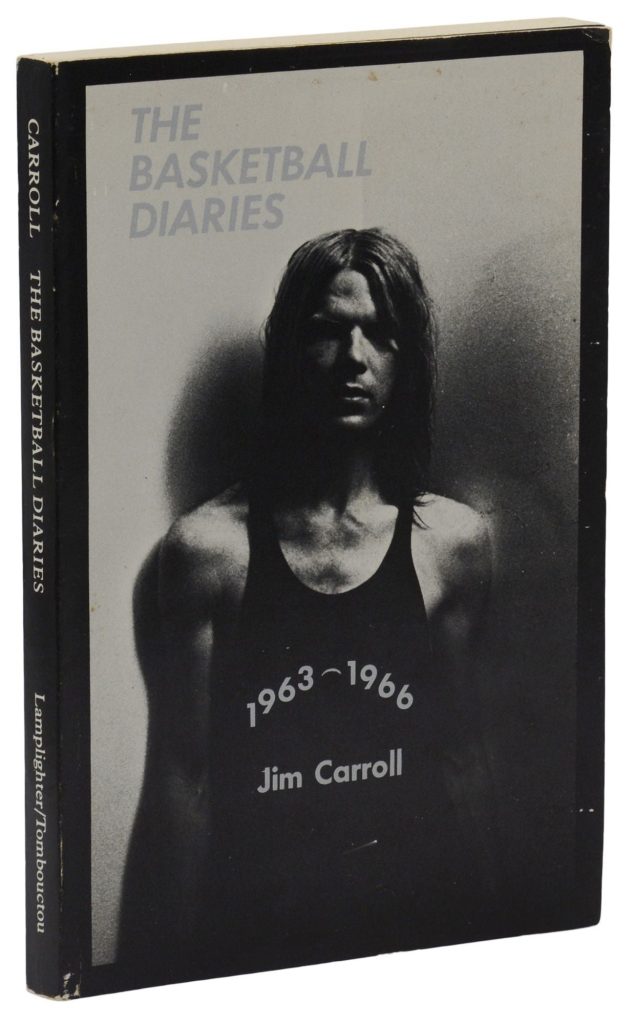
Lamont gives me a memoir called The Basketball Diaries, published only a year ago. It’s well-worn from being passed around many times and the back cover is filled with praise from impressive literary figures like William S. Burroughs, Jack Kerouac, Patti Smith, and Rolling Stone magazine.
Lamont points to Kerouac’s line: “At 13 years of age, Jim Carroll writes better prose than 89% of the novelists working today.”
He says the young novelist was a heroin addict, which turns me off right away.
Lita notices my expression.
She knows I’m not interested in the junkie-poet mystique, and assures me what matters isn’t the drugs but the clarity and detail of Carroll’s storytelling.
“Study the sentences,” she says. “Not the lifestyle.”
He and Lita are encouraging me to seek out new and more contemporary writers to inspire me, rather than reaching back to the past.
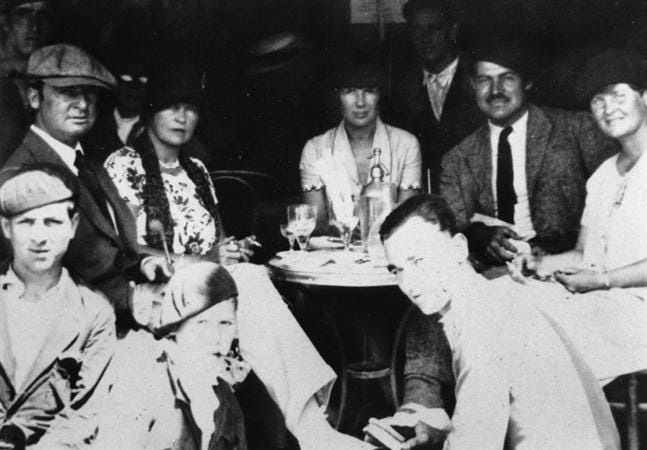
Then, Lamont says I should pick up a copy of A Moveable Feast, a sparse memoir written in 1964 which is set in the 1920s. He says that Hemingway’s memoir is a must-read, because it teaches a young writer what the practice is actually like: the discipline, and the stubborn belief that a sentence can always be made tighter.
“Hemingway wrote like a man trying to sand the world down to its cleanest lines,” Lamont says.
“Watching him hammer away at his craft in Paris cafés might push you to take your own writing seriously.”
It’s not the mythology that matters, it’s the grind. The way you keep showing up at the page.
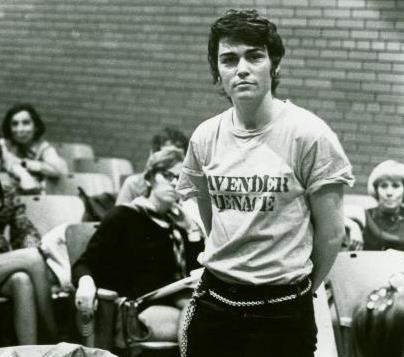
Then Lita pulls a book out of her bag called, Rubyfruit Jungle. “Forget about Tom Sawyer and Holden Caulfield,” she says. “Molly Bolt is the real rebel outlaw.”
Rita Mae Brown
I’m dubious I’ll be able to relate to a coming-of-age lesbian novel, but Lita says I need a woman writer’s perspective after reading so many male science-fiction authors.
I have to agree.
With the exception of John Varley, most of them write women as flat, one-dimensional figures instead of real people.