The 600 Block of East 13th Avenue

This is a story about a place that no longer exists.

Not a business, or a single building, but an entire block—houses, shops, restaurants, bookstores, paths people took without thinking, rooms where conversations happened because there was nowhere better to be. The 600 block of East 13th Avenue is gone. In its place is a parking structure: concrete, efficient, anonymous.

The reason given was necessity. The justification was growth. The beneficiary was a hospital that no longer sits in the neighborhood it helped erase.

What disappeared wasn’t just square footage. It was a way of living lightly inside a city—former houses adapted rather than replaced, small businesses that grew out of need rather than capital, places where you could linger without being expected to buy much, or anything at all. It was a block that worked at human scale.

This isn’t an argument against hospitals, or even against parking. It’s an accounting. A record of what was here before it wasn’t. Before the language of inevitability took over. Before a street with a life of its own was treated as blank space.

I walked these blocks when they were still intact. I ate in those rooms, browsed those shelves, learned which doors mattered and which ones were just scenery. I didn’t know at the time that the whole thing would vanish. Almost no one does while they’re standing inside a place that still works.

What follows is not nostalgia. It’s documentation. A way of saying: this existed, this mattered, and this is how it felt before it was paved over and politely forgotten.

Sacred Heart Hospital, a prominent institution in Eugene’s University District, had been a constant presence for decades before the small businesses and informal community that later defined the 600 block of East 13th Avenue emerged.

By the 1930s, Sacred Heart had firmly established itself near East 12th Avenue and Hilyard Street. As it expanded, it became one of the city’s largest employers and most influential institutions. Its proximity to the University of Oregon shaped the surrounding neighborhood, creating a diverse mix of students, renters, working families, and long-standing homeowners, all residing within the campus and hospital area.

Throughout the 1940s and 1950s, the streets surrounding the hospital—Hilyard, Alder, and East 13th—remained predominantly residential. Craftsman-style houses built in the early twentieth century lined these blocks. As university enrollment increased, many of these houses were converted into rentals, leading to a gradual shift from owner-occupied to increasingly transient housing.

By the 1960s, Sacred Heart’s physical footprint had expanded significantly, and its influence on nearby land use became more evident. Growth brought traffic congestion, parking pressure, and periodic construction projects. Streets were adjusted, and blocks closest to the hospital began to feel institutional. Despite these changes, the 600 block of East 13th—affectionately known as “the campus village” by locals—remained largely intact, separated from the hospital by a few blocks and marked by a noticeable shift in atmosphere. All the neighborhood needed now was a cool coffeehouse. Enter Vic Sabin. 

Vic’s idea for the New World Coffeehouse did not emerge in a vacuum. Before coming to Eugene, he had been stationed in San Francisco while serving in the Navy, where he became immersed in the Italian-American coffeehouse culture of North Beach—the same cafés that had once served as informal headquarters for Beat writers, poets, musicians, and political talkers. Those spaces left a lasting impression on him.

When Vic later arrived in Eugene to attend the University of Oregon, he quickly became involved in the campaign to save the old College Side Inn, a beloved student gathering place slated for demolition to make way for the U of O Bookstore. The effort failed, and the loss was keenly felt. Rather than letting that disappearance stand as the final word, Vic channeled it into action. The New World Coffeehouse was founded, in part, as a response—a deliberate attempt to recreate a space for conversation, culture, and community that Eugene had just lost.

In 1964, the New World Coffee House opened on Alder Street between 12th and 13th as something entirely new for Eugene—a bohemian café in the spirit of Berkeley and San Francisco, a gathering place where music, art, poetry, politics, and everyday talk circulated freely around coffee cups and communal tables.

Inside, salvaged doors, stained glass windows, and wooden spools repurposed as round tables gave it a distinctive, lived-in feel, like someone had dropped a piece of the Fillmore District into Eugene. A funky old piano sat in one corner, and a large wood stove kept the place warm on chilly days, with customers often rising to throw another log into the fire themselves.

Most significantly, New World was the first café in Eugene to serve espresso, at a time when most coffee in town came in the drip or percolated diner style. It introduced freshly pulled espresso shots, handblown Chemex carafes, Torani syrups for specialty drinks, and its own signature creation, the Cappuccino Borgia—espresso with chocolate powder and orange peel, topped with whipped cream—that lived on in a few local coffeehouse menus long after the café folded.

Over the years, the menu expanded to include Hilda’s soups and sandwiches, omelets, bagels, quiche, pastries, and a legendary San Marino Chocolate Cake baked by Stephanie Pearl, who would later open her own café. New World was not just about drinks; it was about food as part of conversation, culture, and community.

In 1968, New World’s owner Vic Sabin sold the café to a group of University of Oregon professors who attempted to run it as an employee cooperative. Idealistic as that was, financial struggles soon followed.

By the late 1960s and early 1970s, East 13th had developed a distinct identity. While still residential in nature, it increasingly supported small, informal businesses that emerged from former houses. These low-overhead ventures—ranging from food stalls and bookstores to craft shops and service providers—catered to both students and locals. The transformation was gradual and organic, occurring without a preconceived plan. Houses remained standing, and people adapted their interiors to suit new uses.

In 1971, Koobdooga Bookstore, owned by David Gwyther, was praised by the Oregon Daily Emerald as one of the best bookstores in town, not so much for its extensive stock, but for its meticulous selection. Located in a house at 651 East 13th Avenue, Koobdooga—a good book backwards—had an inventory that followed the interests of its patrons rather than sales trends. It featured philosophy, radical politics, Native American history, women’s studies, underground comics, and periodicals such as Zap, Bijou, Up From the Deep, Village Voice, Free Press, and Mother Earth News. Alongside these materials, it also carried items related to the Whole Earth Catalogue and works like Bob Dylan’s Tarantula.

The store’s narrow, vertical interior encouraged lingering. A magazine rack near the entrance led to shelves and, toward the back, crates of used records. The store bought, sold, and traded records, but books were its primary reason for existence.

By 1971, New World Coffee House placed a “Closed Forever” sign in the window, only to reopen months later under a leaner staff of friends led by manager Peter Winograd.

In the summer of ‘72, when I was a new kid in Eugene, I was exploring the streets, trying to figure out which doors mattered to an eight-year-old boy from Berkeley, California. The 600 block caught my eye, and Koobdooga pulled me in because a guy named Greg Weed was dealing comic books out of the back of the store. I was also drawn to New World because it reminded me of Caffe Mediterraneam on Telegraph Avenue in Berkeley, where I used to get Italian sodas when my mom was selling tie-dyed clothing on the sidewalk nearby. My dad and his girlfriend had recently decided to become vegetarians, and fortuitously that same year, Lee Boutell, a University of Oregon student from Kansas, turned the Craftsman house at 675 East 13th Avenue into a vegetarian restaurant called Eggsnatchur Natural Foods, usually shortened to Eggsnatchur or just the Snatch.

Eggsnatchur operated as a co-op, prioritizing affordable vegetarian food and long hours. Open seven days a week, it attracted students, locals, and people passing through town who quickly discovered its value for cheap, unpretentious meals. Its politics were subtly conveyed rather than explicitly stated. The food choices, pricing, and company of the patrons said enough.

By 1973, David Gwyther decided to step away from bookselling and sold the shop to Max Baker and Vic Sabin’s brother-in-law, Fred Austin, and they renamed it Son of Koobdooga.

By 1974, Greg Weed was burned out on selling comic books and sold his stock to Darrell Grimes, who added his own formidable collection and continued to operate out of the bookstore.

That second life of the New World Coffee House lasted a few more years, but by August of 1974 it finally closed its doors, marking the end of a chapter in Eugene’s coffee and conversation culture that had begun a decade earlier.

For a generation of students and locals, New World wasn’t just a place to get coffee. It was where you heard the latest political rumble, met someone who could sell you a zine or invite you to a reading, heard live music before a show, played chess on the courtyard tables, or simply found a quiet corner to think. It set a standard for what a coffeehouse could be in Eugene—more than a place for a cup, but a place for conversation.

When it closed, the vacuum it left helped create the conditions for what came next: smaller, more intimate spaces and the thriving, if improvised, café culture emerging off East 13th. New World’s legacy echoed in the espresso shots pulled elsewhere, in the handblown carafes and flavored syrups, and in the idea that coffeehouses could be forums for culture rather than just caffeine.

In 1976, Eggsnatchur transitioned out of the co-op model into single ownership under Lee and a partner, and was renamed Honey’s Café. The name changed, but the place remained essentially the same. It continued to operate as a house on 13th Avenue doing the work it had learned to do. That same year, in August, I moved permanently to Eugene, and Darrell moved his comic book collection into one of the small cottages behind Koobdooga at 667 East 13th Avenue and rebranded his business as The Fantasy Shop, a place I frequented after school for many years.

All these places formed a loose ecosystem along East 13th—businesses operating out of former houses, sharing the street with copy shops, cafés, and service-oriented storefronts that quietly supported a broader community. None of it felt provisional at the time, even though much of it was.

By 1978, Honey’s Café had closed, ending its six-year run as a vegetarian restaurant, and Poppi’s Greek Taverna opened in the same Craftsman house at 675 East 13th Avenue. Poppi Cottam, whose children—Daphne, Ellie, and Alexi—I had gone to junior high and high school with, brought a different cuisine to the space without changing its essential role. The neighborhood existed in a state of balance then, with Sacred Heart close enough to shape the area’s future, but distant enough, for the moment, to allow an alternative community to persist.

By late 1978, it wasn’t just East 13th that was refining itself. A short walk away, on High Street near the corner of East 12th Avenue, a new coffeehouse and gallery announced itself with a different set of ambitions. A zine article from that fall—“High Street, Now Serving Polite Society” by Lolita Fontaine—captured the moment with a mix of enthusiasm and side-eye that felt exactly right. The coffeehouse wasn’t trying to overthrow anything. It was, as the piece put it, “hoping to attract a more cerebral crowd of conversationalists instead of a mob of rabble-rousers itching to stick it to the man.”

High Street Coffee Gallery occupied “a cozy house built at the start of the Mexican Revolution,” a detail included not for historical precision so much as mood. The proprietors, Ann Blandin and Josephine Cole, were described as “striving to create a more European-style esthetic rather than a beat vibe.” Not that “radical beatniks in Eugene won’t dig it,” the article allowed, but the intent was clear: this was a place for hanging out, sipping coffee, and exchanging ideas, not for posturing.

The house did most of the convincing. It had a fireplace, high-ceiling rooms, large windows, and creaky floorboards. The sign out front set the tone: a painted gentleman in a top hat pouring coffee for a bonneted lady, signaling a space that valued manners, wit, and a certain performance of civility.

Culture extended to the plate. The article lingered over the pastries, singling out a “fancy French pastry called Paris-Brest,” described as “a delectable almond-encrusted bicycle-wheel-shaped pâte à choux filled with praline cream.” It was a declaration of seriousness, indulgence, and attention to detail.

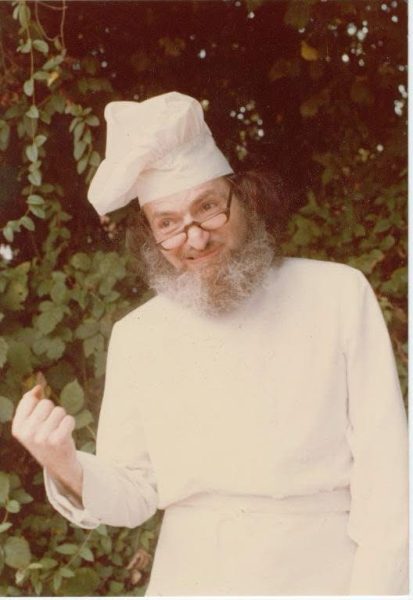
Best of all was the food coming out of the kitchen. Lenny Nathan was the in-house chef, already known around town for the cheesecakes he and his daughters made and sold at the Saturday Market—chocolate rum foremost, but also strawberry, eggnog, and plain. Lenny had moved to Eugene earlier that year to open a restaurant with his son, Nano. “That restaurant fell through,” the article noted, but the tone was forgiving. He treated it as a temporary setback, cooking instead for the coffeehouse: daily soups with locally made French bread, Saturday brunch omelettes, Sunday brunch crêpes.

The rest of the details completed the picture. Classical or jazz played in the background. The art on the walls was local. A brick patio offered outdoor seating. Chess players were welcome, and boards were provided. Smoking was prohibited. The hours ran long. The place was clearly designed to support conversation without rushing it along.

Seen in context, High Street Coffee Gallery wasn’t a rejection of what had been happening on East 13th so much as a refinement of it. Books, cafés, food, art, and talk were still the organizing principles. Where East 13th had grown organically out of former houses and shared necessity, High Street made its intentions explicit. It wanted thoughtfulness. It wanted civility. It wanted a place where ideas could be exchanged without anyone feeling the need to stick it to the man first.

Long Live Lenny’s Nosh Bar

I landed in Eugene in the summer of 1972, when I was eight years old.

That year, I went to my first Renaissance Faire and saw the Grateful Dead perform on the same meadow that would eventually become the Oregon Country Fair grounds. I don’t remember much about the set list, but I recall the energy and running around shirtless, weaving my way through the crowd.

After that, I passed through town periodically with my dad and his girlfriend, staying in various communal houses and crash pads for days or weeks at a time before hitting the road again in our old bread truck. We were nomadic hippies. Eugene was just another stop.

It didn’t feel like home yet, but it reminded me of Berkeley, where I used to live.

Back then, Eggsnatchur Natural Foods was tucked inside the old Craftsman house at 675 E. 13th Avenue, next to Koobdooga Bookstore—“a good book” spelled backwards. The two buildings sat at either side of a funky little campus village: studio apartments, small businesses, and repurposed houses arranged around a central courtyard, like an accidental commune.

From 1972 to ’74, Greg Weed Comics ran out of the back of Koobdooga like a speakeasy for superhero nerds, until Darrell Grimes bought him out and added his own massive collection. I didn’t know Darrell yet, but when I returned two years later, his shop was the event horizon that pulled me back there.

When I finally settled in Eugene in the summer of ’76, the Eggsnatchur was gone, and Honey’s Café had taken its place. Just two weeks before I got back, Darrell had moved into one of the courtyard cottages and officially rebranded his shop as The Fantasy Shop. I spent countless hours there, cross-legged on the hardwood floor between the shelves, devouring issues of Spider-Man and The Fantastic Four. By 1977, I was living with my mom and sister. By ’78, Honey’s had closed, and Poppi’s Greek Taverna became the final restaurant to occupy the old house.

2.

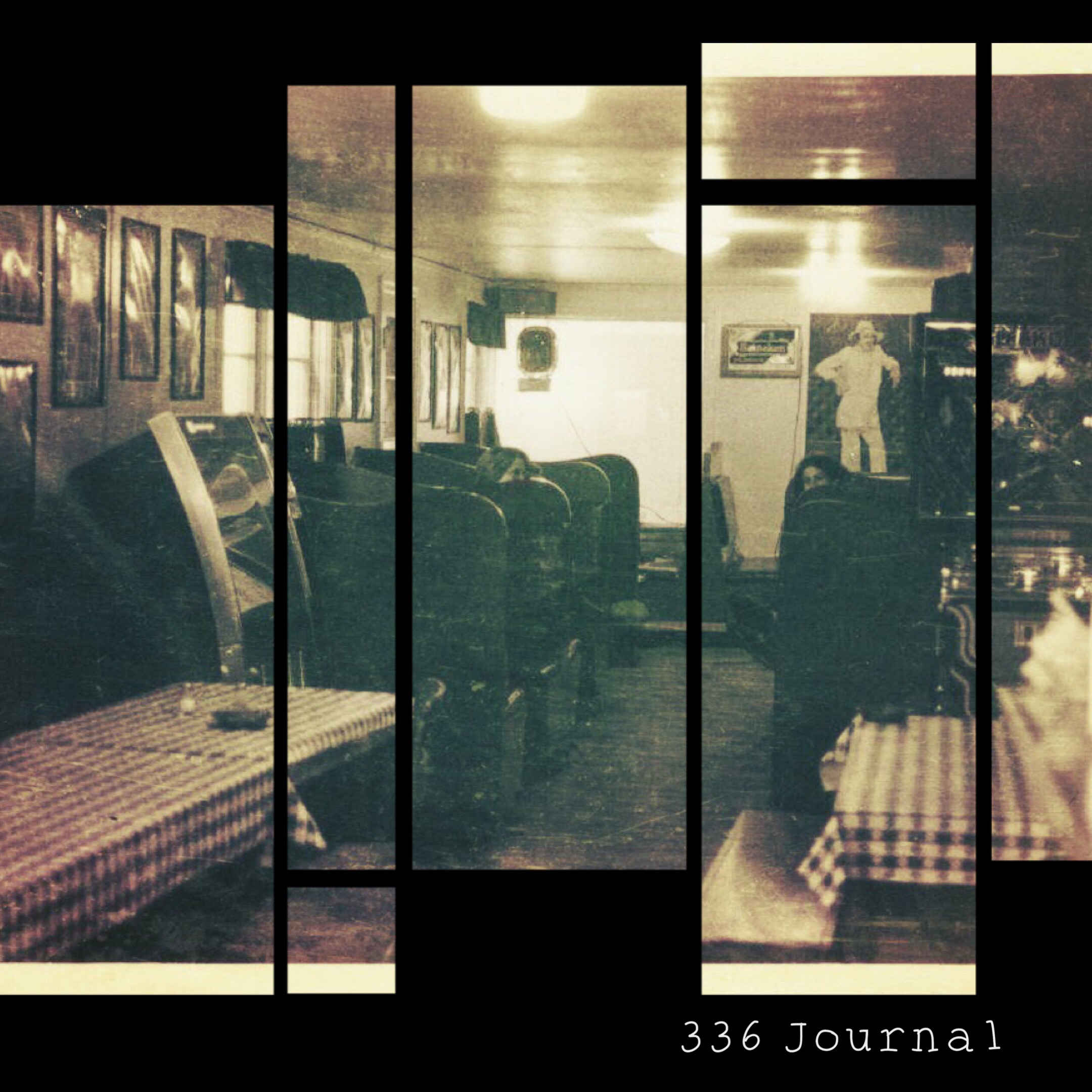
In the fall of 1979, Lenny Nathan opened the Nosh Bar in the cottage next to The Fantasy Shop. I recognized Lenny from the Saturday Market, where he sold cheesecake and coffee with his two daughters. He looked like a rabbi in a straw boater and he sounded just like Burgess Meredith as the Penguin on the Batman television series from the sixties.

Lenny was also quite the raconteur—which, honestly, made him my kind of guy.

At the Nosh Bar, Len served matzoh ball soup, meatball sandwiches, and giant four-egg omelets well into the wee hours. There was a jukebox, a pinball machine, and some very interesting Eugene characters.

For me, it was a kind of bohemian Shangri-La.

Over the years, the courtyard became a favorite after-school hangout spot. I came to know some of the people who worked there—such as Madjym, Hershel, Jillian, Molly, Melody, and Lenny’s daughters, Katy and Annette. My friend Dawn, and a fellow thespian named Aaron, both from high school, worked there for a time. And of course, Uncle Ray drifted through with his shopping cart full of bottles and cans, often scoring chicken and hot chocolate from Poppi at the back door of the Taverna—as long as he wasn’t too drunk or ornery.

Even after Darrell moved The Fantasy Shop out of the courtyard and into the Smith Family Bookstore building I kept coming back.

By the early ’80s, I was living a few blocks away and working across the street at Prince Pückler’s, the best ice cream shop in town. Lenny’s had become my regular late night joint. It was where I lingered, heard all kinds of new music in the jukebox, and where I learned to be a better writer.

That whole 600 block of East 13th between Patterson and Hilyard wasn’t just two lifeless parking structures like it is today. It was a living, breathing ecosystem of oddballs and outcasts, artists and seekers; a village unto itself.

And that’s where I found my tribe.

Richard La Rosa (12-5-2025)
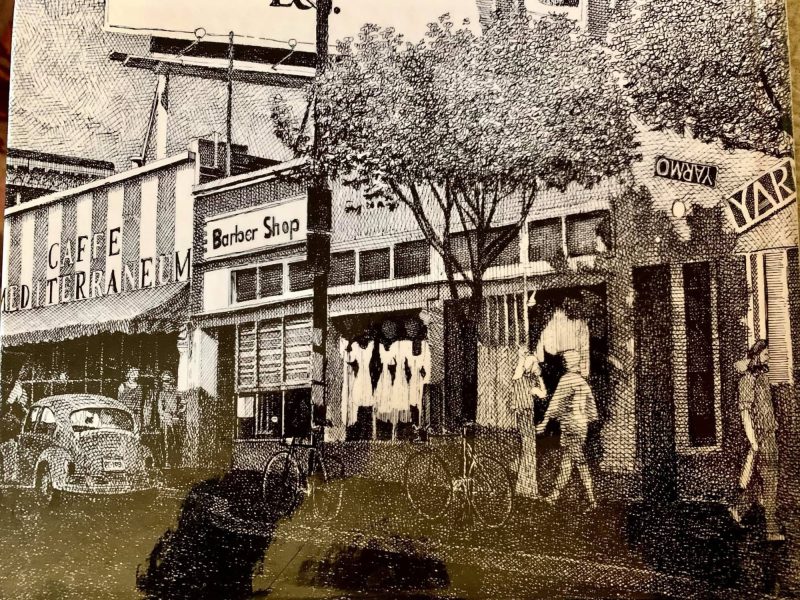
From Berkeley to Boot Camp

I’m in Eugene for a week after leaving my job at a Telegraph Avenue shop called the Yarmo Zone, wedged between Blondie’s Pizza and Sather Gate World Travel.

The Zone is a quirky Berkeley shop facing Caffé Mediterraneum that sells Betty Boop paraphernalia, pin-back buttons, silk skinny ties, and a medley of mod-to-punk ephemera.

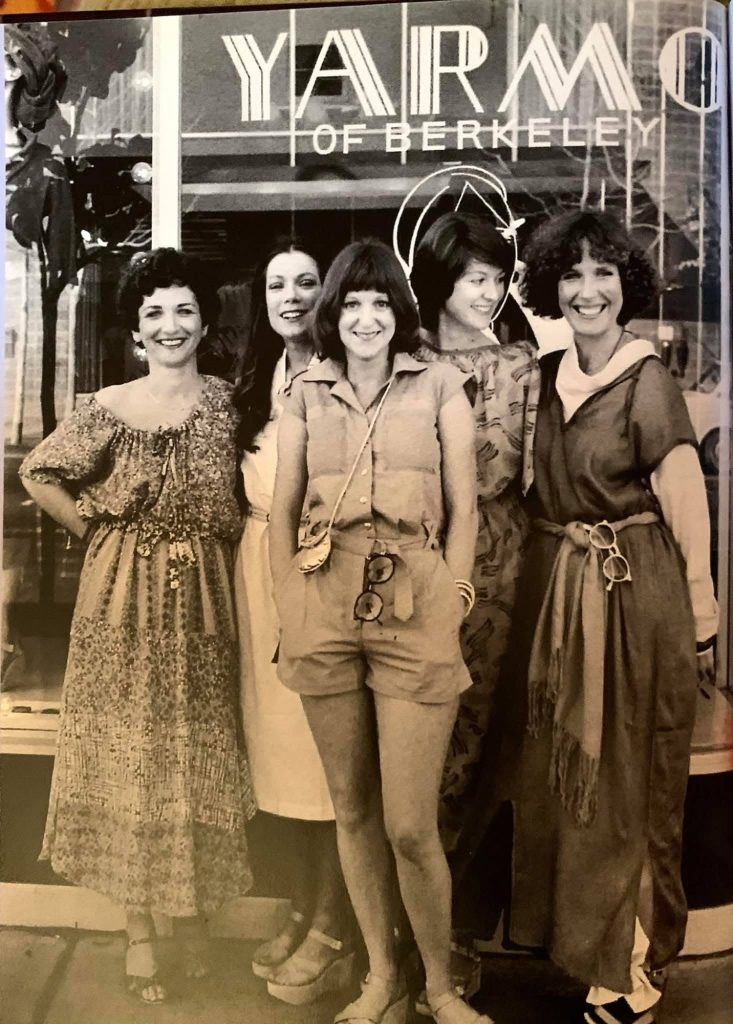
It’s an offshoot of Eva Yarmo’s boho clothing boutique across the Avenue, the one she opened in the mid-sixties when Telegraph was still a runway for miniskirts and the first wave of countercultural fashion.

Eva Yarmo (left) with her crew at Yarmo.

Everyone has an opinion about my plan to join the Air Force. My friends and family are shocked and appalled that I would enlist, but the logic of my decision makes sense to me. Lenny bluntly tells me I’m “just not the type for wearing the uniform,” and I get the heart-to-heart from Joyce’s husband, Lee, a Vietnam vet. We meet at the nosh bar and he’s painfully earnest as he tries to convince me that the military isn’t the place for an idealistic kid raised in the counterculture.

I lay it all out for Lee and tell him I want to learn the Russian language. I’ve been following the cultural shift in the Soviet Union, and I believe that with the rise of computers and the impossibility of controlling the flow of information, Russia can’t stay sealed off forever.

I insist that attending the Defense Language Institute is my ticket to becoming a diplomat someday. I’m sure the United Nations would more readily accept someone with military experience over a college drop-out, so enlisting seems the most direct path.

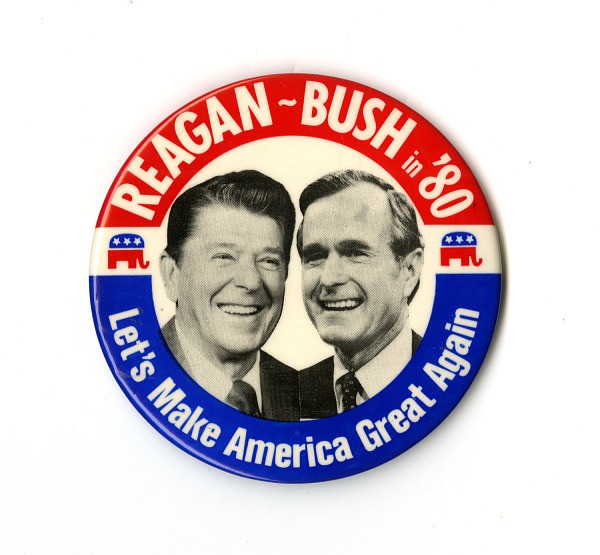
It’s chapter two of the Reagan-Bush era, and Ronnie Raygun is still calling Russia the evil empire. This sort of bullshit propaganda has got to change. And I want to be an integral part of that shift—to be on the front lines of making things better between our countries.

What I’m not telling everyone is that I’ve already enlisted, and I’ll be at boot camp next week.

Discharged

I’m at Lenny’s Nosh Bar on a late-summer afternoon and the University of Oregon campus hasn’t fully repopulated yet so the joint seems like a half-abandoned outpost.

I’m digging into a giant hot meatball sandwich with a Löwenbräu chaser and marinating in the same low-grade shame that’s been dogging me from San Antonio to San Francisco and all the way back to Eugene.

My triumphant return after being discharged from the Air Force did not come with the ticker-tape parade I was promised. Seems there’s no civic prize for an idealistic adult child of flower children who infiltrates a system in hopes of changing it.

Only an hour ago I was downtown, getting off a Greyhound and daydreaming of a hot shower to wash away the stench of cigarette smoke, cheap booze, and that undefinable aroma unique to cross-country buses.

Walking to the nosh bar, stripped down to my military issue pants and a tie-dyed tank top and a duffle bag on my shoulder, I probably looked like some weird hippie-Rambo-hybrid come home from the war.

I knock back the last swallow of beer, lean into the duffel bag wedged beside me, and close my eyes. A twelve-bar blues line spools from the jukebox. It’s Green Onions by Booker T. & the MGs, with its Hammond B3 organ pulsing in sync with my heartbeat.

A hometown welcome if there ever was one.

The bell over the door rings. I glance up. There’s Lenny Nathan, strolling into the Nosh Bar like he owns the place. He spots me, arches an eyebrow, and heads straight for the tap. A moment later he sets a fresh pint in front of me, unasked, which is quite unusual.

Then, with that magician-casual flair he perfected over decades, he pulls a joint from the pocket of his apron and drops it beside the glass.

“I told ya so,” Lenny says.

But there’s humor and understanding in his eyes.

I grin back just as Ella Fitzgerald starts singing Too Young for the Blues.

Richard La Rosa ~ 8/24/1985

Study the sentences, not the lifestyle.

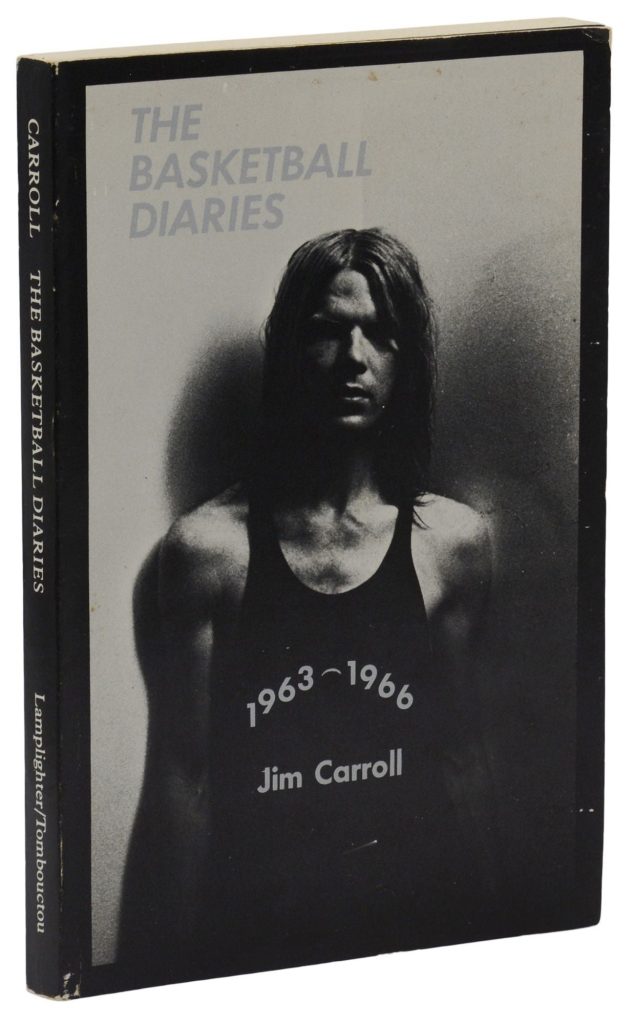
Lamont gives me a memoir called The Basketball Diaries, published only a year ago. It’s well-worn from being passed around many times and the back cover is filled with praise from impressive literary figures like William S. Burroughs, Jack Kerouac, Patti Smith, and Rolling Stone magazine.

Lamont points to Kerouac’s line: “At 13 years of age, Jim Carroll writes better prose than 89% of the novelists working today.”

He says the young novelist was a heroin addict, which turns me off right away.

Lita notices my expression.

She knows I’m not interested in the junkie-poet mystique, and assures me what matters isn’t the drugs but the clarity and detail of Carroll’s storytelling.

Study the sentences,” she says. “Not the lifestyle.”

He and Lita are encouraging me to seek out new and more contemporary writers to inspire me, rather than reaching back to the past.

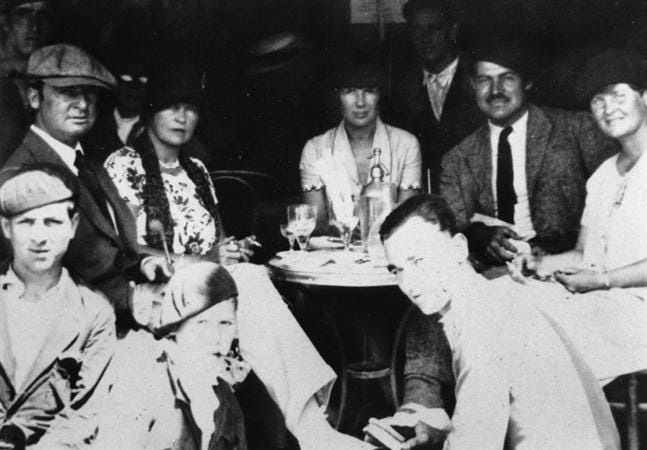
Then, Lamont says I should pick up a copy of A Moveable Feast, a sparse memoir written in 1964 which is set in the 1920s. He says that Hemingway’s memoir is a must-read, because it teaches a young writer what the practice is actually like: the discipline, and the stubborn belief that a sentence can always be made tighter.

Hemingway wrote like a man trying to sand the world down to its cleanest lines,” Lamont says.

Watching him hammer away at his craft in Paris cafés might push you to take your own writing seriously.”

It’s not the mythology that matters, it’s the grind. The way you keep showing up at the page.

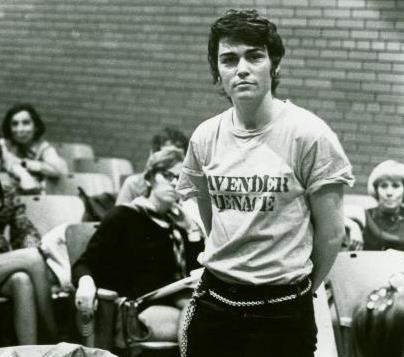
Then Lita pulls a book out of her bag called, Rubyfruit Jungle. “Forget about Tom Sawyer and Holden Caulfield,” she says. “Molly Bolt is the real rebel outlaw.”

Rita Mae Brown

I’m dubious I’ll be able to relate to a coming-of-age lesbian novel, but Lita says I need a woman writer’s perspective after reading so many male science-fiction authors.

I have to agree.

With the exception of John Varley, most of them write women as flat, one-dimensional figures instead of real people.

Richard La Rosa ~ (8/14/1979)

Eugene, Oregon (1984)

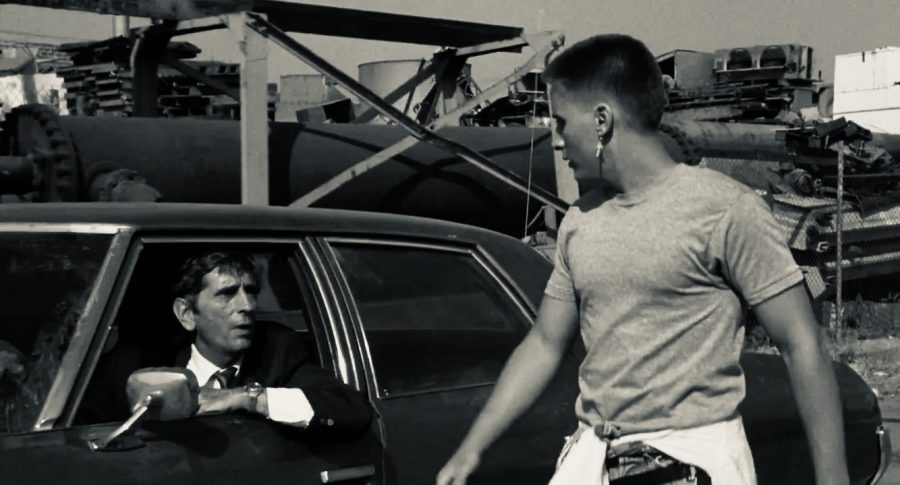
Caught the 7:15 showing of Repo Man at the Bijou tonight. Maybe a dozen people in the audience. Just enough trench coats and flannel to remind me I’m in Eugene, not some back-alley theater in Los Angeles where Otto and Bud would feel at home.

Before the movie, I swung by Earth River Records. Picked up a ticket for the Ramones show at the EMU on the 1st of December. The Rats from Portland are opening, along with a San Francisco band called Junk 57.

Diva is back at Cinema 7 this weekend. I want to see it again. Not purely for cinematic enrichment but to test whether my French has improved at all. Still dreaming of Paris almost daily. Someday I’ll get there, maybe wander the Left Bank in my German peacoat and pretend I’m a writer already.

Single Mary is playing at 8th and Oak on Friday night. I’m going to try to go, if I can switch shifts at work. Nosh bar regular, Laura Rathbun, is the lead singer. She and Todd Bryerton are the only members of the band I know.

Decent crowd at Lenny’s for a Wednesday night. I’m just here for some coffee and scribbling in my journal. After leaving the Bijou I hung out in front of Taylor’s to listen to the Chris Coltrane Blues Band for a bit. Went to Sy’s after for a slice and ate it while walking to the Courtyard.

Lamont is in the next booth, talking about a ’78 Alfa Romeo Spider Veloce he’s going to buy if he can scrape up the cash. Says it’s got 33,000 miles on the odometer and a Blaupunkt AM/FM cassette deck. He’s wearing a black-and-gray wool herringbone sportcoat he picked up earlier today at Rags to Riches. I think it’s the same coat that was left here a few days ago and went missing.

If he knows he’s wearing stolen clothing he’s got balls showing up at the scene of the crime.

~ Richard La Rosa

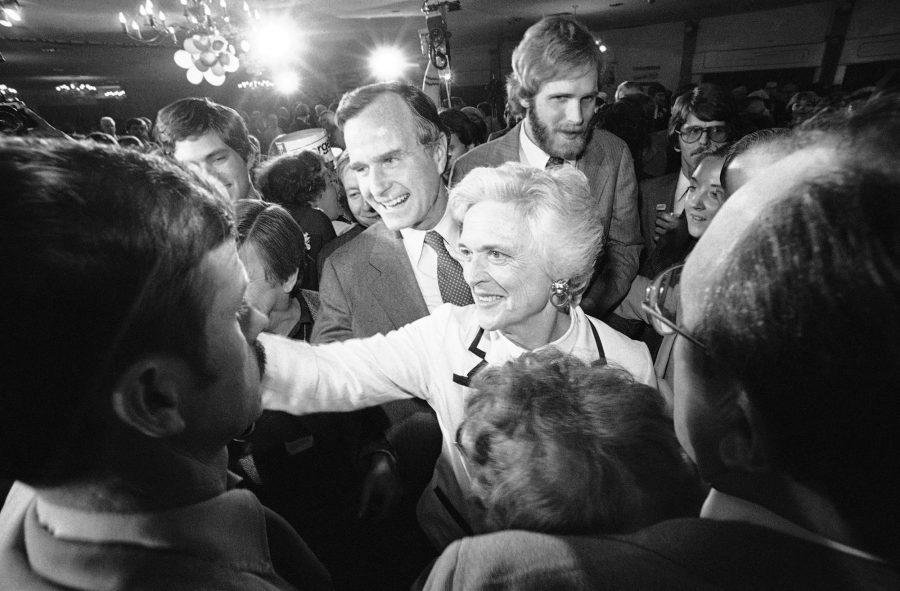
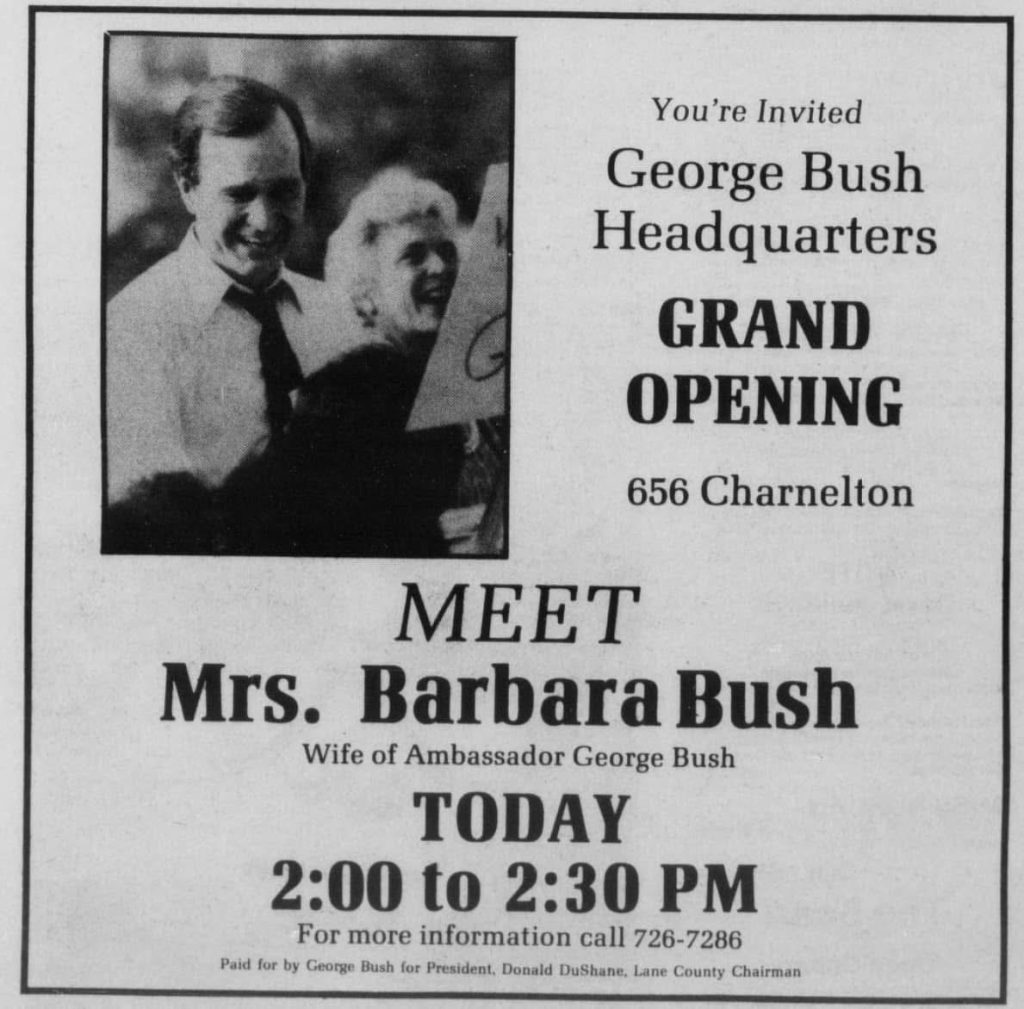
May 6, 1980 — George Bush’s wife, Barbara, is in Eugene today shilling for her husband during the Republican Party presidential primaries.

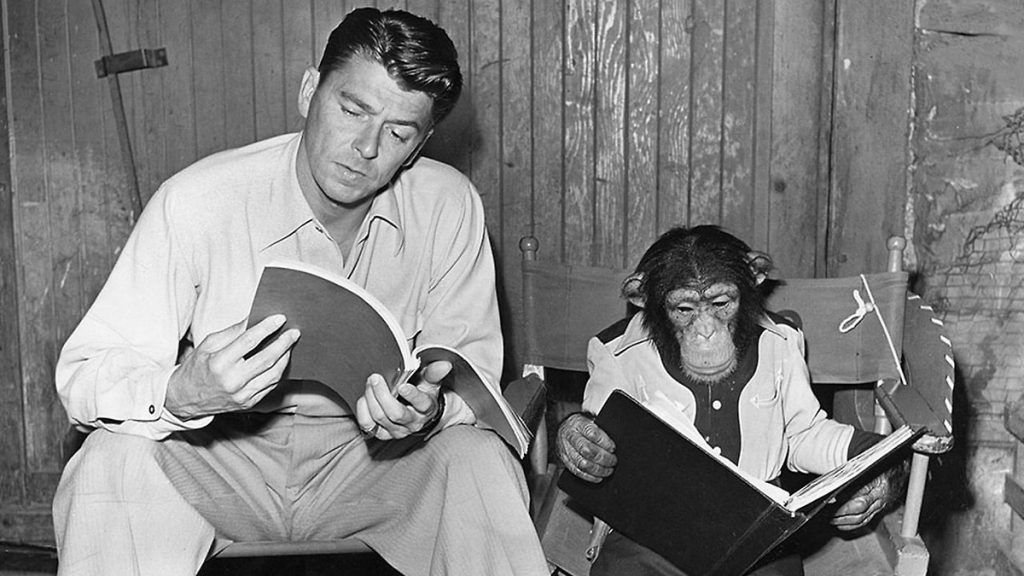
Lolita tells me she met the missus earlier in the day and sold her a bag of weed at the Springfield Rodeway Inn after the opening of the Eugene chapter of Bush for President Headquarters. She says they got high together, and Lita told Barbara that most Oregon Republicans were rooting for Reagan, not her husband, “the thinking man’s candidate.” His campaign was dead on arrival. Barb said no way her man would accept the vice-presidential nomination and be the chump playing the chimp. Then Lita brought up George’s CIA past, just as the Afghani kush kicked in, and both girls started giggling and quoting lines from Bedtime for Bonzo, and the rest of the conversation is classified.

Later, Barb tells the afternoon crowd that George Bush will emulate the pragmatic conservatism of President Eisenhower, and they all get misty-eyed about the good old days before civil rights and hippies ruined everything. Lamont is there with Lita, leaning against a lamppost and quietly heckling them between drags of a shared clove cigarette. They say the crowd seems more afraid of inflation than they are of the Soviets.

At the end of the day, Barbara Bush ditches her security detail to meet with Lita and Lamont at Lenny’s Nosh Bar for a pastrami on rye and a slice of cherry cheesecake. Lenny gives her a red quarter to slip into the jukebox and she selects two songs: Bei Mir Bist Du Schön by The Andrews Sisters and Creedence Clearwater Revival’s Fortunate Son. A perfect bipartisan choice.

May 7 — Poor Chip Carter is spotted stumping for Jimmy Carter outside the Lane County Democratic Headquarters. He seems confident his dad will be re-elected in November, but he knows Oregon liberals and moderates are drifting toward quirky third-party candidate John Anderson.

May 26 — George Bush drops out of the race and endorses Ronald Reagan, pragmatically accepting the Bonzo role.

~ Richard La Rosa

Post updated March 26, 1980