On Overcoming Obstacles And Simply Writing

Discipline, not excuses, makes a writer.

If you think writing is too difficult—that you don’t have time or aren’t in the mood—consider this incredible story of a Parisian journalist who wrote under inconceivable circumstances.

“In the imagination and dreams of people who are cut off from the world, words are ballet dancers.” —Jean-Dominique Bauby

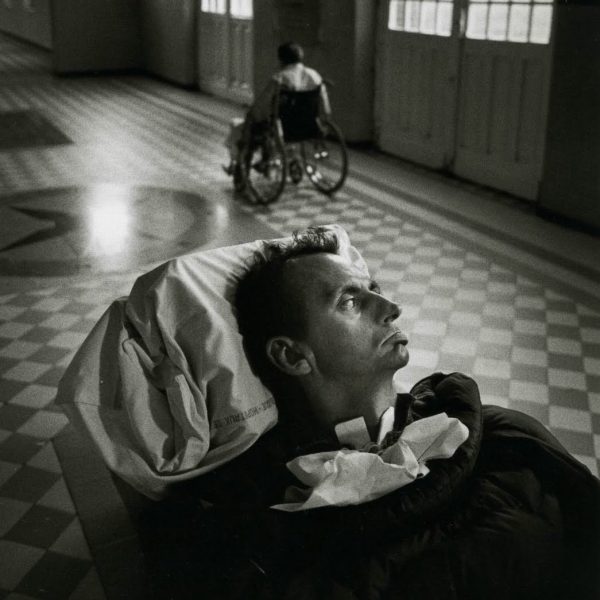
Jean-Dominique Bauby, an editor at Elle magazine, thrived in the fast-paced, glam world of fashion and media. Then, at 43, the lifestyle he cherished vanished in an instant. A massive stroke left him with locked-in syndrome—fully conscious but completely paralyzed, unable to speak or even breathe without assistance. The only part of his body he could control was his left eyelid.

That single functioning eyelid became his writing tool. A transcriber named Claude Mendibil would hold up a card with the alphabet, pointing at the letters in order of frequency in the French language. When she reached the letter he wanted, he blinked. Letter by letter, over two months, blinking three hours a day, he composed The Diving Bell and the Butterfly—an extraordinary memoir of imagination and memory. Some 200,000 blinks in total.

“In my head I churn over every sentence ten times, delete a word, add an adjective, and learn my text by heart, paragraph by paragraph.” (JDB)

Most writers’ obstacles pale in comparison. Yet, self-doubt, procrastination, and perfectionism paralyze us just as effectively. But writing doesn’t wait for perfection. Writing happens in imperfect conditions.

Whenever I feel like writing is too much of a chore or when I don’t have the “right mindset,” I think about this remarkable writer. Bauby had every reason not to write. He could have surrendered to despair, to the impossibility of his condition, but he refused to pity himself.

If you’re tired, write badly. If you’re uninspired, write something meaningless. If you’re busy, steal five minutes. The writer who writes imperfectly still moves forward; the one who doesn’t write at all stays stuck.

Jean-Dominique Bauby wrote under unimaginable circumstances. What’s stopping you?

On Being A Writer By Writing

“A writer is someone for whom writing is more difficult than it is for other people.” –Thomas Mann

Every writer, at some point, faces the question: Am I really a writer? The answer lies in action, not contemplation: Writers write. Not when inspiration strikes, not when they feel like it, but as a daily discipline. Writing isn’t an occasional burst of creativity—it’s a practice.

Gail Sher’s first noble truth for writers is simple: Writers write. If you write, you’re a writer. If you don’t, you’re not. Professional writers don’t wait for perfect moments; they know waiting is futile. The real work happens in the act of putting words on the page—whether brilliant, mediocre, or terrible.

Great writers understand this discipline. Ernest Hemingway wrote every morning until midday, advising to “work every day” regardless of circumstance. Stephen King produces 2,000 words daily, seven days a week. Haruki Murakami rises at 4 a.m. and works for five to six hours straight, maintaining this schedule for months during a project. “The repetition itself becomes the important thing,” he explained. Joan Didion begins her day by reviewing the previous day’s work, creating continuity and momentum. Toni Morrison wrote in the predawn hours while raising children alone and working full-time, proving that constraints often foster creativity rather than hinder it. Octavia Butler pinned a note above her desk reading:

Tell stories you want to read. Keep writing. Keep writing. Keep writing.

The secret is treating writing as a non-negotiable commitment. Marathon writing sessions aren’t necessary—just consistent time. Thirty minutes, an hour, whatever you can dedicate to your craft each day builds your writing foundation. Show up and write, even when every word feels like extraction. This habit distinguishes working writers from dreamers.

And here’s the reward: Writing generates more writing. The more you do it, the easier it becomes. Some days, words flow effortlessly; other days, they emerge reluctantly. But what matters isn’t quality—it’s presence. If you write, you’re a writer. It truly is that simple.

Flowers for Jean-Dominique.

I want to write. But . . .

Suddenly, I’m transported to the Père-Lachaise cemetery in Paris, twenty-five years in the past, and I’m standing by the grave of Jean-Dominique Bauby—paying my respects with a pot of chrysanthemums.
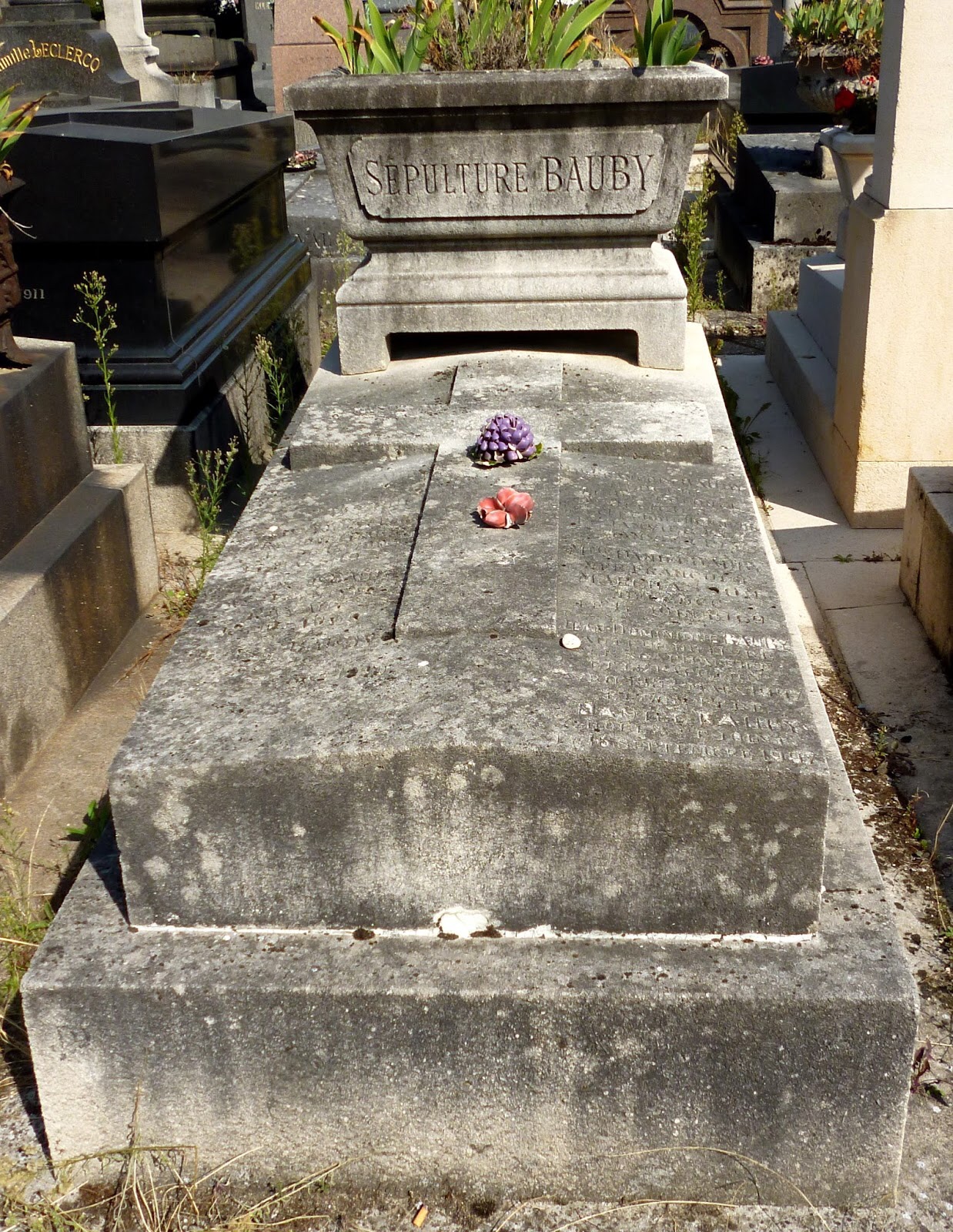
I open my journal and read some French words I’ve transcribed and translated into English, sourced from a book called Le Scaphandre et le Papillon. The English version is called The Diving Bell and the Butterfly.

Derrière le rideau de toile mitée une clarté laiteuse annonce l’approche du petit matin.

Behind the linen curtain a milky clarity announces the approach of dawn.

J’ai mal aux talons, la tête comme une enclume, et une sorte de scaphandre qui m’enserre tout le corps.

My heels hurt, my head is like an anvil, and a sort of spacesuit seems to surround my whole body.

Ma chambre sort doucement de la pénombre. 

My room slowly emerges from the shadows of twilight. 

These sentences were “written” by a writer unable to use his hands to type words, communicate through gestures, or to speak words to be transcribed by another writer. The following italicized words are from the English version of the book:

No need to wonder very long where I am, or to recall that the life I once knew was snuffed out Friday, the eighth of December, last year.

Up until then, I had never even heard of the brainstem. I’ve since learned that it is an essential component of our internal computer, the inseparable link between the brain and the spinal cord. I was brutally introduced to this vital piece of anatomy when a cerebrovascular accident took my brain stem out of action.

The accident that rendered Jean-Dominique Bauby mute and immobile?

In the past, it was known as a massive stroke, and you simply died. But improved resuscitation techniques have now prolonged and refined the agony. You survive, but you survive with what is so aptly known as “locked-in syndrome.” Paralyzed from head to toe, the patient, his mind intact, is imprisoned inside his own body, unable to speak or move.

But, how was Jean-Dominique able to communicate the words you’ve just read if he was unable to speak or move?

In my case, blinking my left eyelid is my only means of communication.

What?

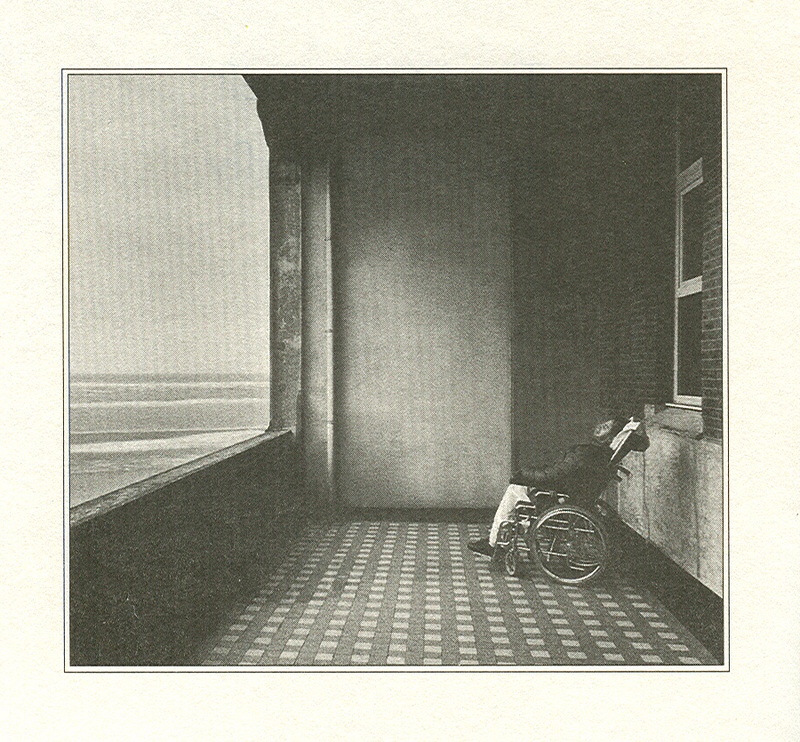
Of course, the party chiefly concerned is the last to hear the good news. I myself had twenty days of deep coma and several weeks of grogginess and somnolence before I truly appreciated the extent of the damage. I did not fully awake until the end of January. When I finally surfaced I was in room 119 of the Naval Hospital at Berck-sur-Mer, on the French Channel coast–the same Room 119, infused now with the first light of day, from which I write.
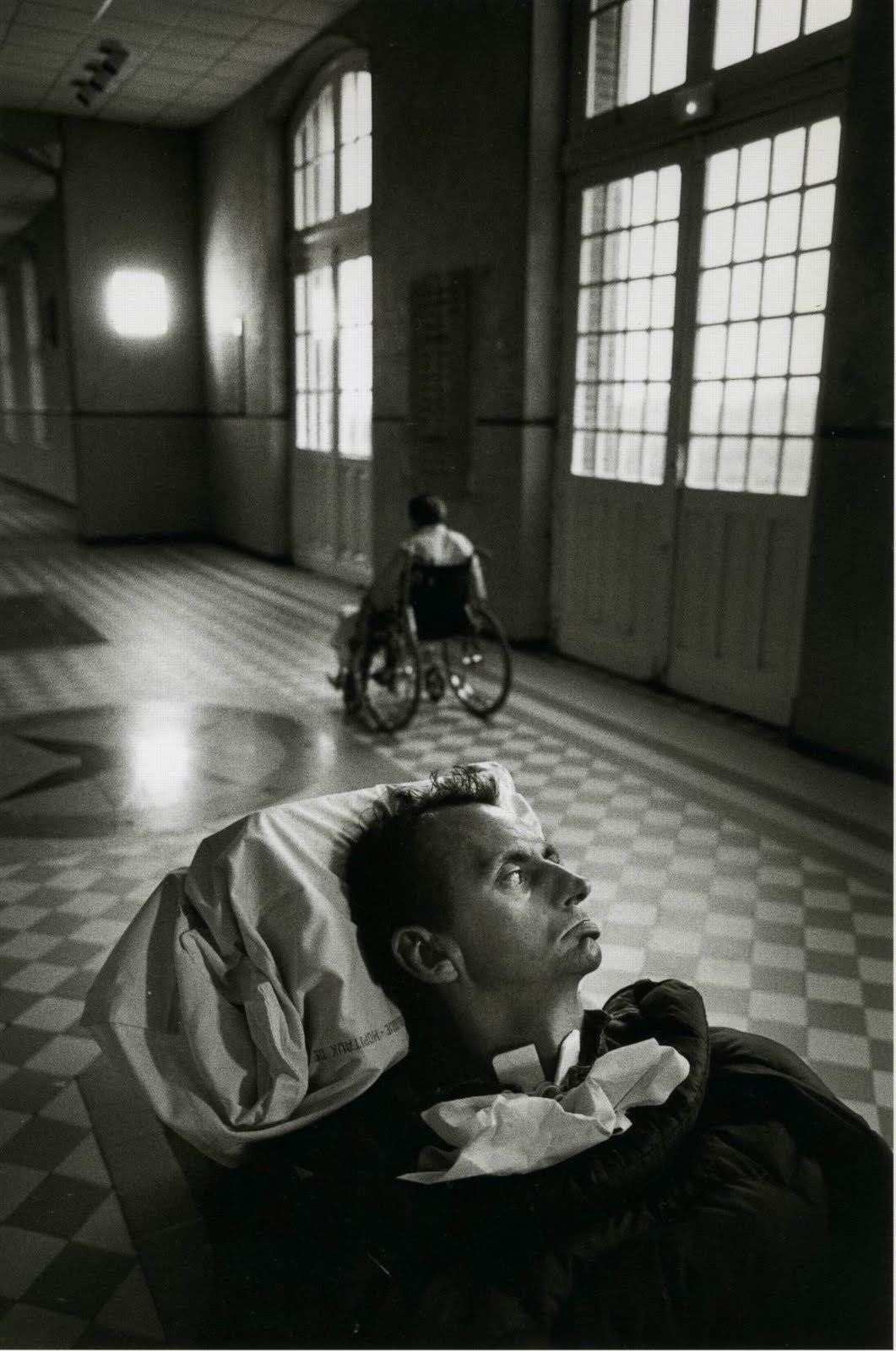
Enough rambling. My main task now is to compose the first of these bedridden travel notes so that I shall be ready when my publisher’s emissary arrives to take my dictation, letter by letter.

He writes these words by dictating his memoir, one letter at a time, to his clever and efficient conversational co-conspirator, Claude Mendibil, who lists the letters in accordance with their frequency in the French language.

In my head I churn over every sentence ten times, delete a word, add an adjective, and learn my text by heart, paragraph by paragraph.

By a fortunate stroke of luck and intuition Jean-Do’s physical therapist noticed that he could blink his left eyelid—his paralyzed right eyelid had been sewed shut to prevent his eyeball from drying up—and she had devised a communication system called partner-assisted scanning, which utilized his singular muscular ability to dictate a beautiful memoir.

It is a simple enough system. You read off the alphabet (ESA version, not ABC) until, with a blink of my eye, I stop you at the letter to be noted. The maneuver is repeated for the letters that follow, so that fairly soon you have a whole word, and then fragments of more or less intelligible sentences. That, at least, is the theory. In reality, all does not go well for some visitors. Because of nervousness, impatience, or obtuseness, performances vary in the handling of the code (which is what we call this method of transcribing my thoughts). Crossword fans and Scrabble players have a head start. Girls manage better than boys. By dint of practice, some of them know the code by heart and no longer even turn to our special notebook—the one containing the order of the letters and in which all my words are set down like the Delphic oracle’s.

And what are those travel notes of which Bauby babbles about? They’re excursions of the imagination, of course—the only recourse for a traveler physically bound and rooted in place like an oak tree. His thoughts branch out, stretching beyond the boundaries of place, allowing his mind (which he likens to a diving bell) to take flight like a butterfly.

You can wander off in space and time, set out for Tierra del Fuego or for King Midas’s court. You can visit the woman you love, slide down beside her and stroke her still-sleeping face. You can build castles in Spain, steal the Golden Fleece, discover Atlantis, realize your childhood dreams and ambitions.

Ten months and two hundred thousand blinks later, Jean-Do completes his magnificient memoir and expires from pneumonia on March 9th, 1997, two days after his book is published.

***

Returning to the present and presented with my first thought—

I want to write . . .

The “but” is a needless word that must be omitted. I write without excuses.
Practicing the art of writing microfiction: The drabble

Microfiction has gained notable popularity among early 21st-century writers. This trend might be attributed to the shortened attention spans of modern readers who multitask on smartphones and tablets. Alternatively, it could be that microfiction presents a compelling challenge for writers to hone their skills in crafting concise narratives.

Personally, I relish the art of writing concise compositions. Crafting polished prose within a strict limit of 336 words is a joy, but I also find pleasure in creating even more concise pieces, such as fifty-word mini-sagas and one-hundred-word drabbles.

For those unfamiliar, a drabble is a vignette precisely one hundred words long. The term was coined by the whimsical minds behind Monty Python’s Flying Circus. As described in Monty Python’s Big Red Book (1971), it originated as a word game for 2–4 players where the first to write a novel would win. Given the absurdity of completing a novel in such a short span, the drabble was conceived as a miniature novel to make the game feasible in real-time.

In the realm of drabbles, the author is permitted up to fifteen additional words for the title and their name.

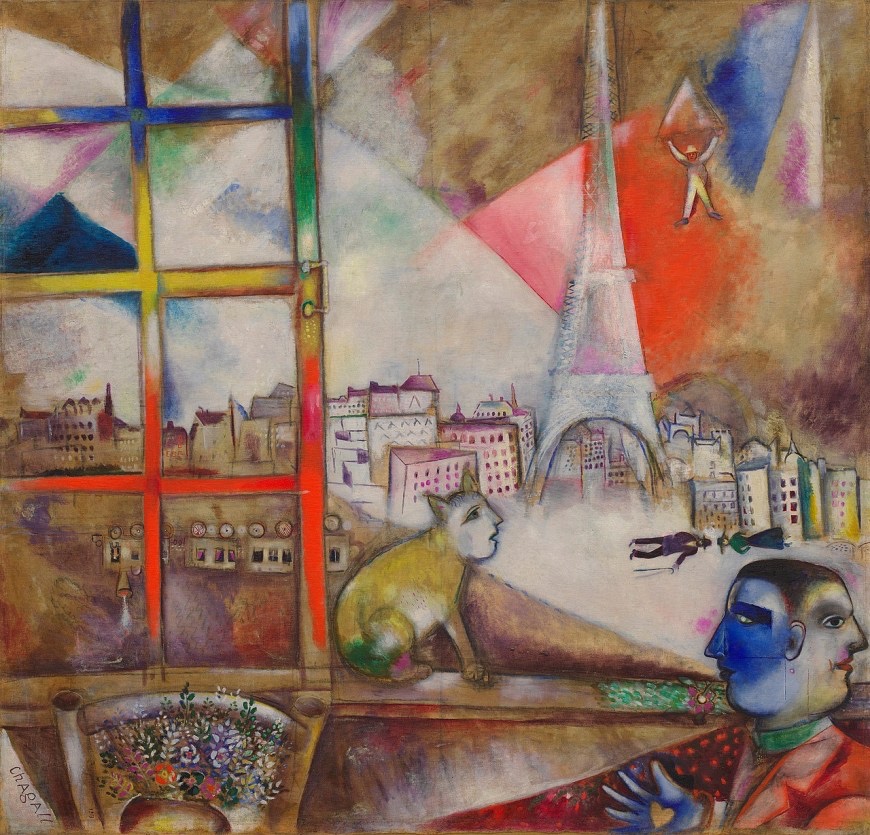
I add my twist to the drabble by pairing it with an image, creating a rich tapestry of visual and textual storytelling. For example, here is a piece inspired by a Chagall painting:

PARIS THROUGH THE WINDOW 2013-1913

By Richard La Rosa

I rush into my SoHo apartment, glancing briefly at the clutter of masterpieces bathed in murky light, before fixing my gaze on the Chagall on the bricked-up window.

Stolen for my art-forger brother a hundred years ago it was created, like all the other paintings, with an extraordinary oil paint made by a Hungarian witch.

A witch whose genetic imprint is stamped in my own art-thief eyes.

Focusing my eyes on the painting, actually my escape hatch, I reach into Chagall’s 1913 Paris to take my brother’s hand.

The past becomes present just before the future unbecomes.

***

Richard La Rosa is an American writer.

You can follow him on Facebook, Twitter, and Instagram.