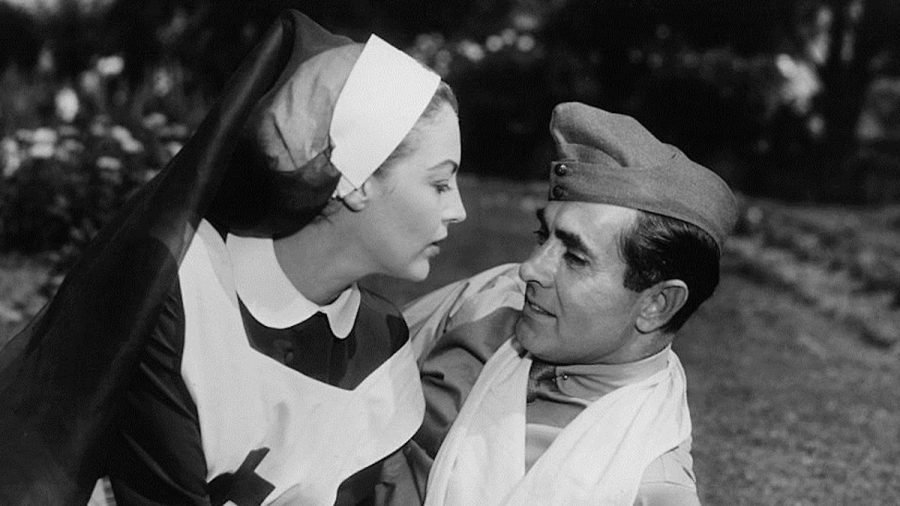
I’ve been feeling a bit like Jake Barnes lately—but not exactly like the tragic, doomed version Hemingway gave us in The Sun Also Rises. More like a 21st century, late-stage Gen-X edition: a guy who survives the war, gets patched up, and then tries to live with a body that no longer behaves the way he remembers.
My equipment still works. I’m not impotent, not broken, not incapable. But I’m also not exactly the same.
The plumbing has gone dry, and the part of me that once thought I could have another kid someday has been forced into permanent retirement.
Truth is, it’s painful down there. Erections come with a wince, and the phantom orgasm comes with an ache that lingers for days. My body feels like a once-dependable race car that isn’t firing on all cylinders anymore and doesn’t handle the way it’s always handled. Suddenly I’m a high-performance driver stuck with a lemon.
So when someone makes a pass at me now—even if it’s just flirtatious banter—I freeze for a second. Not because I don’t feel attracted or flattered, but because there’s that flicker of insecurity: How do I explain all this? How do I even feel about all this?
I’m not Jake Barnes, permanently cut off from intimacy. But I’m also not my pre-surgery self, the one who took sex for granted—even though it’s been a few years since I’ve quoted Barry White in the bedroom.
What I’m learning is that manhood doesn’t have to be defined by fluids or biomechanics or even the familiar ease of pleasure.
Maybe I’ll find it somewhere in the honesty, the emotional vulnerability, and the willingness to be brave in ways Hemingway was too embarrassed to write about. Jake suffered in silence; I’d be a fool to do the same.
I’m still capable of desire. Still capable of wanting a romantic connection with a woman. The rest, I guess, is just part of the story of living long enough to keep becoming someone new.
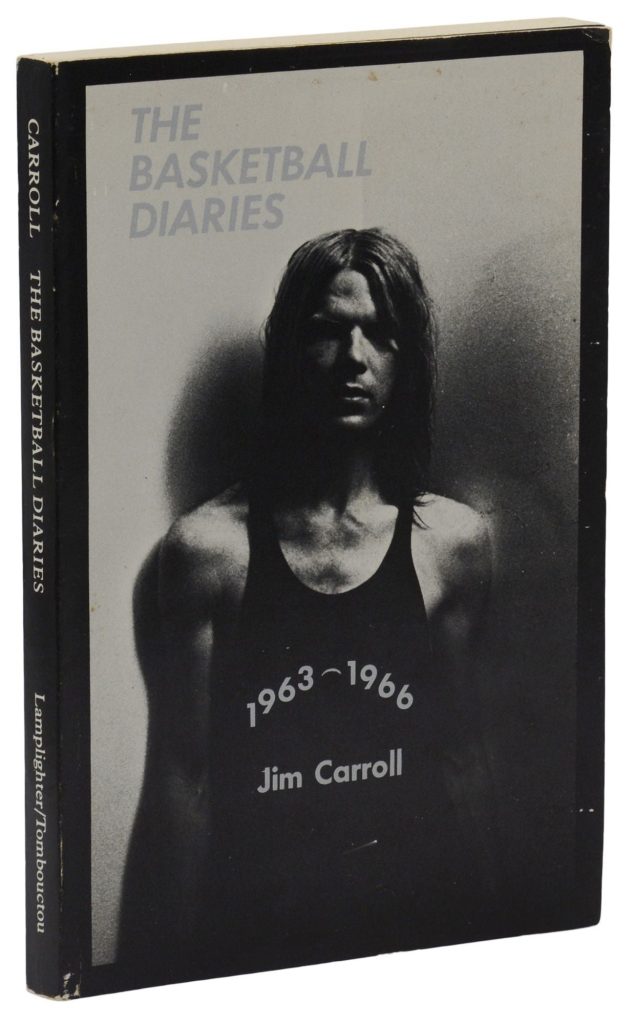
Lamont gives me a memoir called The Basketball Diaries, published only a year ago. It’s well-worn from being passed around many times and the back cover is filled with praise from impressive literary figures like William S. Burroughs, Jack Kerouac, Patti Smith, and Rolling Stone magazine.
Lamont points to Kerouac’s line: “At 13 years of age, Jim Carroll writes better prose than 89% of the novelists working today.”
He says the young novelist was a heroin addict, which turns me off right away.
Lita notices my expression.
She knows I’m not interested in the junkie-poet mystique, and assures me what matters isn’t the drugs but the clarity and detail of Carroll’s storytelling.
“Study the sentences,” she says. “Not the lifestyle.”
He and Lita are encouraging me to seek out new and more contemporary writers to inspire me, rather than reaching back to the past.
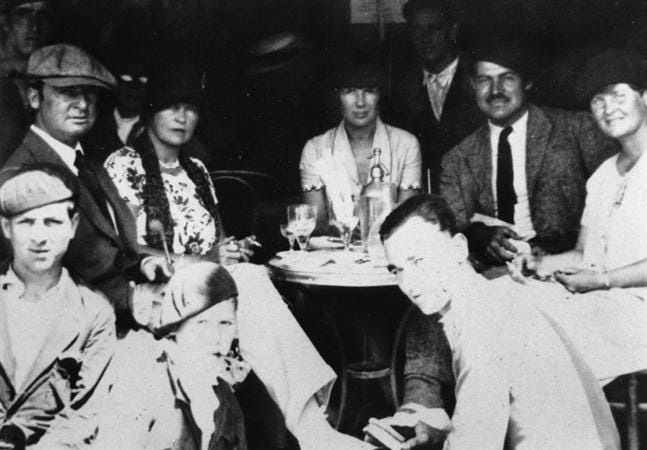
Then, Lamont says I should pick up a copy of A Moveable Feast, a sparse memoir written in 1964 which is set in the 1920s. He says that Hemingway’s memoir is a must-read, because it teaches a young writer what the practice is actually like: the discipline, and the stubborn belief that a sentence can always be made tighter.
“Hemingway wrote like a man trying to sand the world down to its cleanest lines,” Lamont says.
“Watching him hammer away at his craft in Paris cafés might push you to take your own writing seriously.”
It’s not the mythology that matters, it’s the grind. The way you keep showing up at the page.
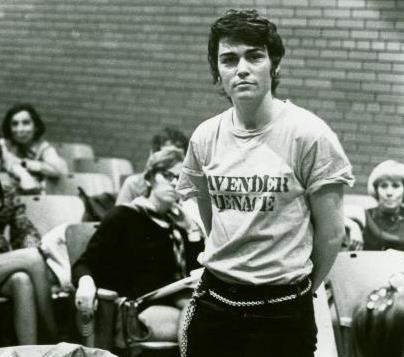
Then Lita pulls a book out of her bag called, Rubyfruit Jungle. “Forget about Tom Sawyer and Holden Caulfield,” she says. “Molly Bolt is the real rebel outlaw.”
Rita Mae Brown
I’m dubious I’ll be able to relate to a coming-of-age lesbian novel, but Lita says I need a woman writer’s perspective after reading so many male science-fiction authors.
I have to agree.
With the exception of John Varley, most of them write women as flat, one-dimensional figures instead of real people.
Uncle Ray bends down to pluck a cigarette butt out of the bushes across the courtyard, far enough away to sidestep Lenny’s wrath if he sees him and makes a scene.
It’s obvious Ray is having a hard time of it. He’s shaky, unfocused, and clearly three sheets to the wind. Ray’s gambling that Poppi won’t notice he’s staggering drunk. He’s crossing his fingers she’ll give him his usual meal of chicken and hot chocolate.
My first brush with Ray was in front of Mama’s Truckstop in the summer of ‘76. He was squatting at the curb beside a shopping cart filled with empty bottles and other objects of questionable origin.
I was riding past, when the bottles in his cart caught my eye. Likewise, Ray glared at the cans in the bag slung over my shoulder. I’d finally met my main competitor in the recyclable-bottles-and-cans racket.
I was twelve and desperately needed pocket change for comic books. I was also on Ray’s turf. And he wasn’t just collecting cans around the campus. Ray was tapped into the motherlode. All the empties the frat boys stockpiled in their party houses.
Several years before Poppi was in the neighborhood doling out dolmas and serving souvlaki to the masses, back when 675 East 13th Avenue was Eggsnatchur Natural Foods, Ray appeared one day with a handful of blackberries he’d picked by the river and offered to swap them for a sandwich.
Lee Boutell, a gregarious college hippie turned vegetarian restaurant entrepreneur, made the trade and staked Ray a meal on the regular. When Lee sold the restaurant, Poppi Cottam took over the old Craftsman house and opened Poppi’s Greek Taverna.
Uncle Ray figured he was part of the deal.
Seven years later, Poppi is still feeding uncle Ray from the back door of the kitchen any time he shows up hungry. Unless he shows up drunk. Then Poppi will send him away with a cup of black coffee and tell him to come back later when he’s sober.
~Richard La Rosa (9/17/1985)
———
This is page 1 of my story about uncle Ray in Tales of the Nosh Bar.
When I lived in California, I loved riding my Vespa from my home in Santa Rosa to Jack London State Park in Glen Ellen.
On the way, I’d stop at Les Pascals Patisserie et Boulangerie to write and watch the charming Parisian owners work and chat with customers. Monsieur Pascal was typically in the kitchen baking while Madame Pascale was at the counter working the register. It was a pilgrimage for many regulars to go there and practice their French. I’d say: “Bonjour, Madame Pascal! Ça va?” I always asked for “un pain au chocolat et un café crème, s’il vous plaît.”
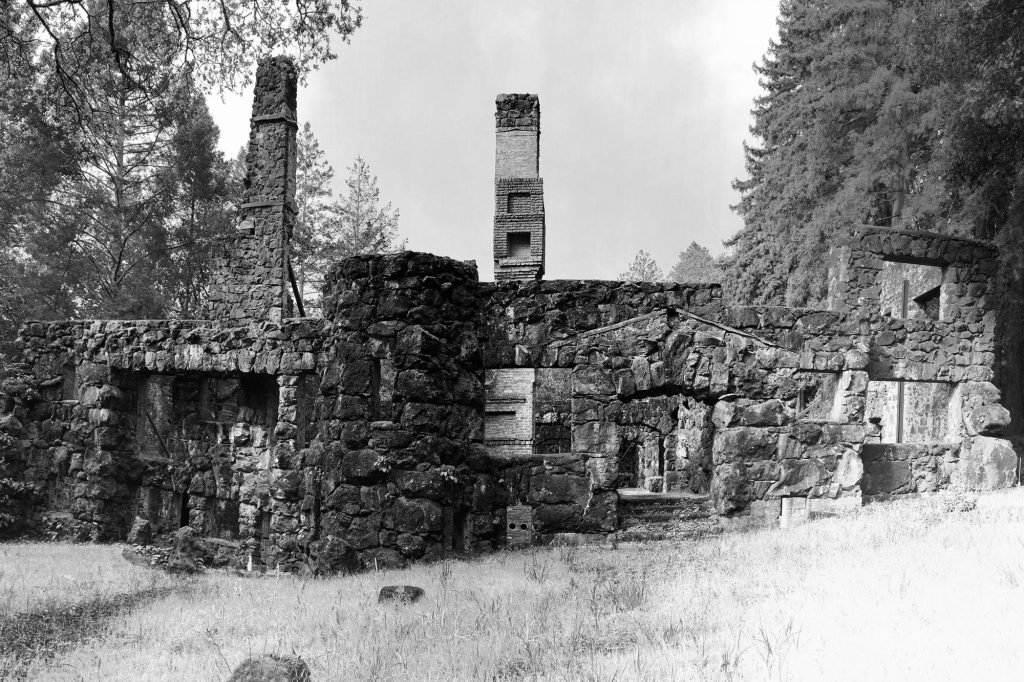
Around the corner and a mile up London Ranch Road, the burned-out stone walls of a house stood—half ruin, half reliquary—like a literary necropolis. Jack London poured years of money, muscle, and yearning into building his redwood-and-stone dream home. Wolf House was nearly finished when, in the early hours of August 22, 1913, a fire ravaged the entire structure before he spent a single night inside. Jack was devastated.
Wolf House
Three years later, on November 22, 1916, he died at the age of forty.
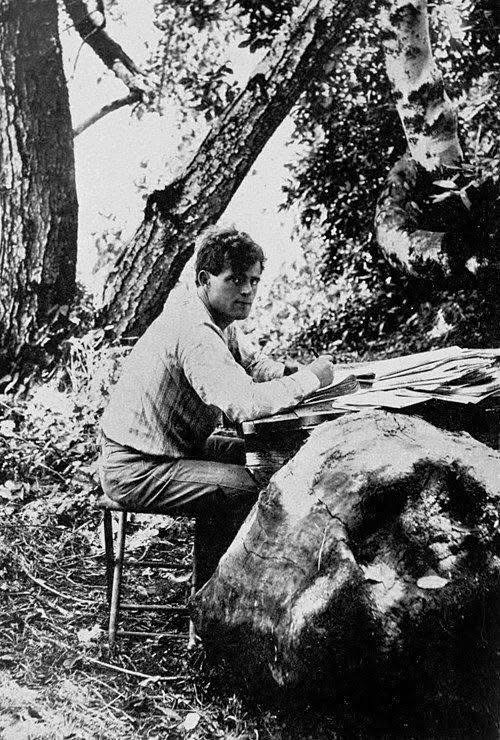
Daydreaming under the cork oaks, I imagined Jack barreling through life with his impossible schedule. So many books, so many articles, and so much ambition for one human metabolism. And toward the end, too much alcohol, too much pain, and two kidneys giving up in despair. His cause of death—from dysentery, uremia, morphine, opium, and late-stage alcoholism—reads like a checklist of self-destruction. I’ve always believed he also died of sorrow. Whatever the cause, Jack London wrote like a machine and wrote to exhaustion. He burned hot, then burned out.
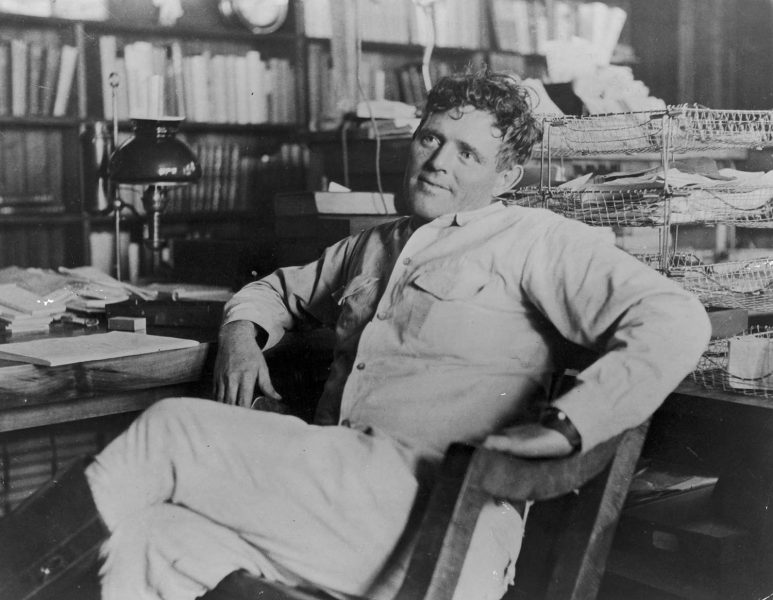
Today, on the anniversary of his death, I’m thinking about Jack London not as the heroic adventurer or the big-jawed socialist sailor-prophet, but as a fellow worker in the mines of language.
He left behind a heartbreaking record of what happens when talent, trauma, substance abuse, and the American drive to produce collide in one short, incandescent life.
My radiation mapping appointment—January 15, 2026–is now a month later than expected. I was told radiation therapy might not start until 6–8 weeks after that. I am not thrilled.
In the past, news like this would’ve sent me into what I called “depression,” mostly because I didn’t have a better word for it. But thanks to the unexpected clarity I’ve been having since starting androgen deprivation therapy, I can actually name what I’m feeling now.
Annoyance tops the list. I’ve already been through catheter hell, surgery, scans, injections, and more appointments than I care to count. Add impatience, a dash of anxiety, and a pinch of “whatever,” and that’s today’s entrée: room-temperature clam chowder straight from the can.
Still, I’ve got a handle on it. I sent the manager in to gently tell my inner Karen to calm the fuck down, then asked questions and got reassuring answers.
Apparently, the long gap between the Eligard shot and radiation isn’t a mistake or a scheduling screw-up—it’s how the treatment is designed. ADT doesn’t just support radiation; it weakens the cancer for months in advance.
Prostate cancer loves testosterone. Gleason 9 tumors are especially dependent on it. Without testosterone, cancer can’t grow normally. ADT cuts off the supply. When testosterone drops, cancer cells slow down, shrink, or stall.
So even though it feels like I’m just sitting here waiting, the Eligard is already doing it’s job. In high-risk, surgery-not-an-option cases like mine, it’s standard to stay on hormone therapy for several months before radiation because outcomes are better when ADT throws the first punch. Radiation is the second punch—and hopefully the knockout.
Eligard will keep suppressing the cancer in the months to come. I’m not unprotected. I’m not waiting with no treatment. I’m already on treatment.
I’m not thrilled with the timeline, but at least I understand now that the cancer is being actively suppressed—not growing like some mutant blob in a sci-fi movie.
I was scrolling through my Facebook memories today when up pops a post from 2013 wherein I confidently declare:
“Loggers have reported instances of very old trees—big pines, firs, and cedars a thousand years old—screaming audibly when they’re cut down. They say that the screams are disturbing at first, but as with anything else, you get used to it.”
Not metaphorically. Not as some poetic lament for the destruction of ancient forests. No, I apparently meant full-on, bloodcurdling screams. Naturally, my first reaction was: Did I actually read this somewhere, or did I just make it up? Because, let’s be honest, both options seem equally plausible given the thought-like-things that caper nimbly through my head.
A quick search didn’t turn up any reputable sources confirming that trees scream loud enough for humans to hear, or even if they possess the capability to wail in terror or pain. However, ultrasonic cavitation is real, and pine sap under pressure can making sort of a hissing sound. But that’s more of a woodland sigh than a death-metal shriek.
Returning to the post a couple of months later, I commented with a Jack Handey quote I’d apparently just seen:
“If trees could scream, would we be so cavalier about cutting them down? We might, if they screamed all the time, for no good reason.”
Which now makes me wonder: did I absorb this idea years earlier, let it ferment in the subconscious barrel of my brain, and then trot it out in 2013 thinking it came from a documentary?
Or did I just invent a perfectly disturbing piece of eco-folklore and forget to take credit for it? Both feel extremely on-brand.
Either way, if any loggers or arborists have actually heard screaming trees (and haven’t simply become desensitized to the horror, as my 2013 self so casually suggested), feel free to chime in. Otherwise, I’ll assume my past self was indulging in a bit of creative mythmaking, and I’ll let the matter rest. Quietly.
In the early 1990s, when I worked as a massage therapist in a quaint Napa Valley town in California, I read Knights Without Armor by Aaron Kipnis. The book attempts to map the private emotional terrain most men rarely name or discuss: longing, vulnerability, the hunger for connection, the need for guidance, and the generational damage passed down from fathers who were never taught how to be fathers. That seemed to be the unspoken throughline of many men I knew.
The book was homework for a personal deep dive into the so-called men’s movement, which I’d largely missed because I was more of a café-intellectual type, interested in existentialism, satire, and science fiction. My late nights were filled with cinema, going out to hear the blues or a punk band, and hanging out with friends.
Drum circles, initiation rituals, and weekend retreats to help men find their “inner warrior” seemed a bit silly to me. It all struck me as performative.
As a former hippie kid who grew up in the counterculture, I had a wealth of past experience drumming in groups, talking about feelings, and listening to self-actualization sessions. I had a life-changing initiation at the age of eleven when I donned a loincloth and sat around a fire pit in a tipi all night for a peyote ceremony in the Arizona desert.
I was a sensitive boy—and a nice guy. A bit of a Romeo when it came to girls and, later, women. Athletic in the hiking, cycling, gymnastics, tree-climbing way, but definitely not a “sports guy.” It wasn’t the sport itself I disliked, but the testosterone-charged swagger that came with it.
I read a lot—comic books, science fiction novels, and later philosophy, psychology, and anything involving semantics and communication. I was mostly secure in my skin and thought of myself as masculine, but I hated the macho bullshit that passed for masculinity.
The book struck a chord.
It made me think of myself as a masculinist. Or rather, a manthropist.
Manthropist (n.)
A philanthropist for the soul of manhood.
A manthropist can be any gender or no gender at all—the philosophy goes beyond gender entirely.
A manthropist is someone who believes masculinity doesn’t need to be “fixed” so much as properly hydrated, emotionally decluttered, and occasionally reminded to see a doctor before something goes completely awry. They are not in the business of dominating, conquering, or reenacting Bronze Age rituals with a ring light and a monetized grievance complex.
The manthropist has a simple mission:
to help men (including masculine people) become healthier, kinder, more self-aware human beings—without turning it into a battle of the sexes or a culture war.
They believe:
• Strength is not the opposite of vulnerability.
• Stoicism is useful until it becomes a personality disorder.
• Feelings don’t evaporate just because you pretend they don’t exist.
• Empathy is not estrogen in disguise.
• “Man up” is terrible advice unless you’re sitting down or you’ve fallen out of your chair.
The manthropist looks at the current state of masculinity—the influencers, the posturing, the algorithmic chest-thumping—and says, politely but firmly:
“No, thanks. I’ll be over here being a decent human instead.”
They advocate for:
• regular checkups
• therapy without shame
• authentic friendships based in honesty and sincere self-expression
• boundaries
• self-respect
• compassion toward younger men trying to navigate this gender dystopia
• compassion toward older men still carrying emotional debris from the last century
Above all, they believe that men deserve better language spoken about them and by them — because words matter, and most of what passes for “masculinity talk” online is just semantic noise on steroids.
Manthropists are pro-man without being anti-anyone
They lift up instead of punching down.
They upgrade and reboot masculinity instead of tossing it onto the trash heap or rewriting it from scratch.
They’re not perfect, but they’re doing their best—which is light years ahead of the algorithm.
If that’s a movement, great.
If it’s just a word, also great.
Either way, we all need a daily dose of manthropy.
A Field Guide for the Modern Manthropist
1. How to Talk to a Man Who Insists He’s “Fine” While Bleeding — Metaphorically or Literally
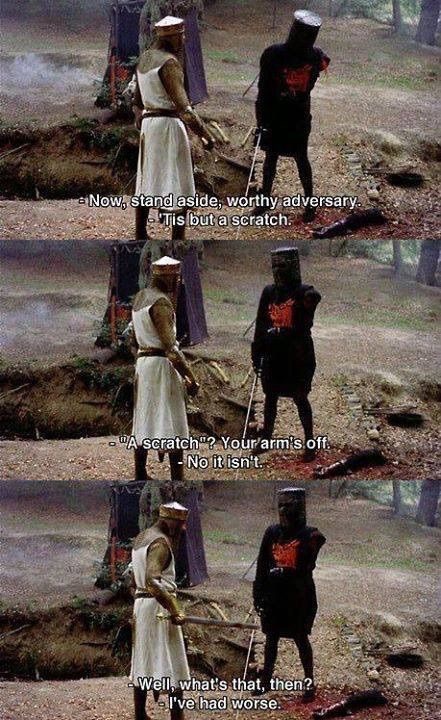
Step one: don’t panic. A man saying “I’m fine” when he’s actually an emotional wreck or gushing blood like the Black Knight in Monty Python and the Holy Grail is following a deeply ingrained cultural script that dates back to prehistoric times, when admitting weakness meant being eaten by a large cat.
Observation No. 1:
When a man says, “It’s nothing,” he is probably lying.
Not maliciously — more like my sister’s goldendoodle, Rosie, when she swallows a squeaky toy and tries to maintain her dignity.
Your job is not to call him out. Your motive is to get him to admit the truth without triggering a fight-or-flight instinct.
To begin, you might try raising an eyebrow, handing him a towel, and asking, in a completely neutral tone, “Is that your blood?”
If he replies, “I’ve had worse,” you’re making progress.
At this point, introduce a grounding statement such as:
“You are not in an action movie. You’re a civilian. Please sit down.”
Should he resist, present a simple yes/no question that cannot be dodged:
“Do you want to keep all your internal organs internal?”
Most men will concede here.
For metaphorical bleeding (heartbreak, existential dread, the realization they’ve modeled their personality after a podcast host), the protocol is similar.
Replace the towel with silence. Replace the question with:
“Do you want to talk about it, or should I just sit here like a supportive houseplant?”
Men, when offered a choice between speaking and botanical companionship, will often choose speaking. Encourage it. If he cries, let him. If you cry, blame allergies.
The goal is not to fix him. The goal is to get him to the point where he can admit, with some degree of sincerity, “Okay… maybe I’m not fine.”
Because once he says it, you’re no longer speaking to the mask—only the man behind it, relieved to be seen.
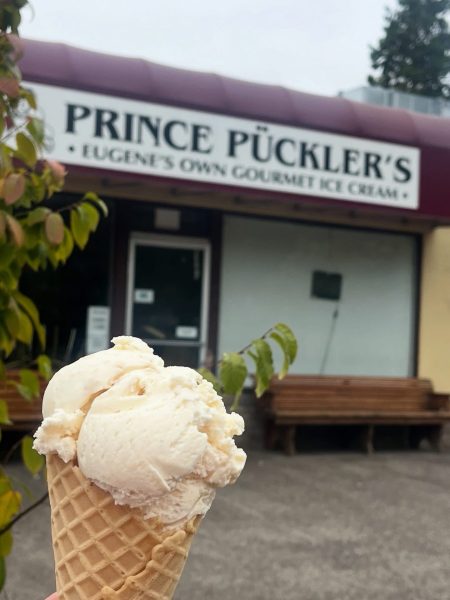
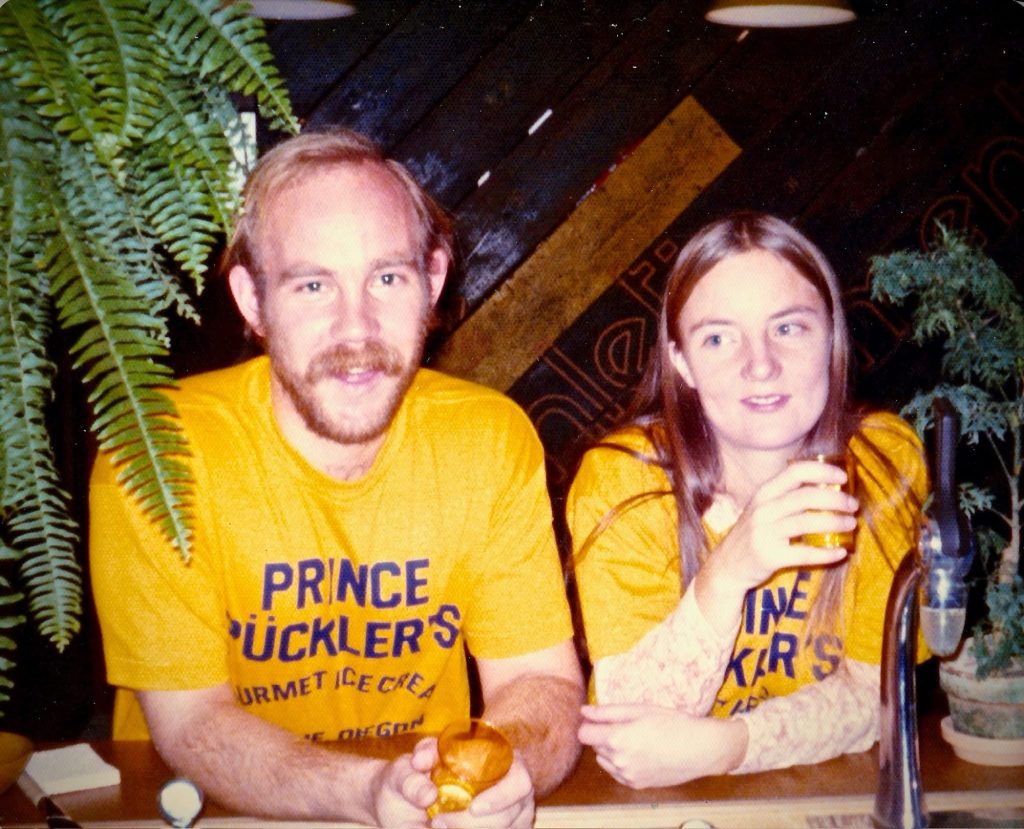
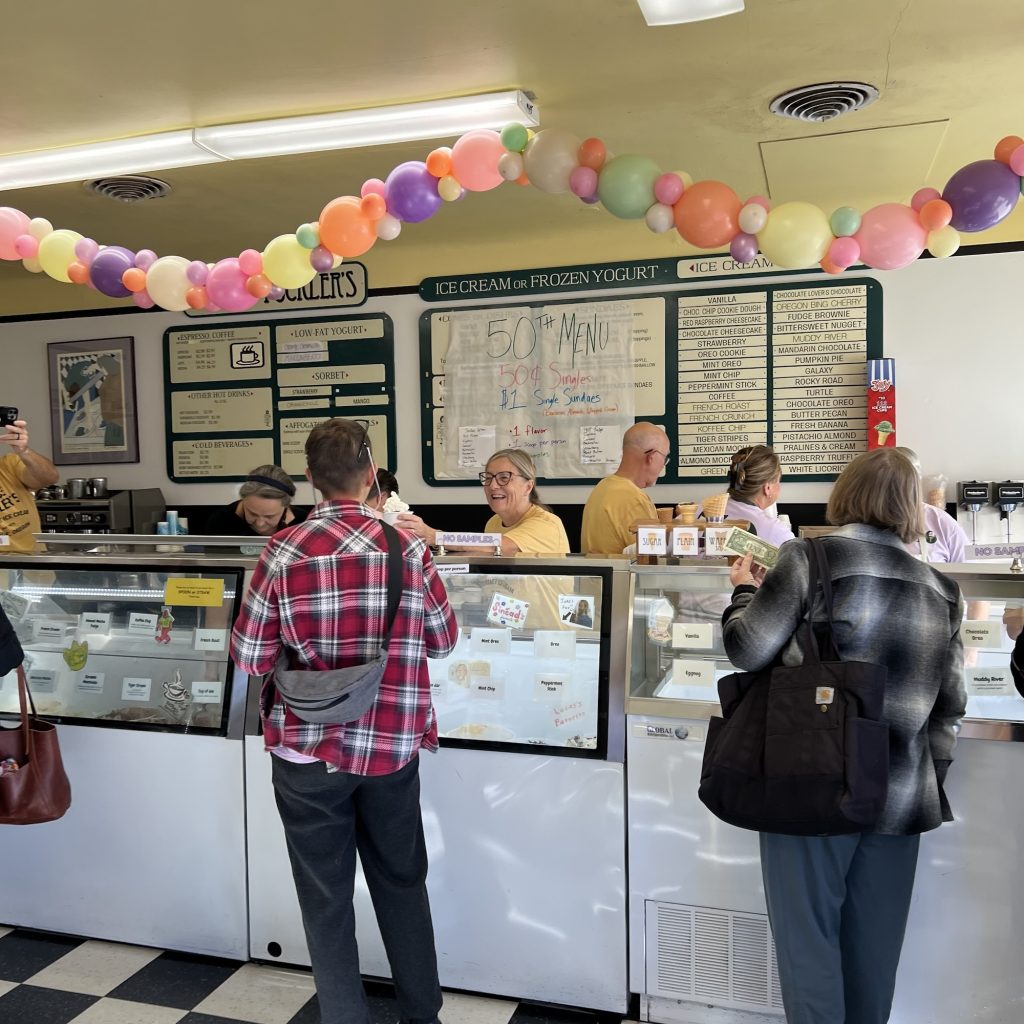
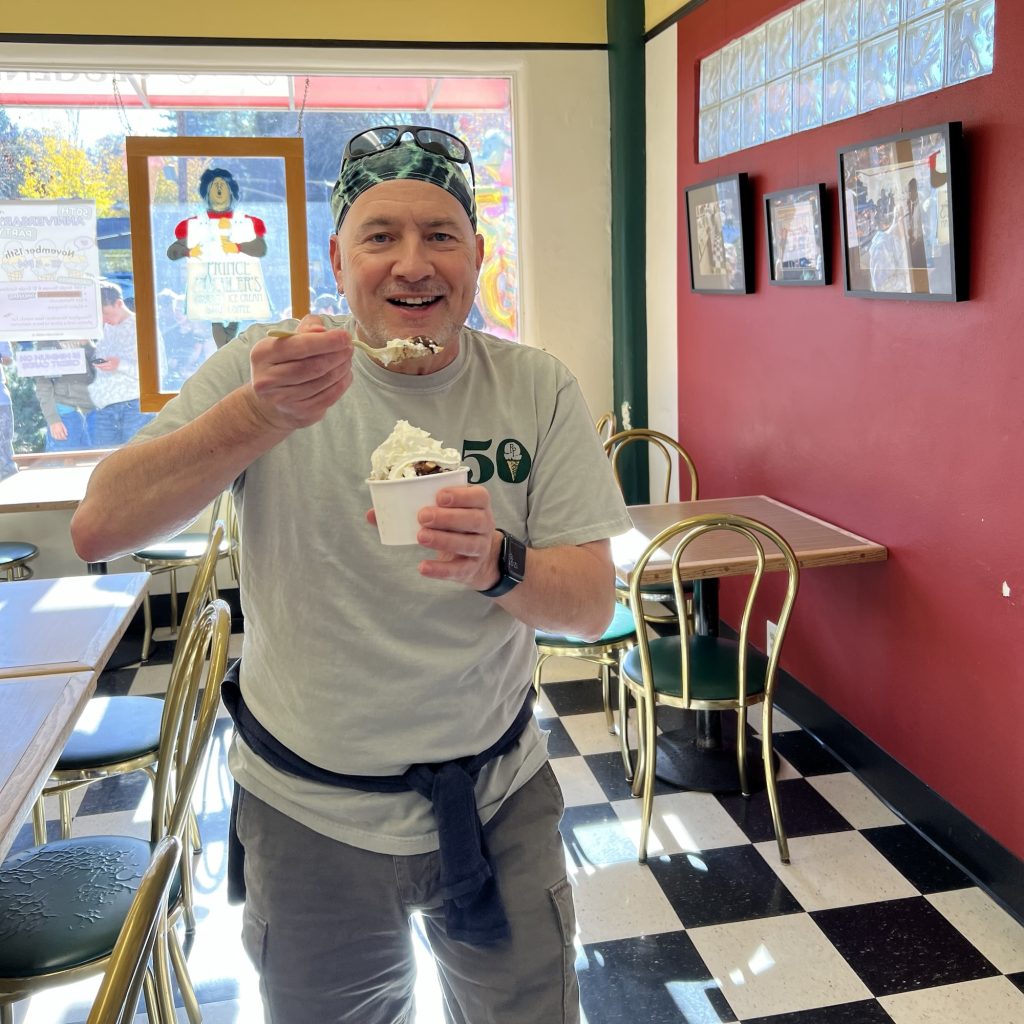
Prince Pückler’s will hit fifty years on November 15th, 2025, which is strange to think about because whenever I walk into the joint I feel like a kid. I first discovered the original shop in 1976 when I was twelve—too young to work there but old enough to understand that this was not the kind of ice cream you bought in a grocery store or at the counter at Woolworth’s. I loved ice cream (still do), and I decided I would work there someday. I asked for a job every time I went in for a cone.
It took six years before I was hired. In the meantime, I made myself useful around Eugene in the ways a determined boy with a single mother does. At Saturday Market I sold lemonade at the Family Homesteader booth. On weekends I helped make Toby’s Tofu Pâté. I collected empty bottles and cans. I cleaned windshields at the Eugene Drive-In for a quarter. Every job felt like a warm-up for the thing I actually wanted: working at Prince Pückler’s in one of my favorite places in downtown Eugene—the Atrium Building at 10th and Olive.
Back then the Atrium was home to Gandalf’s Den, a science-fiction and fantasy bookstore and game shop that introduced a lot of Eugene kids to Dungeons & Dragons. The building also contained Cinema 7, an art-house theater where you could watch classics from the ’30s and ’40s and foreign films; Mr. Moto’s coffee shop; Oregon Repertory Theatre; and the first Nike Store.
It was a thriving cultural hub—long before it settled into the quiet life of government offices.
Jim and Lolly Robertson opened Puckler’s there in late 1975 with $18,000 of used equipment and twenty-two dollars in the register. Jim had bought the secret recipe from Bud’s Ice Cream in San Francisco and secured exclusive Oregon rights, which meant no one else in the state was making ice cream like this.
Pückler’s ice cream had 16% butterfat and almost no air whipped into it. It came in five-gallon batches, hand-made with no preservatives, no stabilizers, no artificial thickening agents, and none of the kerosene-derived “flavor concentrates” that turned a lot of cheap 1970s ice cream into something you might find in Vincent Price‘s laboratory.
Jim and Lolly Robertson.
Ice cream in those days was in a strange in-between place. The 1950s was an embarrassing decade for the industry. Manufacturers discovered they could pump in air (up to half the volume) without the public noticing. The more air, the cheaper the cost. The cheaper the cost, the lower the bar. It wasn’t just bad business; it created its own shady economy.
In 1933, New York City had arrested 899 ice-cream bootleggers for selling illegal low-spec product out of pushcarts and alleys. Sounds like a made up story, but it happened.
Then came the renaissance. In the 1960s and early ’70s, a few companies—Häagen-Dazs being the most famous—brought back dense, premium ice cream. Americans realized what they were missing. Pückler’s opened right on the cusp of this shift.
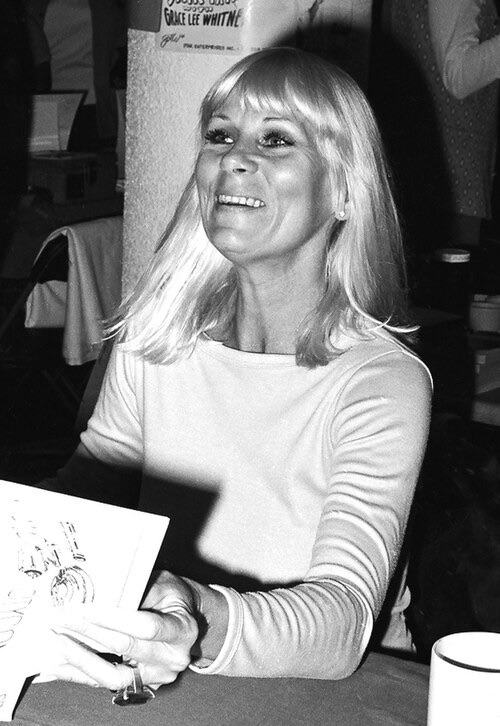
The first time a stranger bought me an ice cream cone was at Pückler’s in 1977, during Space Con Five weekend, the first Star Trek convention in Eugene.
Grace Lee Whitney at a Star Trek convention in 1980.
Grace Lee Whitney (Yeoman Janice Rand from Star Trek) held a poster signing at Gandalf’s Den. She asked me to help her at the table, so I stood beside her, rolling up each signed poster and handing it to the fans. After the signing she took me downstairs to Pückler’s for ice cream. As we said goodbye she kissed me on the cheek and said, “See you tomorrow.” That’s when she learned I couldn’t afford a ticket to the convention at the Fairgrounds. She put me on the guest list and later introduced me to George Takei, who played Sulu, and Bob Wilkins, host of the television show Creature Features.
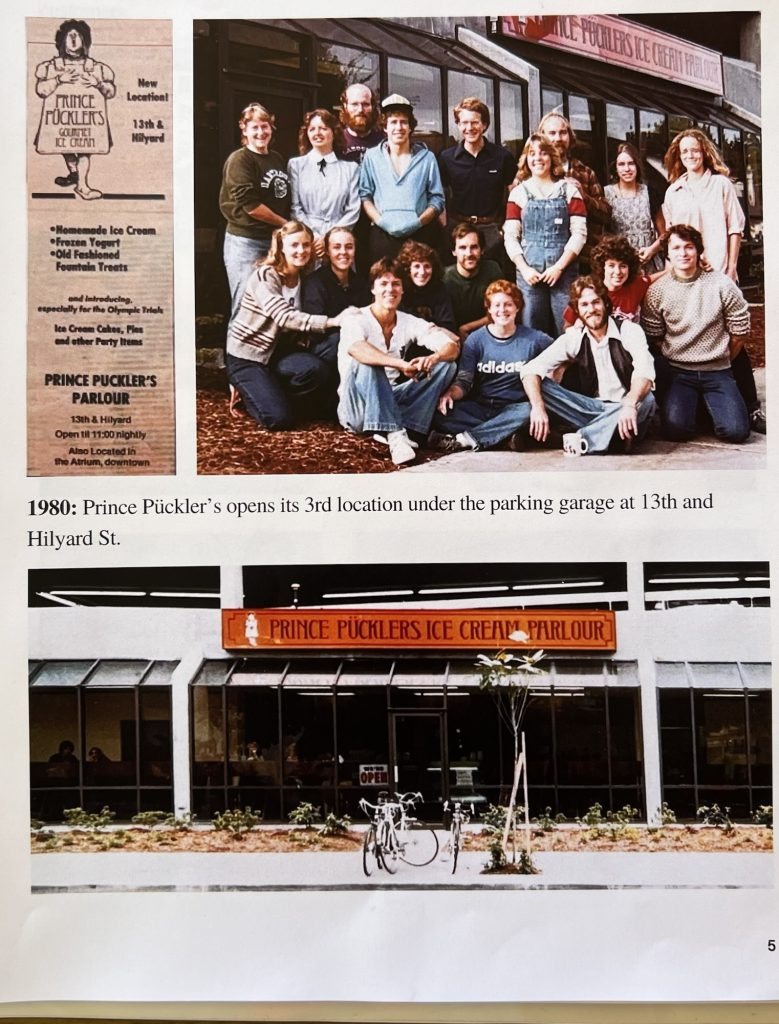
In 1980, Pückler’s opened another shop on the south side of the 600 block of East 13th Avenue, into the ground floor of the new Sacred Heart Hospital parking structure.
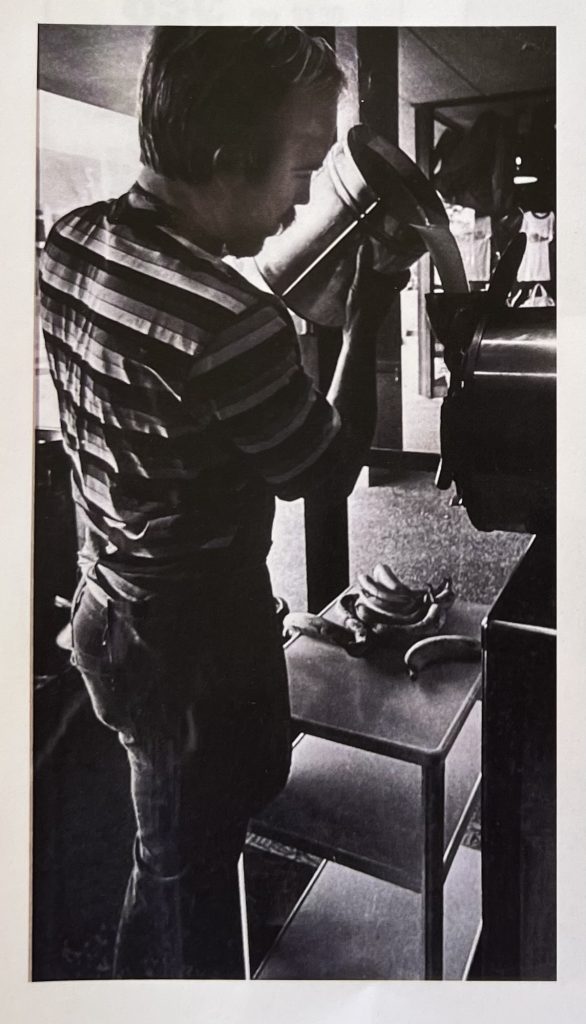
The location was perfect—right in the midst of campus life, the center of gravity for thousands of students. We scooped ice cream, pulled espresso shots, and served giant blueberry muffins and blueberry-bran muffins that kept half the freshman class alive. Many practically lived on the veggie bagels we assembled—cream cheese, cucumbers, tomatoes, sprouts—served with bagels from the Humble Bagel Company.
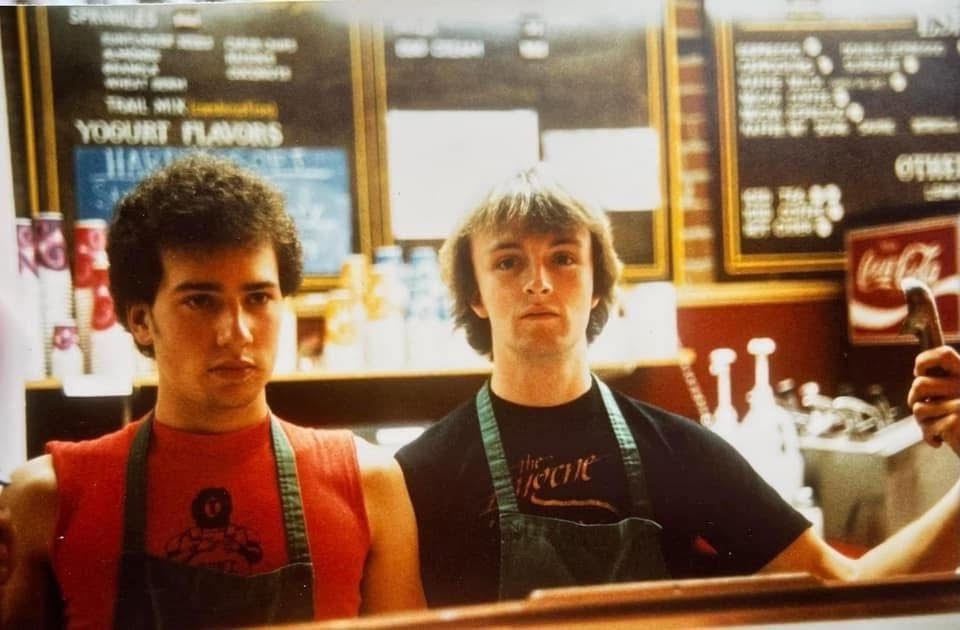
A second shop opened downtown at 861 Willamette. That expansion formed the broader “second generation” of workers. Many were college students working their way through school. A few stayed for years. One or two stayed for a decade or longer. It became a rite of passage: your first job, your college job, your in-between job. A place you never really outgrew, even after you left the city.
Tuesdays were legendary. The 99-cent sundae special stretched a line down 13th Avenue and around the corner. People didn’t mind waiting. It was a weekly ritual.
In the early 1980s, Where to Find It in Oregon listed just three premium ice cream shops in the entire state—Sweet Scoops, Marco’s Gelato Factory, and Prince Pückler’s. That was it. And Pückler’s had earned its spot long before “premium” became a marketing term.
Me and Clyde at the downtown shop circa 1983.
Then came 1983 and the Create Your Own Ice Cream contest. The idea was simple: customers submitted flavor ideas, and the winning ones got made every May. 300 cards poured in. My girlfriend and I helped sort them. A few were brilliant. A few were unhinged. One—Snowflake Surprise—hit the sweet spot. I championed it, and it won. The next year there were 500 entries. Galaxy, another early winner, was such a hit that it’s still on the menu today.
Eventually the shop moved to its long-term home at 19th and Agate. That corner had already lived a few dessert lives—Del Hoff’s in the fifties and sixties, Gantsy’s in the seventies. Pückler’s took the spot and stayed for good.
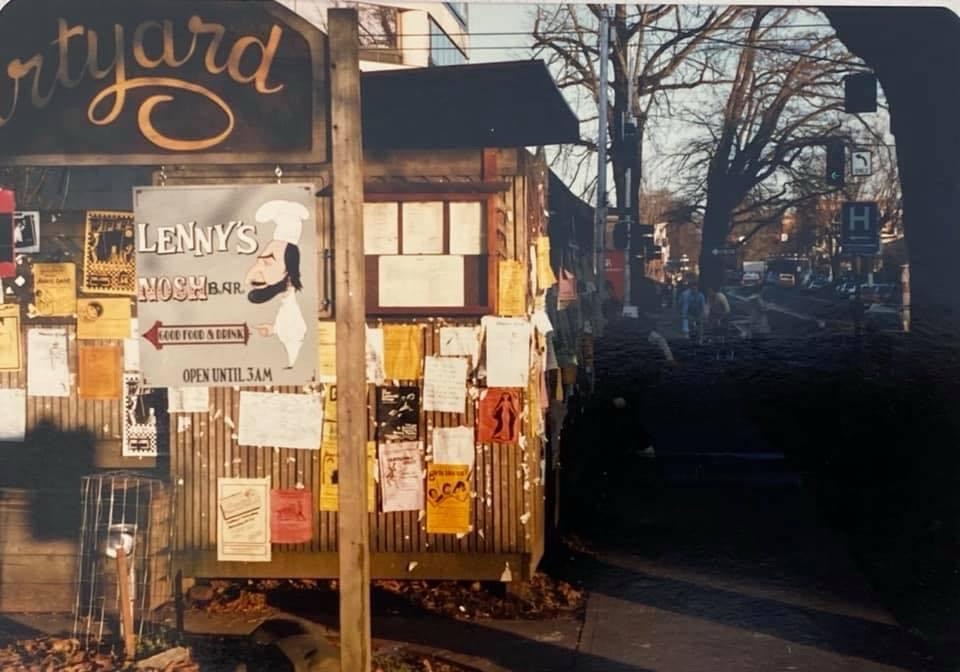
After closing the shop at night, many of us walked to Lenny’s Nosh Bar on 13th Avenue. It was open late and offered what every tired scooper needed: food, warmth, and conversation. The place was filled with artists, students, and the usual characters who inhabited the Eugene after-hours world. It became our clubhouse.
Today, Pückler’s has staked its territory to a single, strong location at 19th and Agate, and it’s owned by Laura Robertson, Jim and Lolly’s daughter. She carries the place with the same straightforward spirit: make good ice cream, don’t cheat the product, don’t cut corners, and give people a place where life slows down long enough to taste something real.
A lot has happened in fifty years. People have moved away, come back, grown older, made families, changed careers. But the shop is still there, still serving dense, honest ice cream with no shortcuts. For some of us, it was our first job. For others, it was home long enough to shape who we became. And for everyone who has ever stood in those long lines, waited for a sundae, or watched a summer evening unfold on the corner of 19th and Agate, it remains one of the quiet constants of Eugene.
~ Richard La Rosa
Next day edit (November 15, 2025):
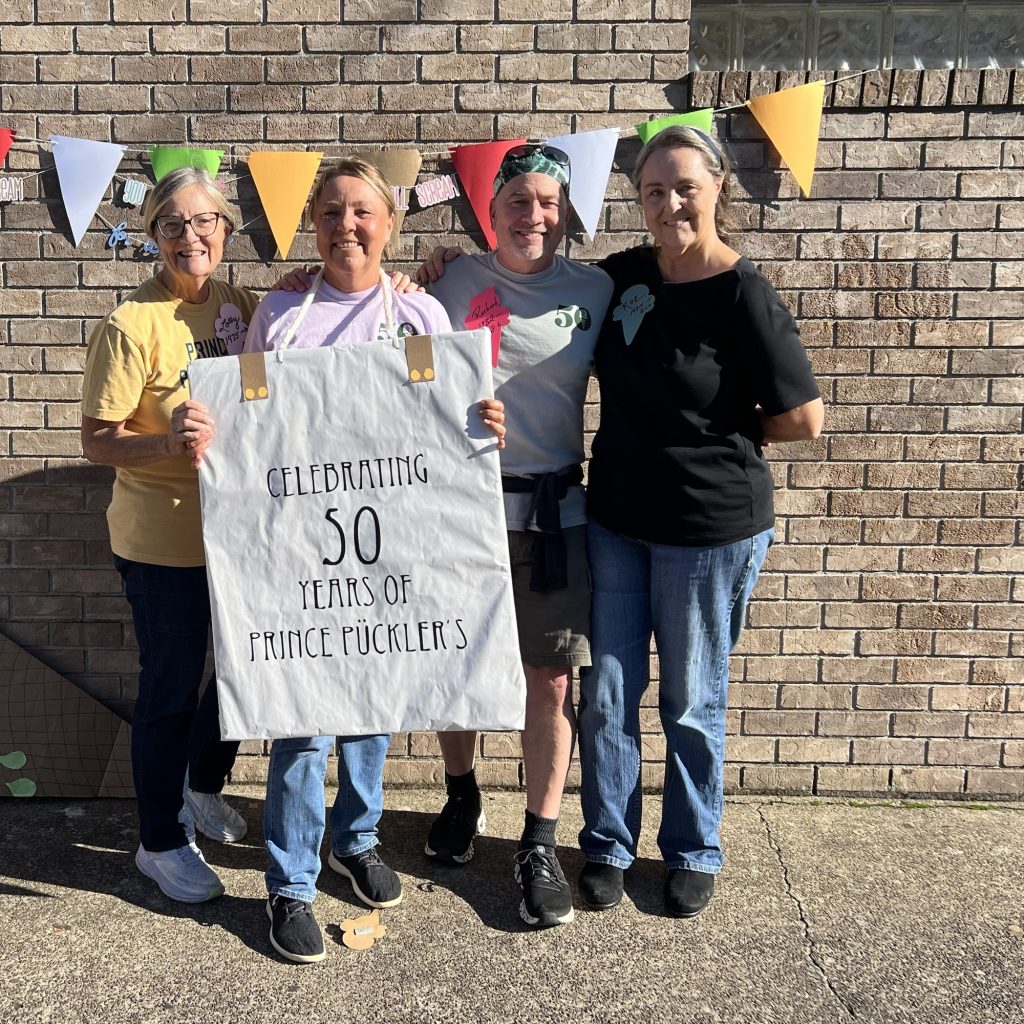
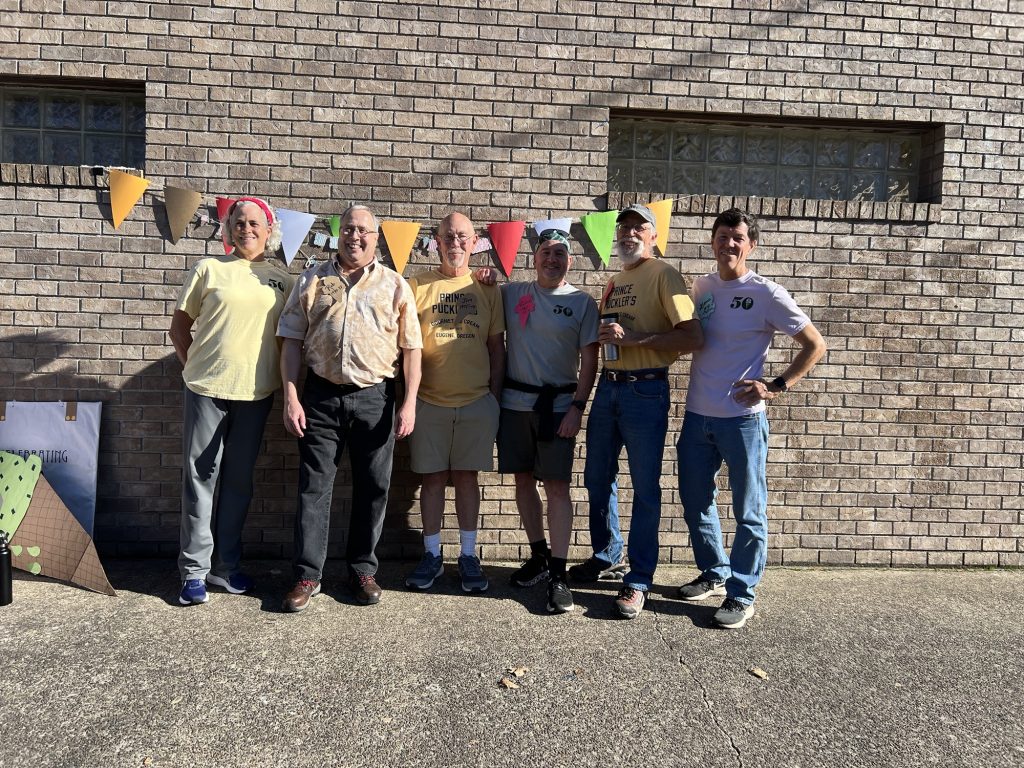
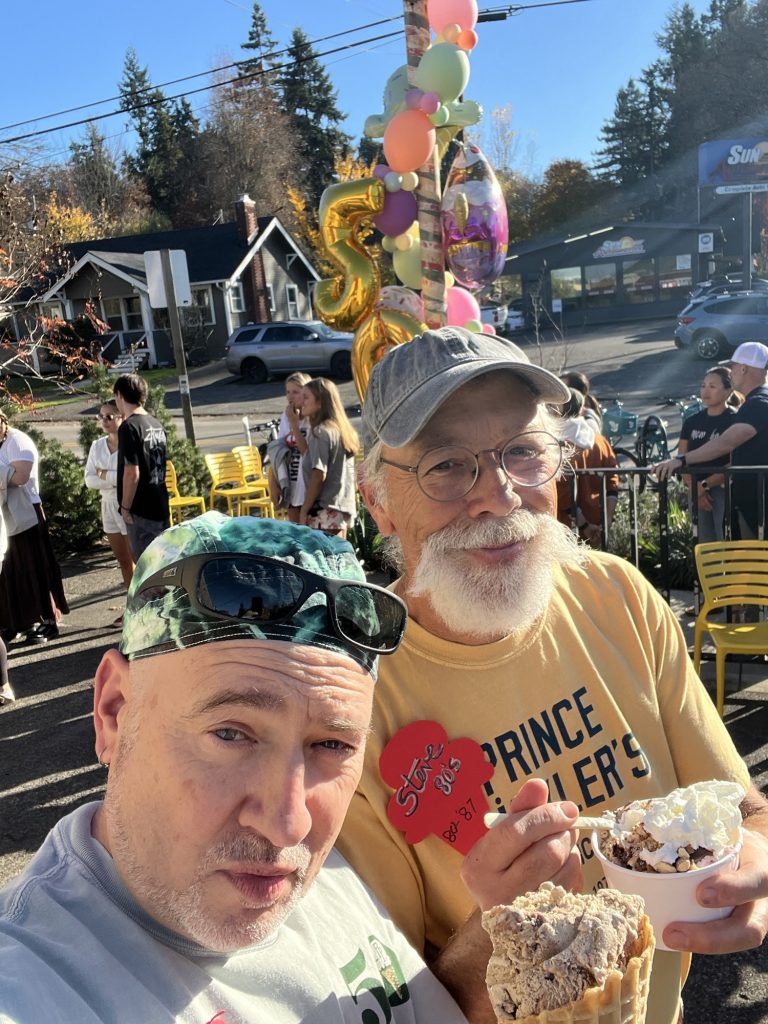
I scooped ice cream at Pückler’s for the first time since I last worked there 39 years ago. I wasn’t alone. Some of the old crew was by my side—Steve, Rob, Coco, Gene, Ros, Kelly, and Lolly. Seeing all of us behind the counter again was a trip
It felt like the old days, especially when the rush hit. It brought back the weekends when we barely had time to breathe and the Tuesdays when we served hundreds of 99¢ hot fudge sundaes to a line that snaked out the door and down the block. I had forgotten the texture of it all—the controlled chaos, the sticky hands, the constant hum of conversation, and the moment you look up, lock eyes with a stranger, and ask the most unnecessary question in the world: “Who wants ice cream?” Every single person did.
Kids lit up. Teens did too. Parents and elders beamed. We answered with the same energy. And for a time it felt like the old rhythm came right back through muscle memory.
Today was one for the record books.
Happy 50th Anniversary, Prince Pückler’s Gourmet Ice Cream!
Lolly, Coco, Richard, and Ros (“vintage” scoopers).