Farewell, Mr Loaf

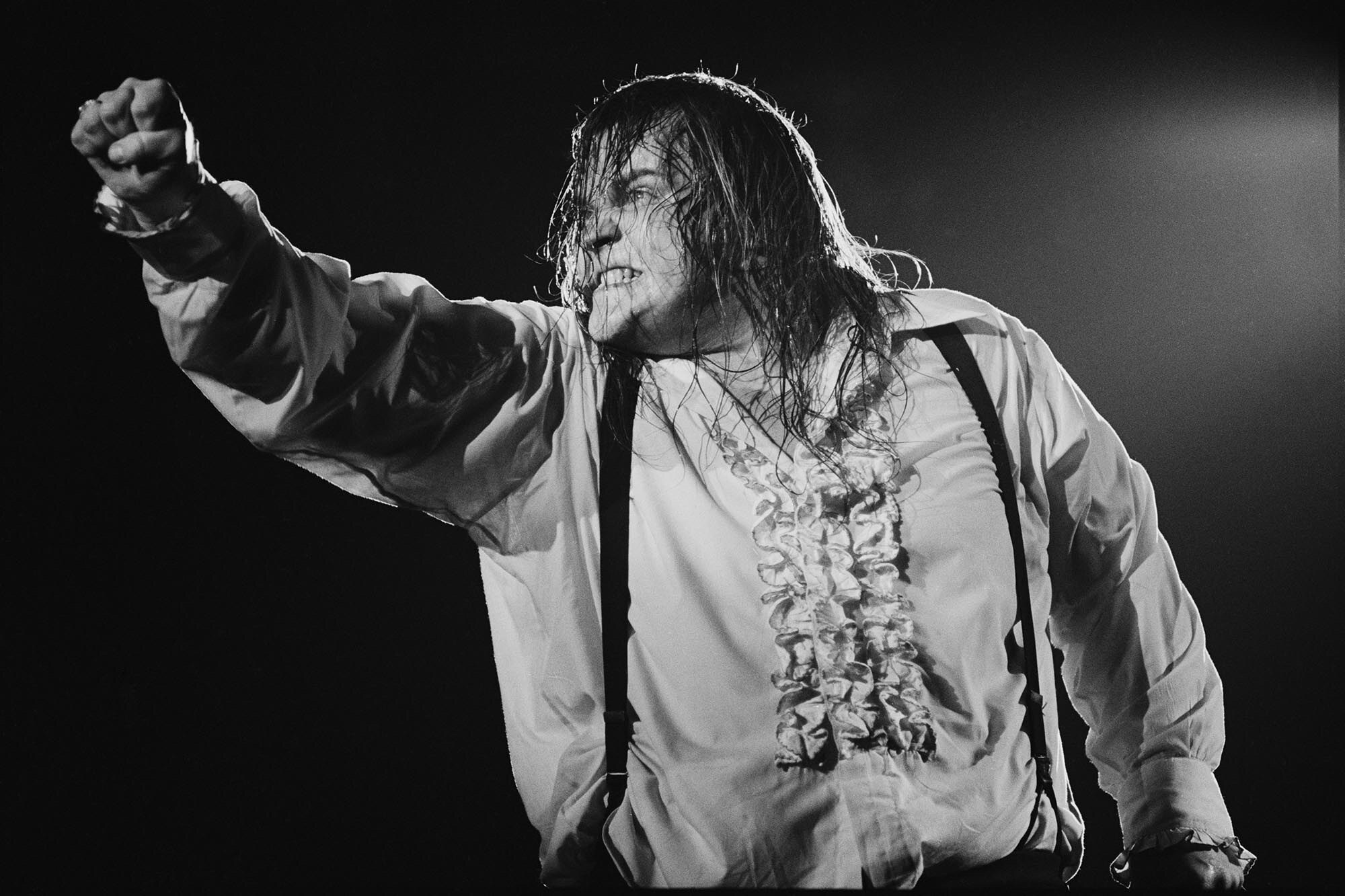
Meat Loaf died today. Or maybe yesterday, I don’t know. For some he was an acquired taste. But, there is no denying the raw power of his passion when he performed.

In the guise of Eddie—a 1950s era biker and greaser channeling Elvis and John Belushi—Mr Loaf burst out of a deep freeze, frenetically riding a motorcycle and chewing the scenery in The Rocky Horror Picture Show; an audacious cult movie from 1975 still playing in cinemas today.

He was loud and brash but he could also be surprisingly tender. And, hot patootie bless my soul, that loaf of meat could Rock n’ Roll!

And sweat. Profusely.

Known mostly for his rock ballads and duets, and for his rock masterpiece, Bat Out Of Hell, Mr Loaf’s loftiest moment arrived in 1999 with his vulnerable performance in Fight Club; which normalized man boobs, male tears, and men hugging other men. His name is Robert Paulson.

In 2020, the self-proclaimed sex god came out as a climate change denier and, worse, a critic of environmental activist Greta Thunberg. Meat Loaf turned rancid for some fans after the duo performed their disastrous rock ballad duet, You’re Brainwashed, Climate Change Isn’t Real / No, I’m Not, Yes, It Is.

But that expression of opposing worldviews shouldn’t prevent us from recognizing his humanity. We don’t all share the same palate. Now is the time to put aside the main course and focus on the mashed potatoes and other side dishes. And come together to eulogize and celebrate the positive aspects of his stage and screen personae.

Meat Loaf. At the end of the meal, all we can say is that he was a man like any other man in some ways and unlike other men in other ways.

Adieu, Monsieur Loaf.

I hope there’s a piece of you still out there. Somewhere. Back in deep freeze.

A piece that may come back again as leftovers.

May flights of bats sing thee to thy roast.

We await the second helping.

Eagle Park Slim

It’s raining today in my corner of California and rain always makes me think of the blues. And the blues plus the rain makes me think of Eugene, Oregon—where I lived from 1976-1988. Eugene is Bluesville in my memory, because that’s where I existentially felt the blues.

I was 13 in the summer of 1977 and still listening mostly to The Beatles and The Who, but I was getting tired of all the usual stuff I listened to and was primed for some new music. Billy Joel’s The Stranger had recently been released and it was fast becoming a favorite. I also really dug a trippy electronic music album called Oxygène, by Jean-Michel Jarre. Then I discovered Mississippi John Hurt and Lightning Hopkins and was instantly hooked.

Later that same year, John Belushi was in Eugene filming National Lampoon’s Animal House and he met and befriended a local blues artist named Curtis Salgado while he was playing a gig with his band, The Nighthawks. That meeting at the Eugene Hotel was the spark that inspired the first appearance of The Blues Brothers on Saturday Night Live. A couple of years later in 1980 the movie came out and the soundtrack for it became hugely popular, especially in Eugene, and it reinvigorated the careers of soul and blues legends such as James Brown, Cab Calloway, Ray Charles, and Aretha Franklin—to name just a few.

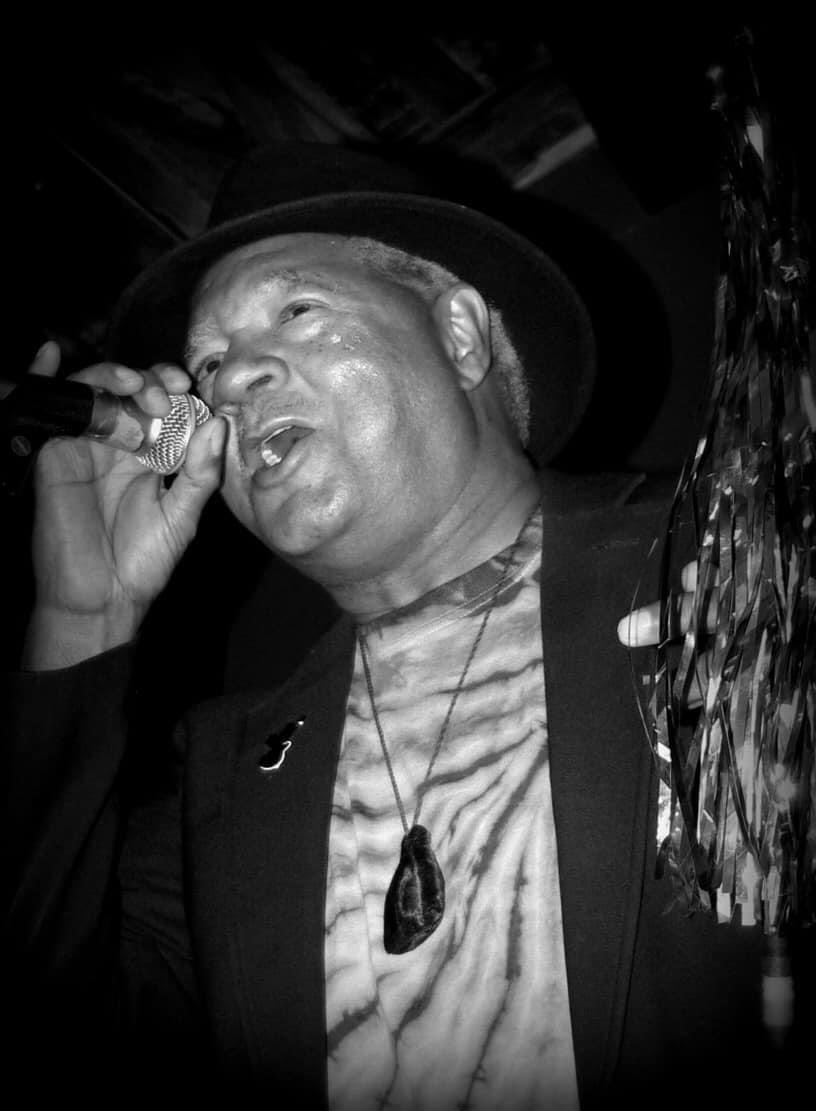
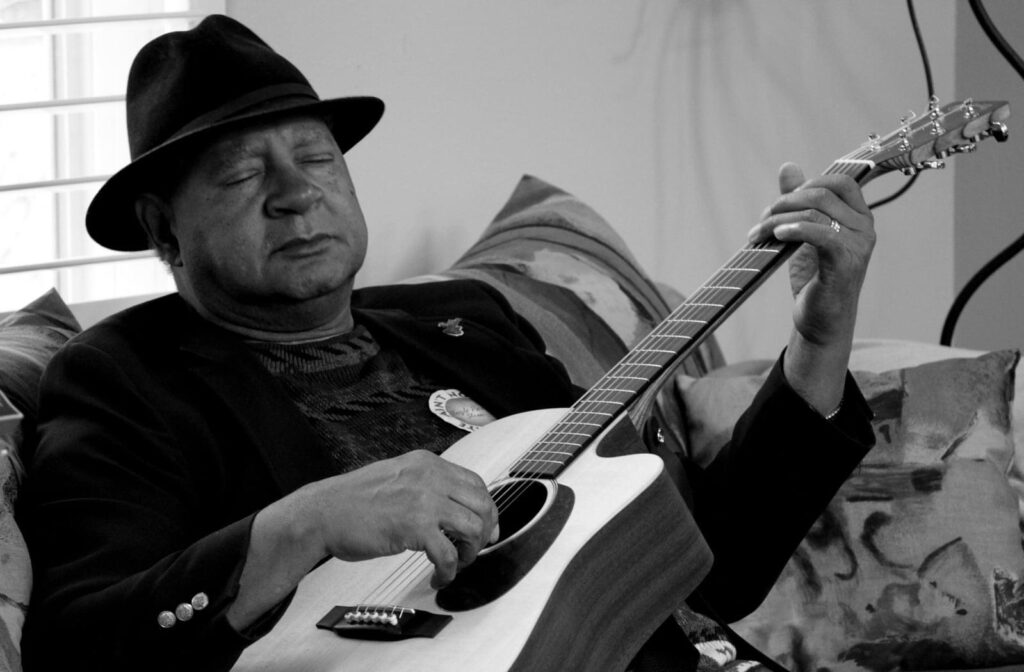
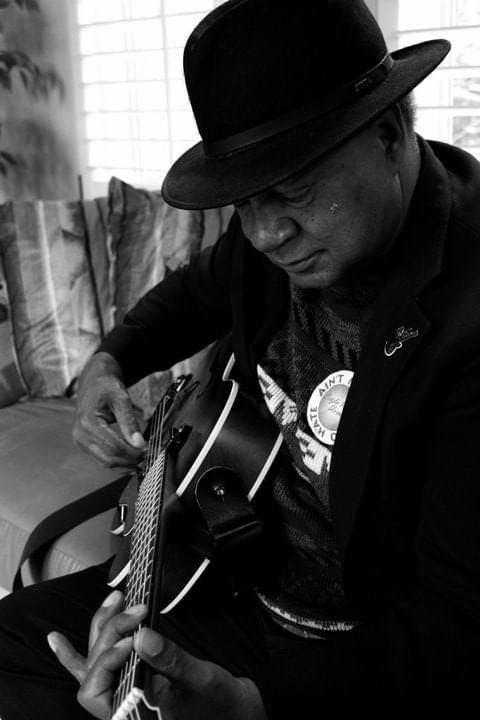
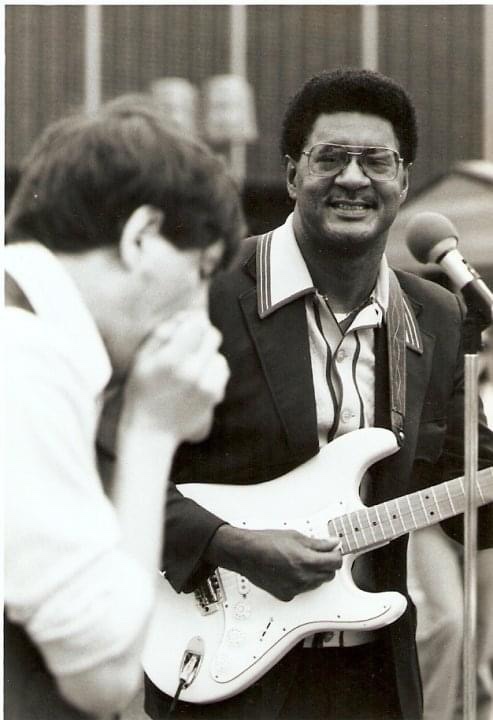
1980 was the year of the blues and it was also the year that Eagle Park Slim came to town. Slim’s motto was “ain’t no time to hate” and his mission was “peace through music.” He’s one of the many hard-working blues musicians in the country that never achieved fame and in my opinion it’s a damn shame.

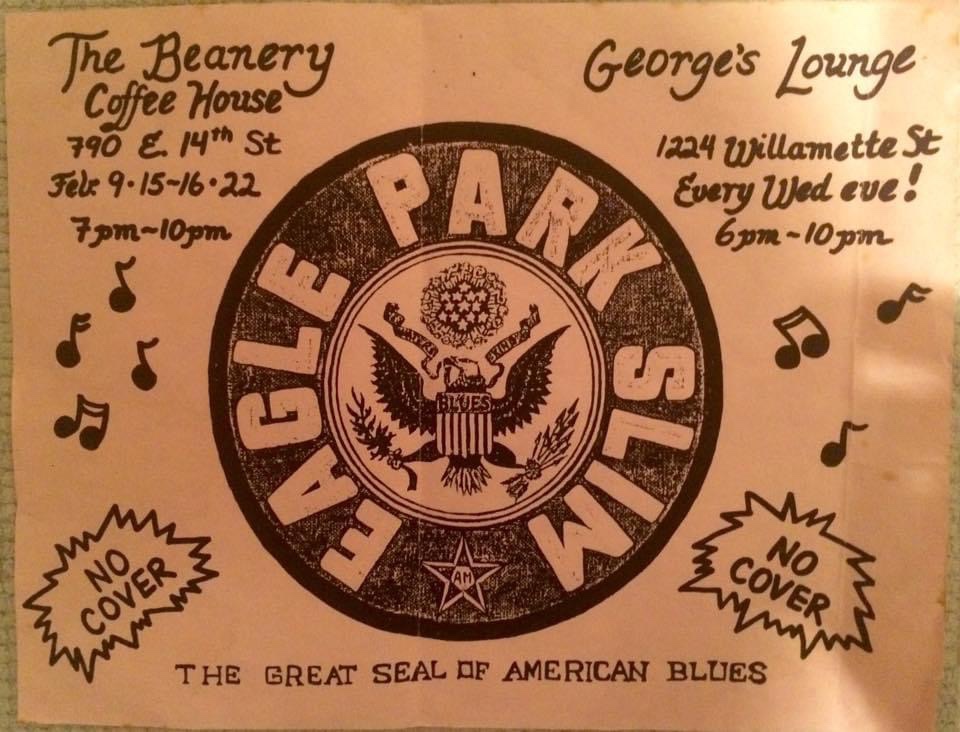
Eagle Park Slim was thirty-eight years old when he moved from Colorado to Oregon and he got to work immediately as a blues busker. With just his guitar and a kazoo, Slim was the kind of seasoned professional that could immediately make himself at home playing his music on the street, and in coffeehouses, and in public markets, of any town or city.

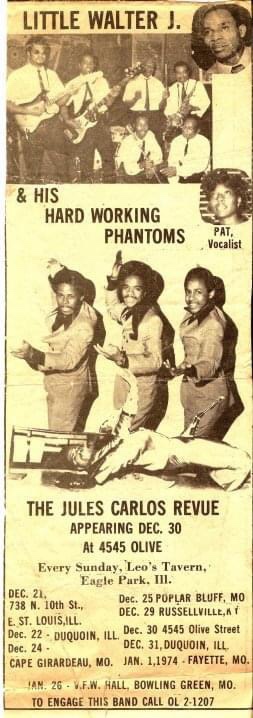
Autry McNeace was born on January 11th, 1942, in Eagle Park, Illinois. He grew up with the blues and started playing at his mother’s club, The Village Tavern, in 1954. I don’t know when he took on the name Slim to go with the name of his city of birth but he was still in Eagle Park in the 1960s, working a regular gig on Sundays at Leo’s Tavern, playing guitar with Little Walter J. & His Hard Working Phantoms.

Slim expanded his territory to East St. Louis and across the river in St. Louis, playing with blues pianist, Johnnie Johnson. During his lifetime, Slim would also play along with Chuck Berry, James Brown, Muddy Waters, Jimmy Reed, Sonny Boy Williamson, Percy Mayfield, Ike Turner, Little Walter, Joe Cocker, Keb Mo, and The Red Hot Chili Peppers. I’m sure I’ve left out many other famous and well-established artists.

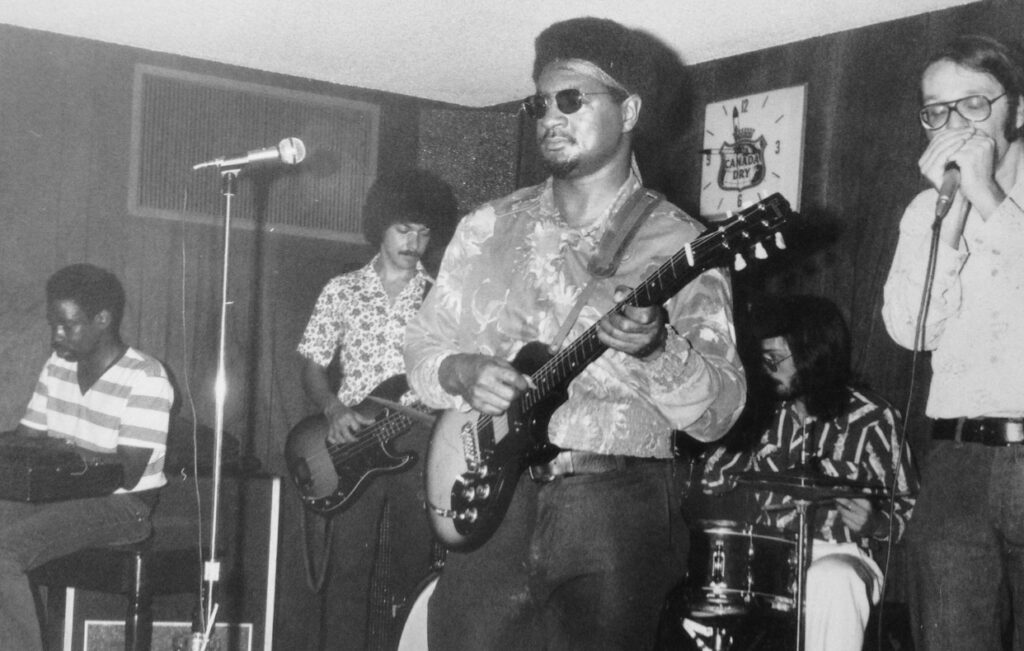
In the 1970s, before he settled in Eugene, Slim moved to Colorado, and Eagle Park Slim & The Mile High Blues Band were the house band at an after hours club in Denver, with a regular gig Thursday to Saturday from 11pm to 3am.

I was fifteen when I first met Slim and heard him play the blues and I got to know him better after I graduated from high school, when I was working at Prince Pückler’s, an ice cream parlor with one shop at 8th & Willamette downtown and another on 13th Avenue, across the street from Poppi’s Greek Taverna and Lenny’s Nosh Bar. I worked at both locations and I always treated Slim to a cup of coffee whenever he came into the one of the shops.

The free coffee for Slim continued over the years and our conversations continued when I worked at the Coffee Corner kiosk at 5th Street Public Market in the mid-eighties. My jam on the boom box in the kiosk was usually blues (I was also obsessed with Joe Jackson’s Jumpin’ Jive) and I think he appreciated my musical taste when he sat at table in front of the kiosk. If it wasn’t Slim sitting there it was often Steve Ibach and Teddy “Honey Boy” Roy of The Soulsations, a new group they had formed with my pal Joe Lewis that was swiftly becoming the hottest band in town.

In those days you could go out almost any night and hear the blues played live for free or so cheap that it didn’t matter. There was a Monday night Blues Jam at Old Taylor’s on campus that you could see for fifty cents. I wasn’t hanging out with friends at Lenny’s Nosh Bar I was probably out somewhere else listening to the blues.

And Eagle Park Slim always seemed to be around—a warm presence that made everyone around him feel happy. It’s funny, blues has a rep for making people feel sad but hearing Slim play the blues was more like the antidote for sadness.

I recently called Slim’s long-time friend, Jan Brown, and asked her to share some recollections for this piece I’m writing. She told me she met Slim in 2002 at a bus stop and he was boldly flirtatious, singing a Lou Rawls song to her while they were waiting for the bus. Not knowing he was a professional, she complimented him on his singing voice, and he introduced himself and gave her a flyer advertising his next gig with The Vipers, a group he played with that also featured the aforementioned Steve Ibach from the defunct Soulsations.

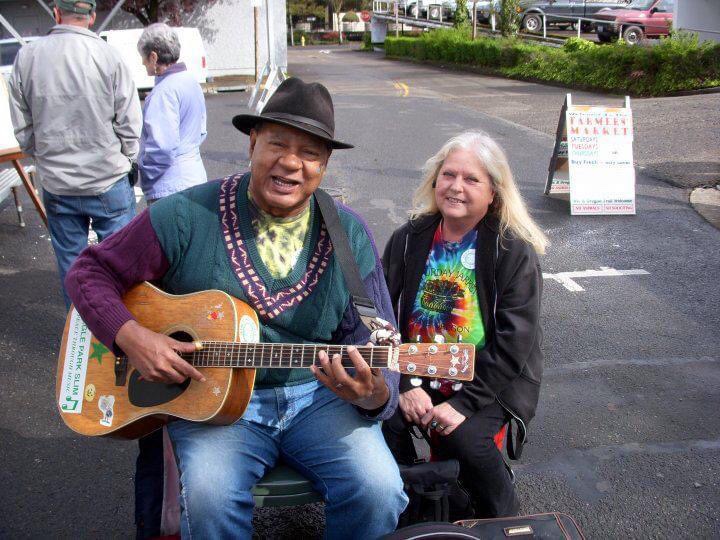
Eagle Park Slim and Jan Brown

Jan said she was a busy single mom at the time, and didn’t get out much to hear live music, but she recognized his talent immediately. They rode the bus together and before he got off at his stop he gave her his phone number and told her to give him a call sometime. Later that day, at the adult foster home where she was working as a caregiver, she showed the flyer to a couple of women and they both squealed with excitement. They were both Eagle Park Slim fan girls. So, at their urging. Jan called Slim and went out to see his show. It was the beginning a beautiful friendship and partnership that lasted for twelve years—until they parted amicably in 2014.

Eagle Park Slim & The Mile High Blues Band. Denver, CO. 1975.

I also called Slim’s friend, Randy Layton, who released Slim’s first professionally produced album, Northwest Blues, a 1998 CD that had the appearance of a vinyl record from the 1960s. Randy wanted to give Slim an album to sell when he was busking—one that looked professional—and it was an album that Slim owned outright after the first pressing. The album has 22 tracks that Randy says “was pretty much a compilation of cassettes he gave out in the streets in the early days of busking.” Randy (also an accomplished writer) wrote the liner notes.

Mardi Gras Saturday at the Winter Blues Festival (2012)

A few random things about Slim:

He frequently wore a fedora, like any self-respecting blues man, and quite often a tie-dyed shirt with dress pants. Like a true Eugenean, he loved his tie-dyed shirts and he had a multitude in his closet.

He usually arrived to his evening gigs by taxi. Often a friend would drop him off at a street corner when he was busking. If he was playing at a bar and you offered to buy him a drink he might accept a snifter of brandy.

At home, he had a poster of Jimi Hendrix on his wall and another picture of Jimi in the window near the recliner where he always sat. Jan says that Slim revered Hendrix.

One last thing of interest I should mention. Eagle Park Slim is remembered by many in Eugene as the first person they met when they arrived. And most of those people will tell you how much they loved him, and talk about the impact he made on their experience in Eugene. And Slim loved them back. And, most of all, he loved Eugene.

***

It’s a year later and I just found my notes from the January 2022 call I made to Jan Brown. I might roll some of this stuff into another revision of this piece but for now, here’s the raw material, if anyone is interested:

Slim mentored a young musician named Andy Strange who would later have a band called Andy Strange and the Strangetones. Slim was very proud of Andy.

Slim loved the ladies that danced at his shows.

Slim and Jan never lived together but they were in a relationship for awhile. Whenever she left after visiting him he sang “Hate to See You Go” or “Baby Don’t Leave.” Sometimes he called her his wife because he didn’t want to call her his manager, though she did a lot with helping him with booking shows. Jan learned how to use a computer from helping Slim put together flyers and book shows. Jan said it gave her a purpose. “He gave me a reason to learn to use a computer.”

Slim was cautious about playing in Springfield. Once, he and Jan were looking into booking a show in Springfield and they were walking through downtown and he said, “Don’t hold my hand.” He had experienced some racism in Springfield and was cautious about appearances.

He always liked to play with his band on his birthday.

Slim had one son, who lives in Denver.

He was always excited when he was on television. He’d bring over some black velvet cake to share and some chicken wings from Dairy Mart.

His influences: Sonny Boy Williamson, Muddy Waters, Little Walter, Chuck Berry, Joe Cocker, Keb Mo, The Red Hot Chili Peppers.

He recorded “Baby Don’t Let Me Go Homeless” with Keb Mo and was payed in classic fashion through Western Union.

He didn’t like to fly, prefering travel by train.

He was a Rodney Dangerfield fan and memorized his jokes. He named Jan’s cats after ex-girlfriends and she named her chijuaja Rodney Dangerfield.

He had pocket bottles of brandy, loved fried chicken.

Slim died in his sleep suddenly during a heatwave in August 2016. He was under a lot of stress from moving and his heart just gave out on him. He’d had two heart surgeries that gave him an extra ten years than what he was expecting and had a pacemaker placed nine months before he died.

All of the songs he wrote came from his daily experiences and feelings and he made most of his money, just enough to get by, through busking.

He loved the rain but he loved the sunshine too because that’s when people came out and he loved to be around people and watch people. He loved to tell stories about the places he played.

Slim at the Oregon Country Fair in Veneta (July 10, 2011)

Happy New Year!

Good news!

yOS 2.021, the obsolete year running in the chronometer of your biological operating system, was updated to yOS 2.022 at precisely midnight on 31 December and installed at 12:01 in the morning of the first day of January, replacing the old year with a new year.

But, is it really a new year?

Users should be aware that downloading and installing yOS 2.022 may not result in a better or more efficient operating system.

In fact, it’s possible the yOS 2.022 update will be incompatible with the chronological operating systems of many people, particularly individuals that frequently tell others to live in the present moment. These people may be resistant to the new update as they are running presentism software and they function in a world wherein neither the future nor the past exist.

Likewise, persons running eternalism software, which allows them to experience time simultaneously and operate in a reality wherein all points in time are equally real, will likely have issues with the update.

These potential issues have prompted some people to suggest that, if time is a construct humans invented to prevent everything from happening all at once, the words Happy New Year should come with a trigger warning, like the words, Merry Christmas and Make America Great Again.

Those critics claim that calling out Happy New Year to someone is a vocal form of chrono-harassment and adds insult to injury to all self-proclaimed slaves of time that have been subjected to cultural conditioning to perceive time in a linear fashion.

This update is not a restart, a reset, or a reboot.

And, if users believe they can change fundamental functionality?

Previous yearly updates have proven the premise that promises can be broken. Be prepared for possible glitches, crashes, energy drains, overheating, application instability, and problems connecting.

The “new” year will not contain any anthropomorphic features, despite reports of a decrepit man passing a figurative torch to a cherubic baby.

May you experience the continuance of a year.

Should Mimes Be Enlisted As Essential Workers To Build Physical Distancing Walls

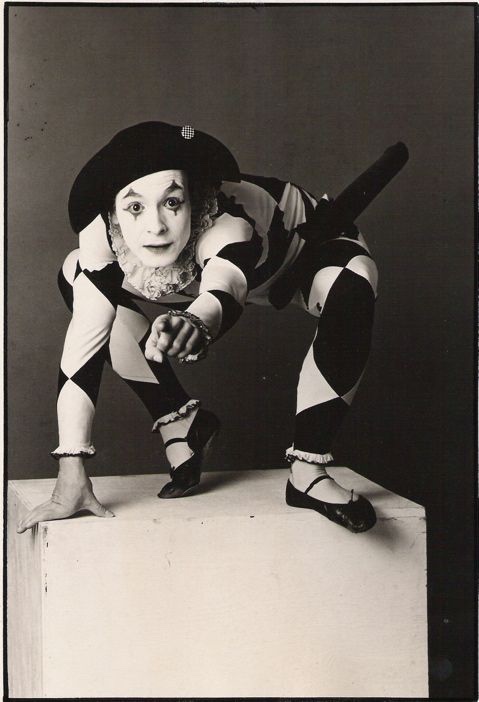
Imagine, if you will, an empty town square. A solitary mime stands, within this public space of your imagination, with an expression of unbearable sadness on their face—gesturing to a single teardrop drawn upon their white-painted cheek.

Waiting for a crowd of people that exists only in memory.

As people around the world observe draconian rules of social distancing, millions of starving street artists and live performers around the world are being denied access to those people that acknowledge their performances by awarding them with the crumpled bills and dirty coins in their pockets.

Inevitably, it falls upon forward thinking humanitarians to come up with creative solutions to mitigate the loss of income from their craft. To this, we must ask the question:

Should we enlist mimes, as essential workers during the COVID-19 pandemic, to fashion physical distancing barriers in the air to protect us from people that refuse to obey the invisible defensive perimeters around our bodies?

I submit an unequivocal yes; and these are the reasons why I think mimes can serve a useful function in the larger world outside our sheltered bubbles of social isolation:

Even though mimes are notoriously misunderstood attention seekers that actively try to draw a crowd, they are also masters of building invisible and impenetrable walls in the air that encourage distancing.

Also, mimes are low-risk as transmitters of viruses because they do not speak and, therefore, they do not emit virus-infused micro-droplets from their mouths.

Mimes are very affordable and will not burden tax paying citizens. Furthermore, they can survive on just a few coins tossed into their hats; all the food they need is created out of thin air, so they can subsist solely on coffee and applause. They also provide their own natural face masks.

These are just a handful of reasons why I think that failing to make use of this valuable resource is absolute folly.

For, as we all know—a mime is a terrible thing to waste.

Tommy Tutone’s Belated Apology To Jenny Jenny After Doxxing Her In His 1981 Pop Single

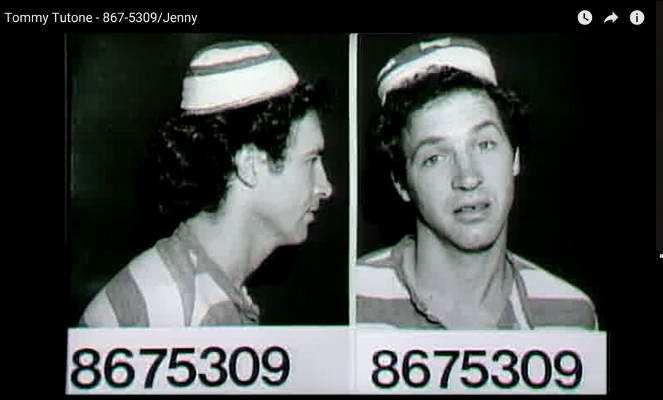
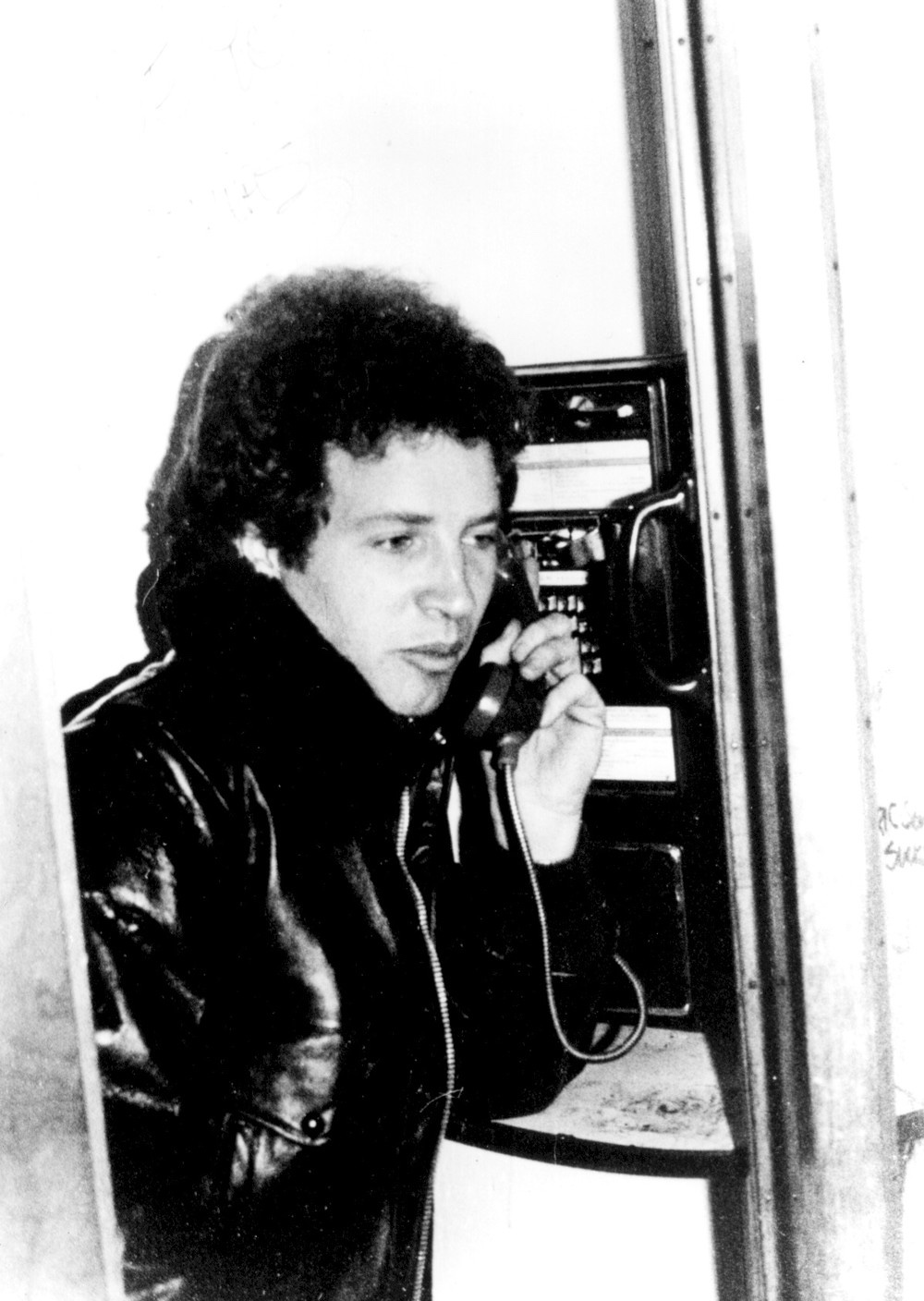
Rocker Tommy Tutone, a 20th century singer who famously sang a pop song about a girl named Jenny Jenny that played incessantly over the airwaves in America and abroad after it was released in 1981, has finally apologized to the woman he infamously doxxed in the early eighties by revealing her phone number to the world back in the olden days before the Internet existed.

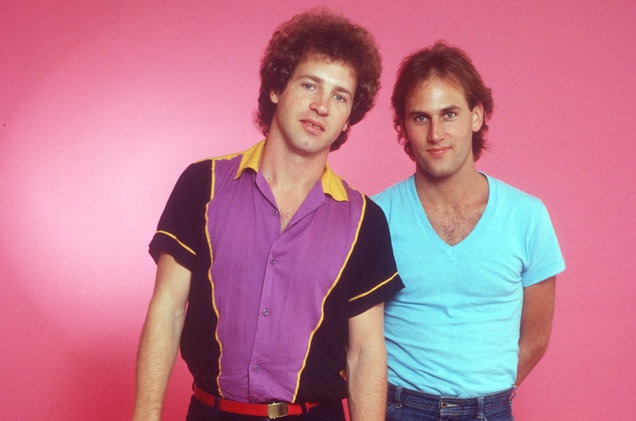
Tutone (shown above left with his psychotherapist) admitted that he “may have been a bit of a stalker back in the day” and further admits that he “probably acted inappropriately” with a girl with whom he “had a schoolboy crush on.”

After releasing the hit single inspired by a phone number scrawled on the wall of a men’s room in a cheap bar, the pop star released a video on Music Television, a fledgling new television network which had also launched the career of a new wave band called The Buggles.

“I’ve paid my debt to society,” Tutone says, speaking to me via Skype from the penitentiary where he’s been serving time since he was caught by police, crouching by the window outside of Jenny Jenny’s house and spying on her while she was entertaining another gentleman.

“I can’t wait to get out of prison and show Jenny Jenny I’m a changed man.”

Tutone is up for parole this week and he’s confident he’ll be released by Valentine’s Day of this year. Tommy told me he “planned to rush straight over to her new house with flowers and chocolate.”

I reminded him that he’d gotten rich ruining the reputation of an innocent woman by telling strangers “for a good time call 867-5309” and it wouldn’t be prudent to just show up at her front door.

“Oh, I’ve learned my lesson,” he assured me “and I know it’s maybe not cool to just drop by unannounced, but, hey man, I’ve tried and tried calling her at least a hundred times and it’s weird—I think she might have disconnected her number.”

If you liked this piece of ridiculous nonsense, please consider following 336 Journal on Facebook and the author, Richard La Rosa, on Twitter.

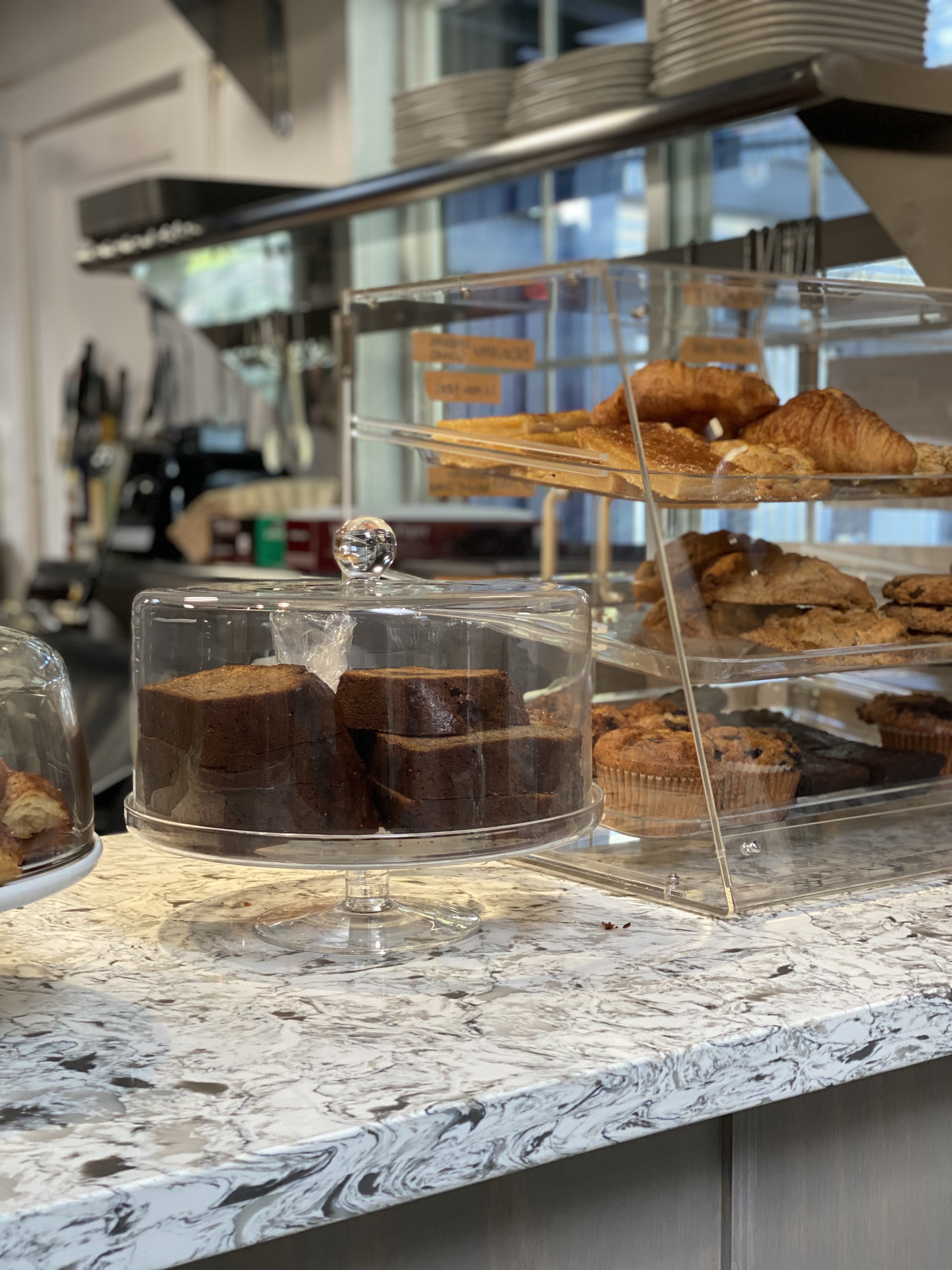
Café Frida is a new art gallery and cafe hot spot in Santa Rosa.

My friend Shey called me yesterday to say he’d heard a rumor that the fledgling coffeehouse and art gallery in town, Café Frida Gallery, was finally opening on Thursday, January 16, and he was going to check it out. I said I wouldn’t miss it and true to his word he rang me this morning saying, “I’m here and it’s happening!”

So I headed over to meet him at the same place where I used to spend many days at my writing studio and literary salon in the SofA Arts District of Santa Rosa at 300 South A Street, in the space formerly occupied by Atlas Coffee Company, which had permanently closed in October 2018.

Two months later, Mario Uribe, an artist with a well-established studio and gallery in the arts district, took over the space and began the long process of turning it into his vision of the sort of cafe he wanted to operate in the neighborhood.

It’s been a year in the making, during which time I’ve lamented the loss of an artistic and cozy place to hang out with my friends and converse on meaningful subjects. I’ve been searching for that special place to go and gather with others and make human connections in the real world and Café Frida Gallery is just the sort of place I would want to create if I had the means and the motivation. A place I could also kick it with a book or write when I wasn’t with others.

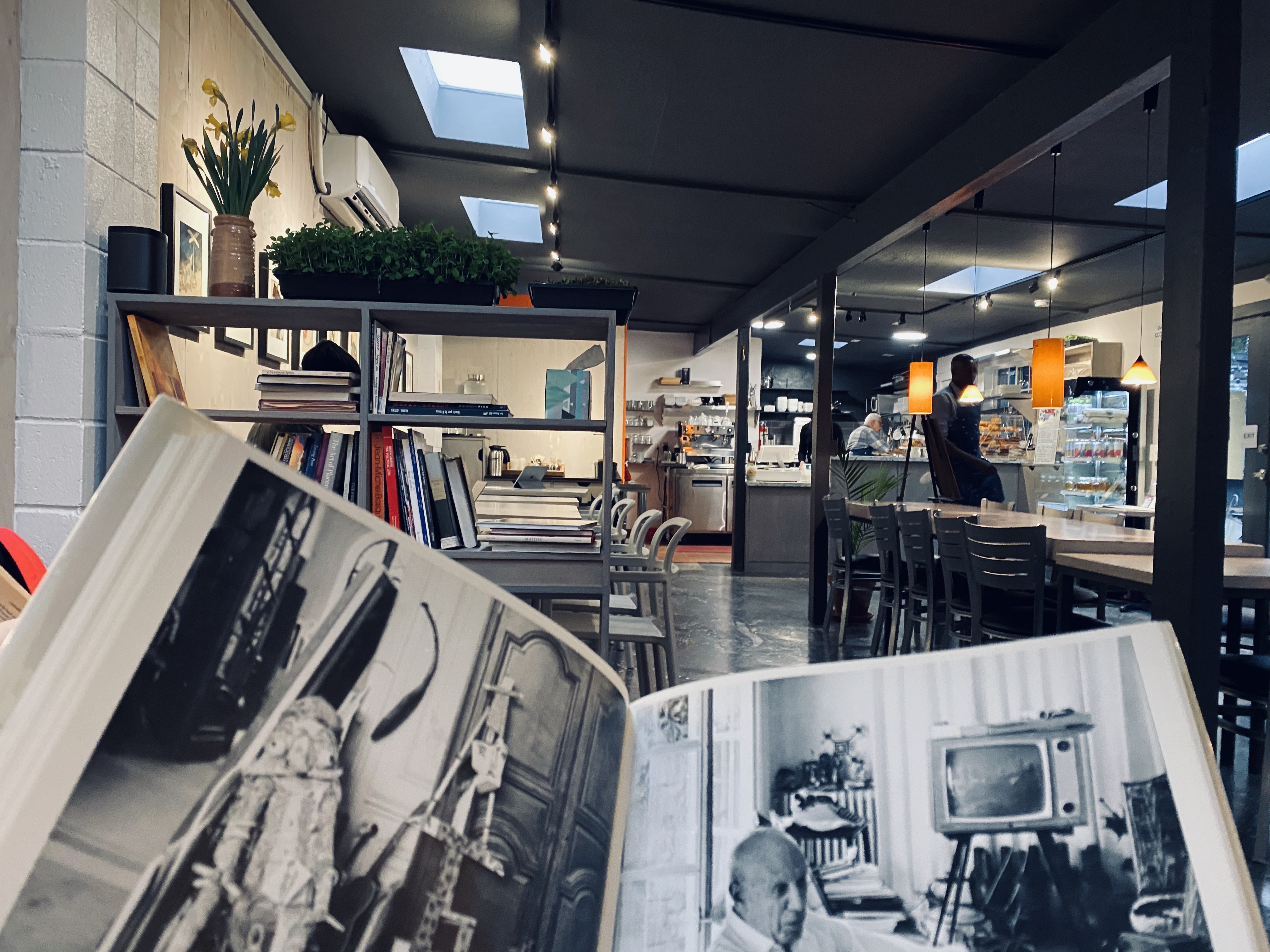
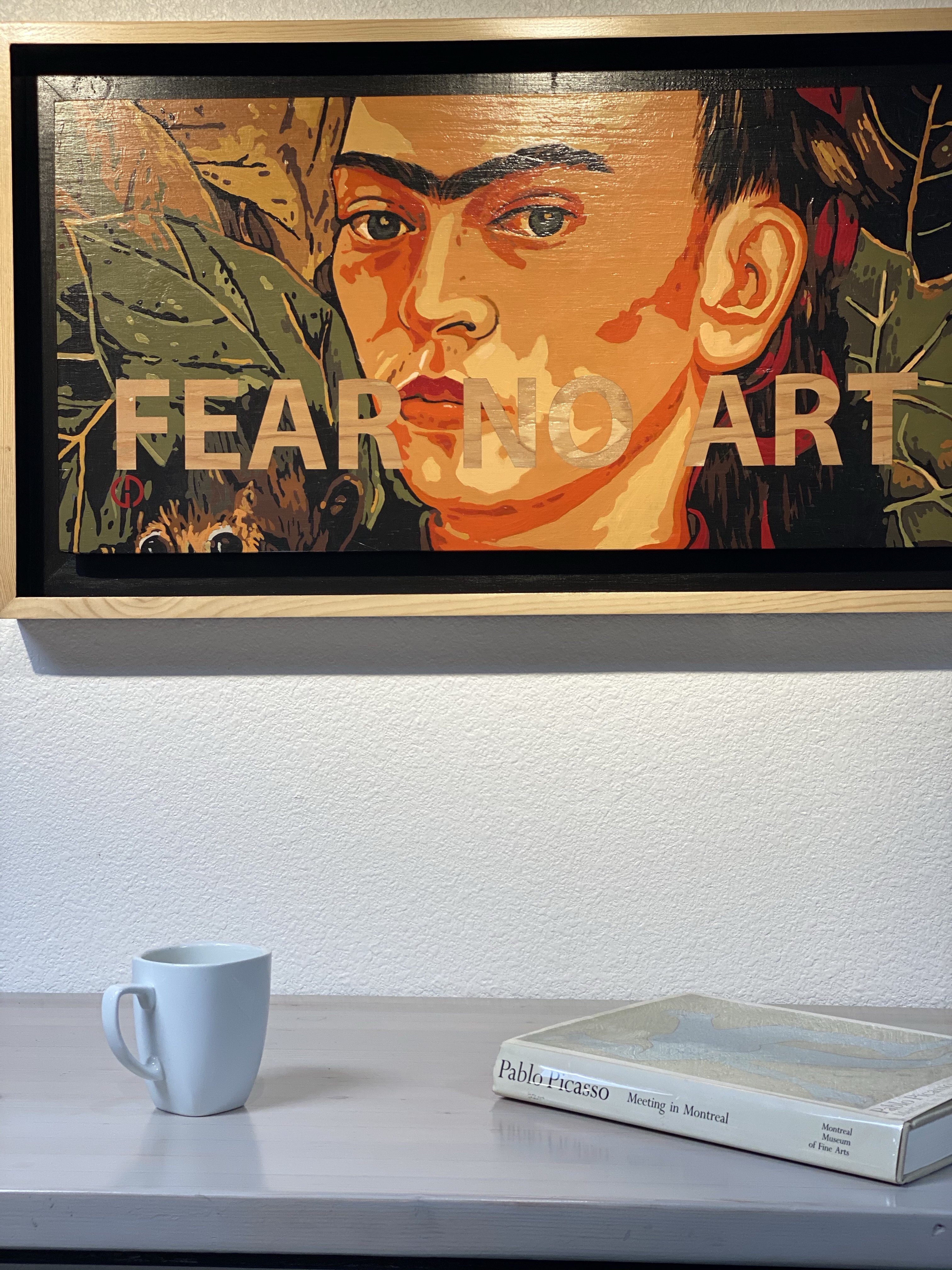
As soon as I arrived at the café I could tell I was in my home away from home. The joint looks swell and there’s a chill vibe in the air with jazz music playing over speakers, art on the walls, and a single bookshelf filled with art books—from various indigenous artists around the world to books containing works by old familiar names like Picasso, Hockney, and Parrish.

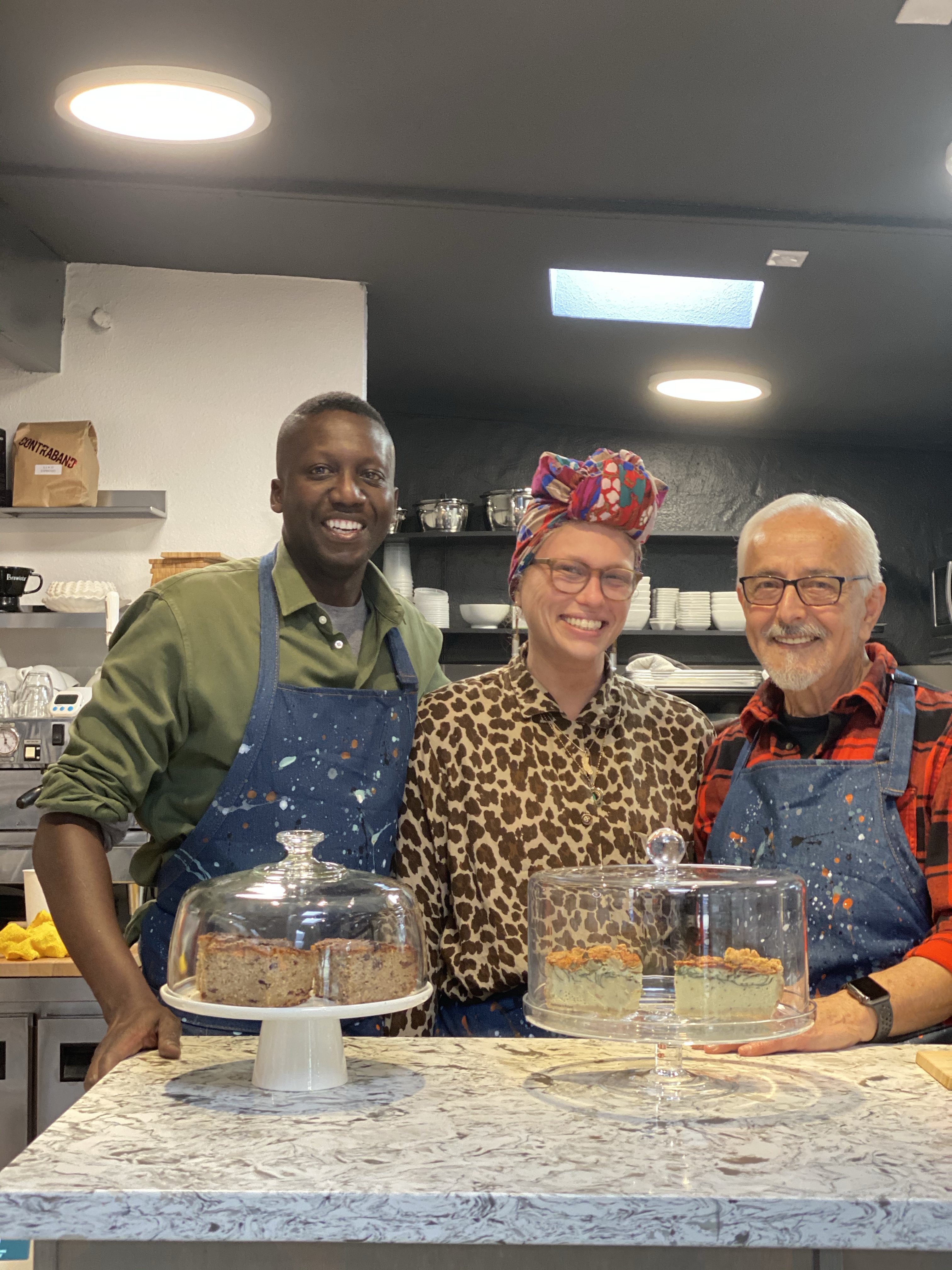
Mario is working in the café today, along with his son-in-law, Mamadou, and their friend Alex, shown below.

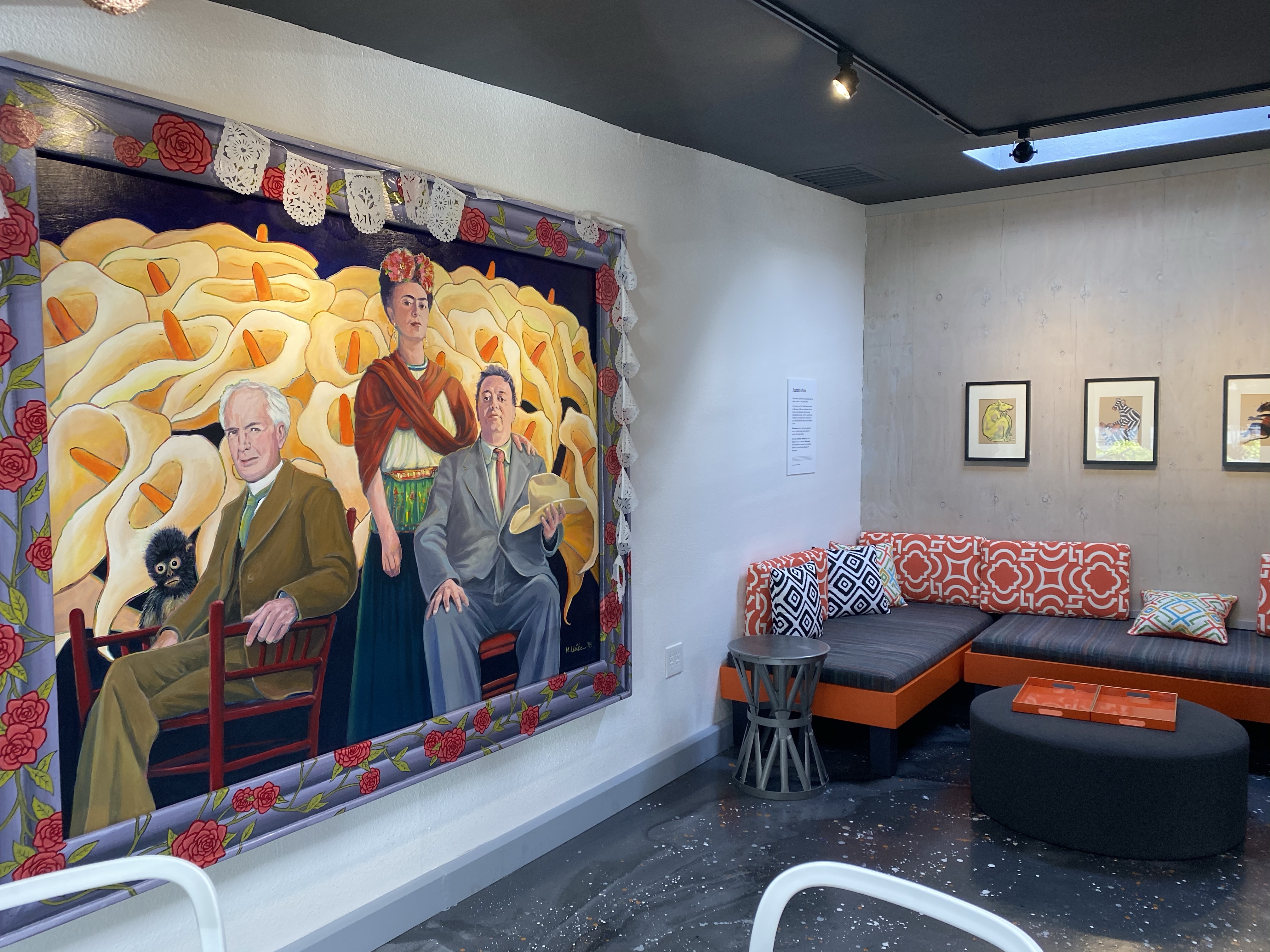
Mario’s daughter, Andrea, is also here today and she tells me about the large portrait on the wall that Mario painted of Frida Kahlo standing before a field of giant-sized orange and white calla lilies and flanked by local hero, Luther Burbank, and her legendary husband, Diego Rivera. The artwork overlooks a cozy lounge area that appears to be able to seat three or four people in comfort next to the bookshelf.

A long table in the center of the café seats 10-12 people; perfect for conferences or just a random assortment of writers tapping away on their laptops. There are outlets to plug in power cords for eight laptops but you can bring in your own power strip if you need more. In fact there are power outlets everywhere in the café.

Eventually, the food menu will expand to reflect the culinary identity of an actual cafe but for now there’s a small nosh menu with savory and sweet pastries from Dawn Zaft’s nefariously yummy Criminal Bakery. A plethora of teas. And, naturellement—an espresso machine playing all your caffeine favorites.

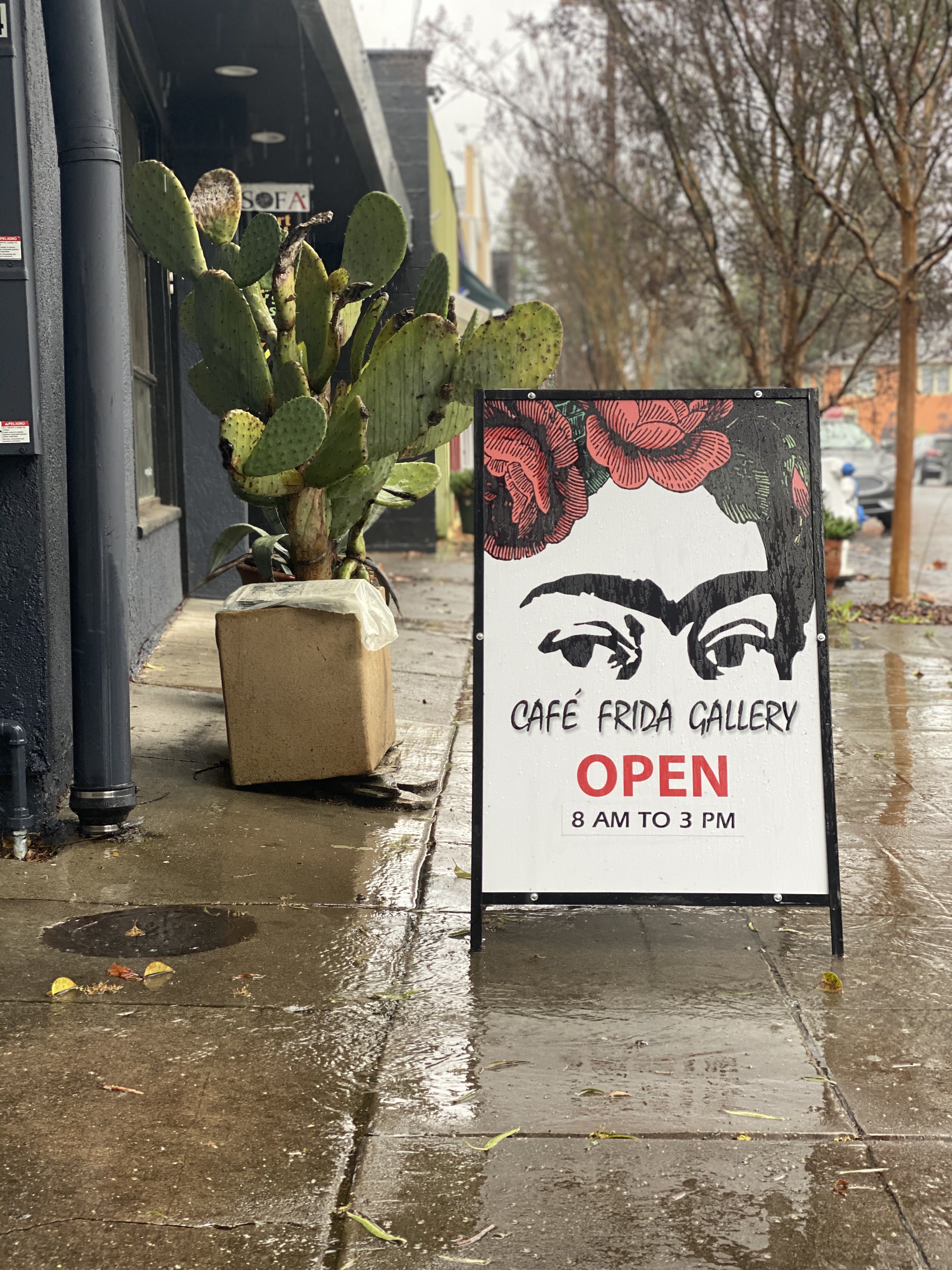
Currently, a sidewalk sign stands near the building facade by the walkway during business hours to guide passersby strolling on A Street, as the café is tucked behind the 300 building and to the right of the courtyard as you walk down the access path I’ve always called Atlas Alley. A more permanent form of signage for Café Frida Gallery is in the works.

Check it out for yourself. There’s seating for thirty-three with some extra standing room inside and even more seating in the courtyard. Currently, and through mid-February, the café is open from 8 am to 3 pm Thursday-Sunday.

Café Frida Gallery

300 South A Street #4

Santa Rosa, California 95401

(707) 308-4344

Readers can also share this article on Facebook and Twitter.

The Turning Point

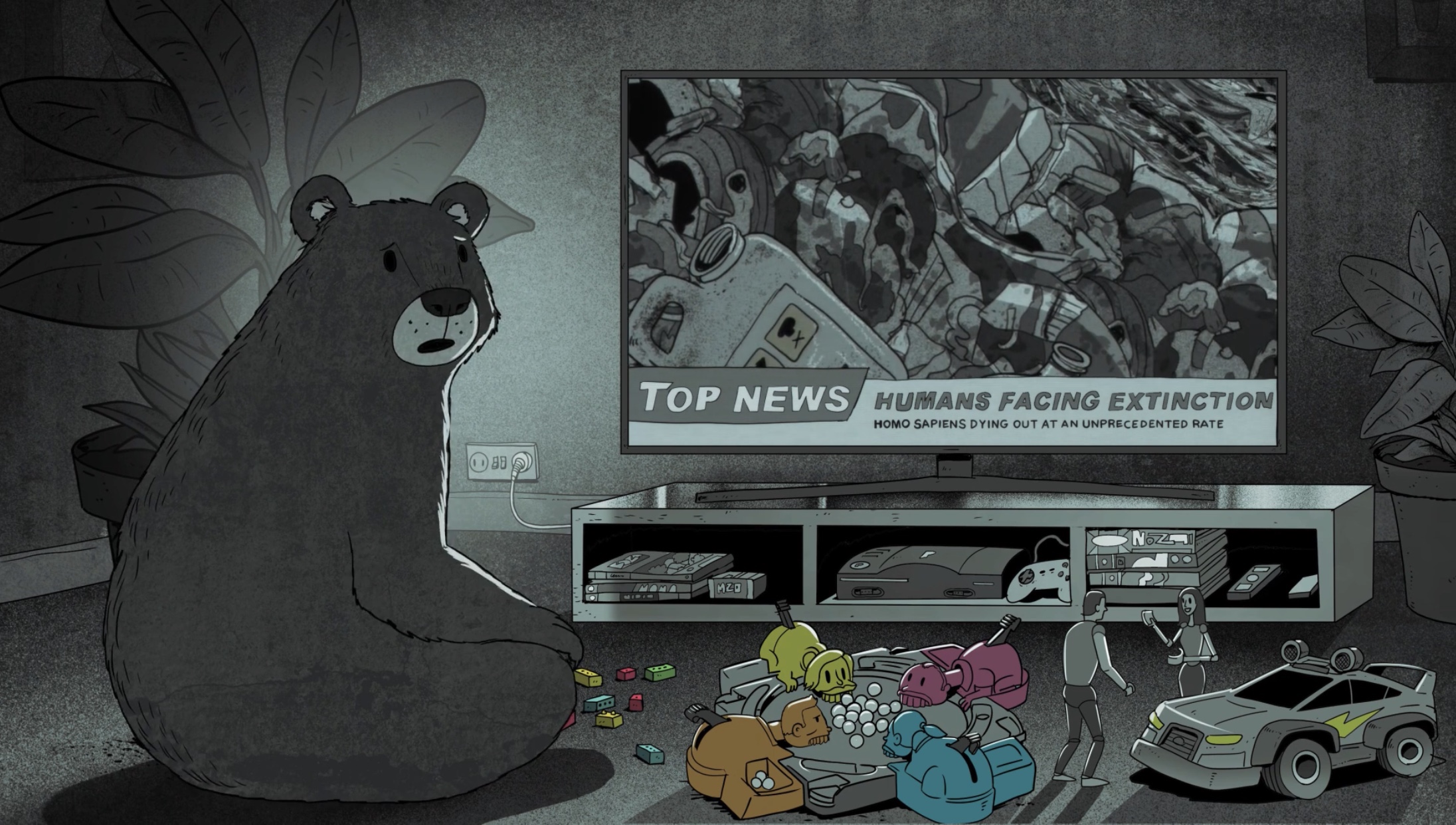
Steve Cutts has released his latest short film today, a music video called The Turning Point, which was commissioned by Wantaways, a solo project by Melbourne musician, Ken Seto.

The video flips the script and explores a world wherein it is anthropomorphic animals that are responsible for climate change and the destruction of the human species, not humanity.

Check it out and stay tuned for more words on the subject…

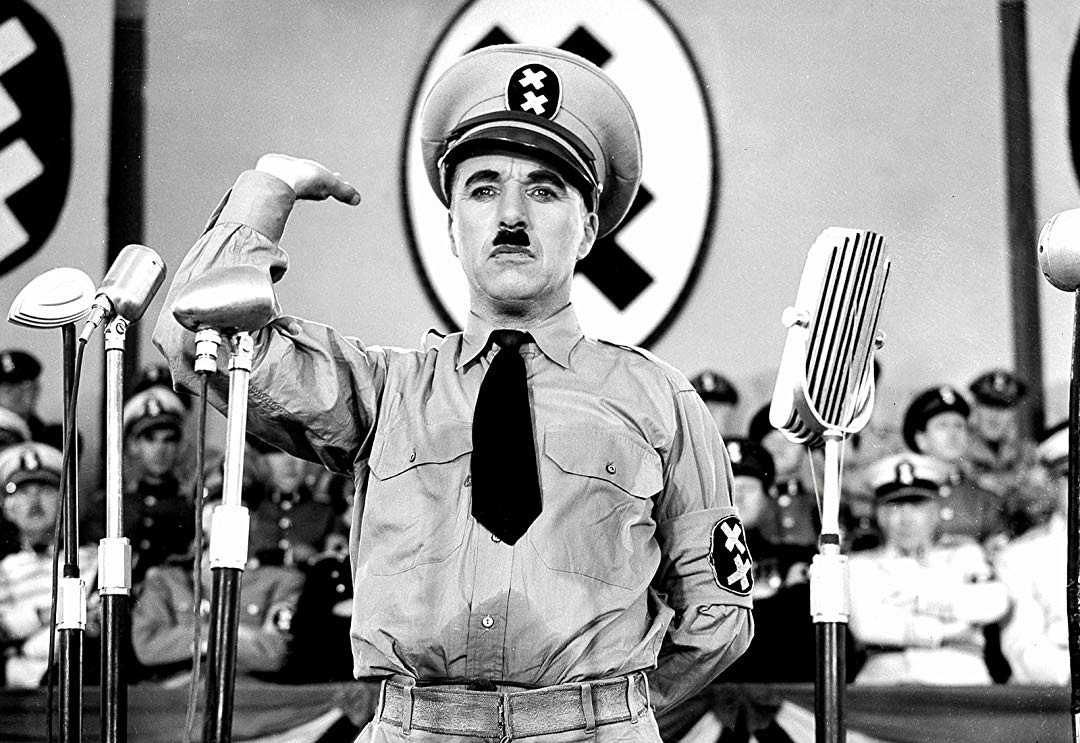
Charlie Chaplin’s Inspirational Great Dictator Speech

The Great Dictator (1940) was Charlie Chaplin’s first talking picture and the film is a magnificent parody and a scathing condemnation of fascism and Adolf Hitler. The movie was still in production in 1939 when Britain and France declared war on Germany on Sunday, the 3rd of September, and Chaplin heard “the depressing news” over the radio while he was on his boat in Catalina over the weekend. The allies could no longer stay out of the fight after the invasion of Poland by German forces two days earlier and the news was delivered in depressing tones by British Prime Minister, Neville Chamberlain.

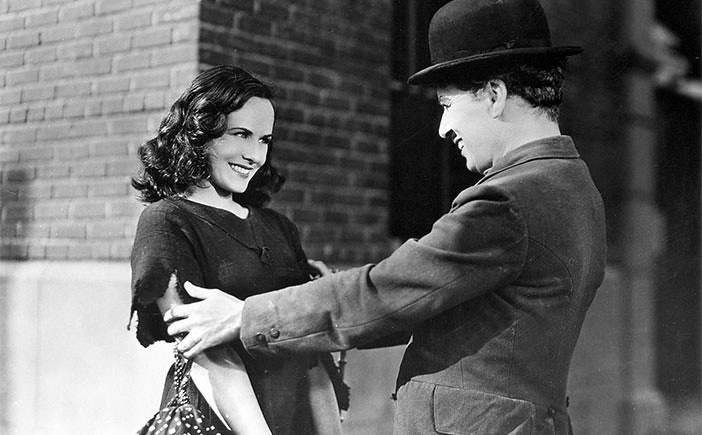
Two years earlier, in 1937, when war was in the air and Nazis were on the march, Charlie was struggling to write a story and a role for his twenty-nine year old wife, Paulette Goddard, who had shot to fame the previous year as leading lady to Chaplin’s character, the tramp, in Modern Times.

“How could I throw myself into feminine whimsy or think of romance or the problems of love,” Charlie would later write in his autobiography, “when madness was being stirred up by a hideous grotesque, Adolf Hitler?”

Enter, friend and fellow filmmaker, Alexander Korda—whose own wife, film actresss Maria Corda, was unable to make the artistic transition from the silent era to the emerging age of the talkies because of her strong Hungarian accent. Korda made the audacious suggestion to Chaplin that he make a film about Hitler based on mistaken identity, because the resemblance of Charlie’s famous fictional character, the tramp, was often compared to the infamous real world character of the dictator, as they both sported the same sort of mustache.

Coincidentally, Chaplin and Hitler shared other similarities, in addition to the style of the hair below their noses. Born four days apart in April of 1889, both men idolized their mothers, had ugly drunks as fathers, and had risen to success from the experience of living in great poverty. They were also both consummate actors.

Alec Guinness on getting a laugh…

Theatrical audiences are fickle beasts and each audience is prone to its own sort of reactions and mood swings with regard to play performances; no two audiences are alike. So, it’s best to think of audience reactions as gestalt expressions of the moment and to not take them personally. Especially when you speak a line in a Saturday night performance that gets a huge laugh from the audience—and the same line spoken to a Sunday afternoon audience the next day lands like a sour note sung to a cricket symphony.
Sir Alec Guiness, writing in My Name Escapes Me: The Diary of a Retiring Actor, gives the following example of the fickle beast’s inconstancy, and sometime mystifying immunity to laughter, as a cautionary tale for the fragile actor ego:

“In 1937 [Sir Tyrone] Guthrie directed Twelfth Night at the Old Vic with Larry Olivier as Toby Belch, his then wife, Jill Esmond, as Olivia, and the adorable Jessica Tandy as Viola. Marius Goring was Feste and I was Aguecheek; for some odd quirky reason of my own I played him as if he were Stan Laurel. It was a very undisciplined affair, not good at all, but I was thrilled to be acting my first important part. Also, I learned a thing or two while doing it. Like every Aguecheek that has ever been I got a laugh on the line, ‘I was adored once too.’ One midweek matinee, with a sparse audience, no laugh came although I undoubtedly sought it. Larry hissed in my ear, “Fool! You should know a matinee audience would never laugh at that.’”

Occasionally, a schizophrenic quality in the audience will present itself in the traitorous bark of laughter from a single audience member. In cases like this, while I reject the belief some actors have that sometimes they “are performing for the wrong audience,” I fully believe that when a single audience member laughs when no one else is laughing that person is definately sitting in the wrong audience.

*** *** ******

Richard La Rosa is an American writer that once played Sir Toby Belch in William Shakespeare’s Twelfth Night.